

Mad for Basketball, Foolish for Christ

March Madness is upon us. My husband spends hours teaching our boys the art of bracketology. My boys' work ethic displayed through perfecting their brackets is inspiring. Why can’t they apply this passion to their geometry homework? As a mother of four sons, I’ve resigned myself to the fact that any plans I had to engage in a non-basketball-related conversation have been rescheduled for April. During this time of year, my house is overrun with cheering, shouting, and surprises. Whoever decided to call the NCAA Tournament season March Madness rightly understood its effect on basketball fans.
With my free time this March, I’m wondering about madness as it relates to faith. Madness can be defined as, “extremely foolish behavior.” Usually, that’s not a good thing, but March turns that expectation on its head. (And sometimes that madness turns the bowl of Doritos on the floor after a buzzer-beater—but that’s another matter.)
We accept the cultural norm of going a little crazy over basketball, or any sport really, but forget to be enthusiastic about the kingdom of God. Imagine the kingdom-impact of millions of zealous people united in Christ to advance the gospel.
The end of March presents an opportunity for sports enthusiasts to go a little mad. Every day presents an opportunity for the church to be known for our madness for the Lord.
MISSIONS MADNESS
According to Joshua Project, of the almost 7.5 billion people in the world, only about ten percent claim to be evangelical Christians. Three billion live among unreached people groups. Ninety percent of the world is lost, and many of them live in countries hostile to the gospel. What does this mean for the church? It means we need more madness for evangelism.
We have been entrusted with the most significant mission of all time. We are commissioned to make disciples of all nations (Matt. 28:19). We are gospel-advancers; the gospel doesn’t advance when we retreat. We must go.
We must reject the assumption that someone else will go. Why not us? We need to embrace the unfamiliar for the sake of the gospel. We may need to abandon the comforts of our current zip code so others may know an eternal home in heaven.
We can’t be casual about advancing the gospel. We must passionately combat the darkness with the light. We must get a little crazy about evangelism.
DISCIPLE-MAKING MADNESS
Making disciples starts with making converts, but it doesn’t end there. It continues with the work of discipleship—teaching followers of Christ how to obey his Word (Matt. 28:20).
Particularly in America, we’ve bought into an individualistic theology. I stay out of your business and you stay out of mine. We have compartmentalized our faith to the point that it serves as mere window-dressing to our lives. However, obedience to God’s command to make disciples requires us to be fully invested in one another. We must come alongside each other, helping one another understand what it means to follow Christ.
We depend on one another to point out blind spots, to hold us accountable, to instruct us in the Word, to champion us in our pilgrimage. We must reject the temptation to isolate ourselves from the Christian community. We must seek out spiritual siblings to walk with, discipling one another as we go. We harm each other when we let sin go unchecked in our lives. As believers, we are our brother’s keeper.
Our younger siblings in the faith are counting on us to teach them how to be mad for Christ. In the same way a junior on the team can help a rookie get up to speed with how things work on and off the court, how we lead those younger in the faith than us matters. We need passionate teachers. We need to get a little crazy about discipleship.
WORSHIP MADNESS
We advance the gospel and make disciples because our God is worthy of the worship of the nations. “Let everything that has breath praise the Lord. Praise the Lord” (Ps. 150:6).
One of my favorite things about my local church is our celebration of the gospel through baptism. New believers share their story of deliverance from the domain of darkness into the kingdom of Christ (Col. 1:13). One of our elders immerses them in water. They rise from the water to thundering applause.
I'm not talking about a polite clap. We shout. We hoot and holler. We whistle. We cry. We celebrate the expansion of the kingdom of Christ and the destruction of our enemy. It gets a little crazy.
Scripture offers a great example of a man whose celebration of the Lord looked a little mad. As the ark of the covenant was brought to Jerusalem, David “danced before the Lord with all his might” (2 Sam. 6:14). When he was confronted by his wife about his embarrassing behavior, his response was, “I will celebrate before the Lord. I will become even more undignified than this” (2 Sam. 6:21-22).
“Great is the Lord and greatly to be praised, and his greatness is unsearchable” (Ps. 145:3). Our God is awesome and worthy of praise. Let’s go a little crazy in our worship.
GOSPEL-CENTERED MADNESS
Imagine a world where every follower of Christ displayed signs of madness for our King. What if we, like Paul, could describe ourselves as, “fools for Christ’s sake” (1 Cor. 4:10)?
If you think a sixteen-seed beating a one-seed team is wild, imagine telling your friends and extended family that you’re moving to Bangladesh to plant a church.
Imagine a small group inviting local refugees into their weekly gatherings to help them transition into our culture and expose them to kingdom-culture. Imagine a people whose free time wasn’t spent on Netflix but in prayer.
Imagine teenagers more concerned with their friends knowing the Lord than knowing the latest app. Imagine college graduates taking their skills to the 10/40 window to live as missionaries. Imagine older saints who understood that retirement doesn’t apply to kingdom work.
Imagine local churches concerned with building God’s kingdom and not their own buildings. Imagine small groups that heard words of confession and petition instead of gossip.
Imagine families that invite new neighbors over to share more than just lasagna—to share the life-giving bread of the gospel. Imagine parents that train their children to be faithful witnesses, not just committed soccer players.
Imagine being the people who forego the feast of our day to fast for the nations to know the gospel.
ARE YOU MAD FOR THE LORD?
The world watches us get excited over many things—sports, politics, food, entertainment. How often do they see us get excited about the kingdom of God?
When was the last time you were foolish for Christ? How long has it been since you engaged in disciple-making? Let’s not fool ourselves. Disciples make disciples. God is glorified when we are foolish for his sake, not when we are just fools.
I’ll probably get caught up in the excitement of upsets and buzzer-beating three-pointers as my guys enjoy watching basketball over the next few days. But my prayer is that my life will display madness for the gospel, zeal for the church, and foolishness for the name of Christ.
Our zeal for the kingdom should be evident to all. We don’t need to hide our excitement; we need to embrace it, flaunt it. March proves we have a capacity for craziness. Let’s redirect that capacity and apply it to advancing the kingdom of God.
Christy Britton is a wife, homeschool mom of four biological sons, and soon-to-be mom of an adopted Ugandan daughter. She is an orphan advocate for 127 Worldwide. She and her husband are covenant members at Imago Dei Church in Raleigh, NC. She loves reading, discipleship, Cajun food, spending time in Africa, hospitality, and LSU football. She writes for several blogs, including her own, www.beneedywell.com.

The Last Days of King Jesus: A Guide for Holy Week
 Between Palm Sunday and Easter Sunday, the drama of redemption comes to a climax. Jesus, the supposed King of the Jews, is arrested, unjustly convicted, tortured, mocked, and brutally murdered. As we read through Jesus' last days, we see that he endured these things for us. He was accused for us. He was abandoned for us. He was condemned for us. He was betrayed for us.
For centuries, Christians have meditated through Holy Week on the suffering and passion of Jesus, generating a sense of wonder at both the person who suffered and the meaning of his suffering.
Between Palm Sunday and Easter Sunday, the drama of redemption comes to a climax. Jesus, the supposed King of the Jews, is arrested, unjustly convicted, tortured, mocked, and brutally murdered. As we read through Jesus' last days, we see that he endured these things for us. He was accused for us. He was abandoned for us. He was condemned for us. He was betrayed for us.
For centuries, Christians have meditated through Holy Week on the suffering and passion of Jesus, generating a sense of wonder at both the person who suffered and the meaning of his suffering.
Purchase a copy of A Guide for Holy Week: The Last Days of King Jesus, and join us this Holy Week as we reflect on Jesus' life, death, and resurrection. This collection of essays, Scripture meditations, and songs will serve you during Holy Week as you seek to grow as a disciple of Jesus.
A Guide for Holy Week: The Last Days of King Jesus is available in paperback and Kindle editions.
GIVEAWAY
 To celebrate Easter, we're giving away five copies of Raised?: Finding Jesus by Doubting the Resurrection by Jonathan K. Dodson and Brad Watson.
About Raised?:
Did Jesus really beat death? That’s what Christians for hundreds of years have believed, that Jesus Christ returned to life after death and burial in a stone tomb. To the modern mind, “resurrection” is utterly implausible, but it was also doubtful to many first-century Greeks, Jews, and even some Christians. With such an incredible assertion at the heart of the Christian faith, it’s no wonder that some people struggle to believe.
The giveaway will take place from March 22, 2018 at 10:00 p.m. to March 25 at 11:59 p.m. EDT.

How Do Christians Get Better?

“I’m not getting any better,” he muttered from across the room. We gave an understanding nod. “I’m trying—I really am—but sin keeps tripping me. I don’t know what else to do.”
Our high theology did nothing to calm his despair.
But our pastor was unburdened by the moment. He looked the man in the eye and said, “The primary aim of the Christian life is not to avoid sin but to follow Jesus.”
I didn’t expect this response. Then again, the gospel is always surprising.
THE DANGER OF SIN
Sin is everywhere. But sin is not only a danger outside, it’s a danger inside as well. Sin is a part of us, living in our hearts since birth. Sin is the disease we can’t cure, the ailment we can’t ease, the problem we can’t solve. Words of despair are the only rational response to sin in all its ugliness. We need someone who can fight for us.
In Numbers 21, the Israelites grew impatient with God as he led them to the Promised Land. They tired of the food and water God provided—the miraculous bread from heaven became a bore; the fish of Egypt tasted better. They spoke against God, blaming him for their plight as he led them into plenty.
God’s punishment was swift and strong: “The Lord sent fiery serpents among the people, and they bit the people, so that many people of Israel died” (Num. 21:6). Throughout the Bible, the serpent symbolizes Satan and his schemes. The venom was a painful reminder of their rebellion against God.
What were the Israelites to do?
THE PROBLEM WITH MOST ADVICE
What advice would you give those with venom in their veins? Some would say they only need to go to the doctor. Stand up and walk toward the healer. But how can a paralyzed person walk? Others may say they need to have enough faith to believe God will heal. But how can one who’s unbelief got them here make such a quick turnaround?
Most advice doesn’t account for our complete inability to fix ourselves. Fearing sin only takes us so far; it does nothing to keep us from sin altogether.
Too often, the despairing man or woman across the room receives a head-nod and a handful of suggestions. They’re told to cut the cord, smash their idols, maybe get outside more. Some say they’re too hard on themselves. After all, they can’t be as bad as other people. But none of this helps. In fact, it may grow our fears. How can we be sure we’re doing enough?
The bad news is our effort doesn’t overcome our sin. The good news is our effort doesn’t overcome our sin. Left to ourselves, we would fail. But left in Jesus’ hands, we receive his success.
Sin is overcome by Jesus’ grace applied to our hearts by the Holy Spirit. We don’t need a list of suggestions any more than the dying Israelites needed to stand up and get moving. We need a rescue. We need a savior. Effort may give us a chance, but the gospel gives us far more—the gospel gives us Jesus.
LOOK TO JESUS!
As the snake-bitten Israelites lay dying in the desert, God commanded Moses to construct a bronze serpent and lift it up on a pole. It’s an odd prescription, but God’s ways are not our ways. His response to sin is to present a savior to behold, not a list of rules to follow. It’s the looking and believing that makes the difference.
In 2 Corinthians 5:21, Paul says “For our sake he made him to be sin who knew no sin, so that in him we might become the righteousness of God.” The Israelites in the desert looked at a statue of the thing killing them. At the cross, we too behold the image of the thing killing us—ourselves. Jesus became human. And on the cross, Jesus became sin. All the ugliness of our sin was there, clinging to the skin of Jesus, seeping into his body, infiltrating his perfect heart. The sin that paralyzed us paralyzed Jesus.
With his last breath, he proclaimed, “It is finished.” Death flooded in. Salvation was at hand. A centurion saw and said, "Truly this man was the Son of God!" (Mark 15:39).
Those who beheld his crucified body went home despairing. How would they ever get better now, after the one they thought would save them had died? Then something remarkable happened. Three days later a stone rolled away, and Jesus walked out of the grave. The serpent’s bite was overcome!
THE GIFT OF SIGHT
Before Jesus died or rose, he had a conversation with a Pharisee seeking God named Nicodemus. He wanted to know the way to life. Jesus told him he must be born again. But that made no sense to Nicodemus. How can one be born when he is old?
There was a way, Jesus said, but only through himself: “As Moses lifted up the serpent in the wilderness, so must the Son of Man be lifted up, that whoever believes in him may have eternal life” (John 3:14-15).
What snake-bitten sinners need is to look to the One who can save them.
How were the paralyzed Israelites saved in the desert so many years ago? It was not through their effort. It was not because of their good deeds. It was not even their amount of faith. It was beholding the serpent lifted up.
What you get depends on what you set your eyes on. Jesus was raised on the cross so our eyes would raise to him. He was raised from the grave so our eyes would continue to look to our living Savior.
Sin is scary. It should be. But Jesus has conquered it on our behalf. As Al Mohler has said, “Christianity isn’t about how Christian you feel, but how faithful Christ is.” With Jesus, what you see is what you get—a complete Savior for your complete need.
A friend of mine lost part of her eyesight last year due to an optic nerve injury. She has no hope of a complete recovery. But in her blindness, she sees the sharpness of Jesus. She recently told me, “I can’t see very well, and it’s not going to get better in this life. But, you know, I don’t think that when I stand before Jesus he will be blurry.”
If your life is blurred by sin and you’re not sure what to do, look to the One who’s making all things new, including you. The way to get better in the Christian life is by looking to Jesus rather than fearing sin.
David McLemore is the Director of Teaching Ministries at Refuge Church in Franklin, Tennessee. He also works for a large healthcare corporation where he manages an application development department. He is married to Sarah, and they have three sons.

Say No to Yourself So You Can Say Yes to Jesus
Everyone you know—including your Christian friends—has been seduced by the siren song: “Be true to yourself.” David Kinnaman has said that seventy-six percent of practicing Christians in the U.S. now think the best version of themselves can be found by looking inside.
Studies show that each generation in America is more anxious and depressed than the last. Suicide rates are skyrocketing even though we have more doctors and treatments available than ever. We’re looking inside for meaning, but finding emptiness instead.
As believers, time spent searching our hearts for truth and meaning numbs us to what it means to live like Jesus, who says we can’t follow him unless we deny ourselves.
But what does that mean?
WHAT “DENY YOURSELF” MEANS
The concept of denying yourself comes directly from Jesus, most notably in his call to discipleship in Luke 9:23: “If anyone would come after me, let him deny himself and take up his cross daily and follow me.”
If you’re like me, that statement leaves you with lots of questions, like, “What should I be denying myself?” or, “Am I denying myself enough?”
Darrell Johnson, a professor of pastoral theology, explains:
“To deny yourself means to deny your self-lordship. It means saying no to the god who is me, to reject the demands of the god who is me, to refuse to obey the claims of the god who is me. [It means we say] a decisive no—‘I do not know the lord Me—I do not bow down to him anymore.’ ”
Understood this way, it’s not hard to see how important self-denial is in following Christ. In fact, self-denial is the essence of discipleship to Jesus. It’s crucial if we’re going to follow the Master who came to lay his life down for others.
Denying self is essential because it allows us to conquer our own will in favor of the Father’s. “[Jesus] wants to lead and he asks me to follow,” Bill Hull writes. “That drives a stake through the heart of my will, my ego, and my desire to control.”
What are we to deny ourselves of that is so painstaking?
WHAT WE ARE TO DENY
“When we follow Jesus, we deny ourselves the right to justice in human relationships. We deny ourselves the right to a good reputation and immediate vindication,” Hull writes in The Complete Book of Discipleship.
After all, that’s what Jesus did. Though he was God in the flesh, he emptied himself of his rights as God (see Phil. 2:1-11) and gave himself over to the judgment and opinions of others without guarding his reputation.
The heart of self-denial is giving up your need to control every thought or opinion others have of you. Which means you have to die to your metrics of success, along with the world’s—and, yes, even the church’s. You must not allow success to be defined by anything other than obedience to Christ’s commands.
Self-denial is about more than giving up control of your idea of success. Ultimately, it involves giving up control of your future. This is where most start to chafe under the yoke of Christ, like Hull, who says, “My natural bent is to follow my vision, my dreams, my heart—and then periodically check behind me to make sure Jesus is blessing what I’ve chosen.”
Often, we say we’re following Jesus, but what we really want is Jesus following us. If we are to follow Jesus, we must deny—say no to—ourselves. That has always been difficult, but the realities of the modern world make it as complicated as ever.
SELF-DENIAL IN AN AGE OF SELF-FULFILLMENT
Christians in America and other Western countries live in the tension between pursuing a life of self-fulfillment or self-denial. I sense this tension daily. I know Jesus calls me to deny myself, take up my cross and follow him. But sometimes, deep down, I don’t believe he would really ask me to do that.
This is one of the main problems with self-fulfillment. It seeks the happiness of the self over and above all other facets of life so that I can’t imagine someone asking me to do anything contrary to that path.
I think: If realizing my true self in my heart is the path to happiness, then surely Jesus wouldn’t ask me to do something that goes against my heart, right? But Jesus says anyone who wants to follow him must deny himself. . . .
But just when I get close to the truth, the world lures me away. I think about reading the Bible, but I want to keep scrolling and swiping on my iPhone. I think about serving the poor, but it’s much easier to text a donation. I wonder who I should share the gospel with, but I’m more comfortable watching Netflix.
I hope your life is different, but odds are you’re a lot like me. That’s because we’re programmed to seek fulfillment inside ourselves. Thankfully, we can be reprogrammed.
WHAT SELF-DENIAL LOOKS LIKE
Instead of hoping in our plans and pressing on to achieve our goals, followers of Christ are to put God first. We are to give up our right, our need, to be the ones setting the agenda, and pass that mantle to Christ instead.
Practically, this means we are to pray first and act later. Instead of asking the Father to bless what we've chosen, we are to seek his wisdom and will before strategizing. “Unless the Lord builds the house, those who build it labor in vain” (Ps. 127:1). Most of us plan first, pray later. Self-denial reverses the order.
Once we have the order correct, we can think about why we are to deny ourselves. Here we come to Christ’s example once more. When pressed by two of his disciples who wanted seats of honor in his kingdom, Jesus replied, “For even the Son of Man came not to be served but to serve, and to give his life as a ransom for many” (Mark 10:45).
In this incredible statement, we see that the purpose of denying ourselves is for the good of others. Jesus was going to lay down his life for the salvation of others, and he calls his followers to do the same. In his short book Discipling, Mark Dever writes:
“Being a disciple of Jesus means orienting our lives toward others, just as Jesus did. It means laboring for the sake of others. … We set our sights on serving others for Christ’s sake, just as Christ came into the world not to be served, but to serve and give his life as a ransom for many.”
DIE TO YOURSELF SO YOU CAN LIVE IN CHRIST
Dying to yourself effectively means saying no to your dreams, desires, and ambitions. That sounds depressing, doesn’t it? Only if you don’t consider how saying no to yourself allows you to say yes to Christ.
As you die to yourself, you make more and more room for Jesus to take up residence in your heart and mind. You remove your selfish ways and replace them with his selfless ones. That’s a difficult, sometimes painful, process. But unless you die, Jesus won’t live in you.
Jesus promises to give his followers abundant and eternal life (see John 10:10), but he makes it clear that following him is costly and difficult.
That’s not the narrative many of us are telling ourselves, though. As Hull writes, “We all admire self-denial in others, but we seem to detest it in ourselves.”
We want the abundance Jesus offers without accepting the cost and making the sacrifices. We want godliness without having to work for it. We want fulfillment without learning to find it in Christ.
We want the resurrection without the crucifixion.
But that’s not how it works.
NO RESURRECTION WITHOUT THE CRUCIFIXION
Darrell Johnson writes that there can be no resurrection without the crucifixion—for Jesus or his disciples. He goes on to say:
“Jesus calls his followers to think of ourselves as already dead, to bury our earthly hopes and dreams, to bury the plans and agendas we made for ourselves. He will either resurrect our dreams or replace them with dreams and plans of his own. … This is a hard but liberating saying. … Freedom comes when we lay down the ill-gotten false crown, when we say no, when we live as though the gods who are us have already died.”
Looking inside ourselves will never satisfy our consuming desire for fulfillment that can only be found in Christ. We must repent of our quest for self-fulfillment and press on to win the prize that can only be won through self-denial.
We can follow our hearts or we can follow Jesus, but we can’t do both.
Grayson Pope is a husband and father of three, as well the Managing Web Editor at GCD. He serves as a writer and editor with Prison Fellowship and has earned a MACS at The Southeastern Baptist Theological Seminary. For more of his writing check out his website, or follow him on Twitter.

Why Are You Suffering? Here's God's Answer

 Job, his wife, and his three friends agreed on two things. Our lives are “few of days and full of trouble” (Job 14:1), and God’s hand is intimately mixed up in our troubles. But strife and perplexity set in among them when they tried to explain exactly how God and troubles connect.
They argued about the cause of Job’s troubles; no one understood the backstory of cosmic drama. They argued about what God was up to; no one understood that God had purposes for good beyond human comprehension and he was not punishing Job. They argued about the validity of Job’s professed faith and faithfulness; no one understood that Job was both the genuine article and a work in progress. And they argued about who needed to do what in response to affliction; no one understood that the Lord would show up, that he would be asking the questions, that his purposes would be fulfilled. The Lord himself described Job as “a blameless and upright man, who fears God and turns away from evil” (Job 1:8). But who could have predicted the tumultuous journey that proved that fact?
Job, his wife, and his three friends agreed on two things. Our lives are “few of days and full of trouble” (Job 14:1), and God’s hand is intimately mixed up in our troubles. But strife and perplexity set in among them when they tried to explain exactly how God and troubles connect.
They argued about the cause of Job’s troubles; no one understood the backstory of cosmic drama. They argued about what God was up to; no one understood that God had purposes for good beyond human comprehension and he was not punishing Job. They argued about the validity of Job’s professed faith and faithfulness; no one understood that Job was both the genuine article and a work in progress. And they argued about who needed to do what in response to affliction; no one understood that the Lord would show up, that he would be asking the questions, that his purposes would be fulfilled. The Lord himself described Job as “a blameless and upright man, who fears God and turns away from evil” (Job 1:8). But who could have predicted the tumultuous journey that proved that fact?
WHERE IS GOD IN YOUR SUFFERING?
Thousands of years later, we humankind are still short-lived and still much afflicted. And our troubles still perplex us. Why is this happening to me? Where is God? What is he doing? What does faith look like? How does the Lord show up? Why is the journey so tumultuous?
And what difference does it make that in between Job’s afflictions back then and your afflictions right now, the Word became flesh and dwelt among us? Job said:
I know that my Redeemer lives,
and at the last he will stand upon the earth.
And after my skin has been thus destroyed,
yet in my flesh I shall see God,
whom I shall see for myself,
and my eyes shall behold, and not another.
My heart faints within me! (Job 19:25–27)
Job’s Redeemer came to him at last. The Lord answered out of the whirlwind, and Job said, “Now my eye sees you” (Job 42:5). But we see even more clearly. From where we stand, we see Jesus Christ. We see more of who the Redeemer is. We see more of how he did it. We say more than Job could say: “God, who said, ‘Let light shine out of darkness,’ has shone in our hearts to give the light of the knowledge of the glory of God in the face of Jesus Christ” (2 Cor. 4:6). We see. But our lives are still “few of days and full of trouble.”
3 TRUTHS ABOUT SUFFERING
When you face trouble, loss, disability, and pain, how does the God and Father of our Lord Jesus Christ meet you and comfort you? How does grace and goodness find you, touch you, work with you, and walk with you through deep waters? You probably already know something of the “right answer.” Consider three sweeping truths.
1. God doesn't promise to keep us from suffering
First, it is obvious from both Scripture and experience that God never establishes a no-fly zone keeping all problems away. He never promises that your life will be safe, easy, peaceful, healthy, and prosperous. On the contrary, you and I are certain to experience danger, hardship, turmoil, ill health, and loss. And some of God’s beloved children live lives particularly fraught with physical pain, poverty, isolation, betrayal, and loss. For all of us, death is the inevitable and impending final affliction. We humankind are mariposa lilies in Death Valley after rain. We flourish for a moment. Then the wind passes over us, and we are gone, and no trace remains. That’s the description of God’s blessed and beloved children according to Psalm 103:15–16. And, of course, people who are estranged from God also live brief and troubled lives. We cannot read God’s favor or disfavor by assessing how troubled a person’s life is.
2. God doesn't promise earthly goods
Second, it is obvious from Scripture and experience that we also sample joys and good gifts from God’s hand. The mariposa lily is beautiful in its season. Most people taste something of what is good—familial care perhaps, and daily bread, occasional feasting, a measure of good health, friends and companions, moments of beauty, opportunity to become good at something, committed love, children’s laughter, a job well done, the innocent pleasure of resting after working, and perhaps a restful sleep. There are no guarantees of any particular earthly good, but all good gifts may be gratefully enjoyed.
Some people seem unusually blessed with temporal joys. Job enjoyed unusually good gifts at both the beginning and the end of his life—Satan had accused the Lord of giving Job a cushy life as a bribe for faith. And arrogant people, at odds with God and self-reliant, may also enjoy an easy life of good health, growing wealth, and the admiration of others. That’s how Psalm 73:3–12 describes people who flourish though they deem the Lord irrelevant. We cannot read God’s favor or disfavor by assessing how easy and trouble-free a person’s life is.
3. God works through suffering
Third, it’s obvious from Scripture—and it can become deeply rooted in experience—that God speaks and acts through affliction. As C. S. Lewis says, “God whispers to us in our pleasures, speaks in our conscience, but shouts in our pain: it is His megaphone to rouse a deaf world.”[1] Suffering reveals the genuineness of faith in Christ. And suffering produces genuine faith. For example, when you struggle under affliction, the Psalms become real. True faith deepens, brightens, and grows wise. You grow up in knowing God. When you are the genuine article, you are also and always a work in progress.
Suffering is both the acid test and the catalyst. It reveals and forms faith. It also exposes and destroys counterfeit faith. Afflictions expose illusory hopes invested in imaginary gods. Such disillusionment is a good thing, a severe mercy. The destruction of what is false invites repentance and faith in God as he truly is. Suffering brings a foretaste of the loss of every good thing for those who profess no faith in the one Savior of the world, God’s inexpressible gift, the Lifegiver. Affliction presses on unbelief. It presses unbelief toward bitterness, or despair, or addiction, or ever more desperate illusions, or ever more deadly self-satisfaction—or to a reconsideration of what lasts. To lose what you are living for, when those treasures are vanities, invites comprehensive repentance. We can read God’s favor or disfavor by noticing how a person responds to affliction.
YOU CAN FIND HOPE IN SUFFERING
God’s hand is intimately mixed up in our troubles. Each day will bring you “its own trouble” (Matt. 6:34). Some difficulties are light and momentary—in your face today and forgotten tomorrow. Other hardships last for a season. Some troubles recur and abate cyclically. Other afflictions become chronic. Some woes steadily worsen, progressively bringing pain and disability into your life. And other sufferings arrive with inescapable finality— the death of a dream, the death of a loved one, your own dying and death. But whatever you must face changes in light of the resurrection of Jesus Christ and the promise that you, too, will live. Faith can grow up. You can learn to say with all your heart, in company with a great cloud of witnesses: “We do not lose heart. Though our outer self is wasting away, our inner self is being renewed day by day. For this light momentary affliction is preparing for us an eternal weight of glory beyond all comparison” (2 Cor. 4:16–17). We can learn to say it and mean it, because it is true.
If you are someone who has taken the book of Psalms to heart, if you’ve pondered the second half of Romans 8, if you’ve worked your way through Job, if you’ve let 1 Peter sink in, then you’ve already got the gist of how God’s grace works in hardships. But there are always new challenges. The wisdom to suffer well is like manna—you must receive nourishment every day. You can’t store it up, though you do become more familiar with how to go out and find what you need for today.
GOD'S ANSWER IN YOUR SUFFERING
How will God actually engage your sufferings with his grace? You may know the right answer in theory. You may have known it firsthand in some difficult situations. And yet you’ll find that you don’t know God well enough or in the exact ways you need to for the next thing that comes your way.
We take God’s hard answer and make it sound like a pat answer. He sets about a long slow answering, but we’re after a quick fix. His answer insists on being lived out over time and into the particulars. We act as if just saying the right words makes it so. God’s answer involves changing you into a different kind of person. But we act as if some truth, principle, strategy, or perspective might simply be incorporated into who we already are. God personalizes his answer on hearts with an uncanny flexibility. But we turn it into a formula: “If you just believe x. If you just do y. If you just remember z.” No important truth ever contains the word “just” in the punch line.
We can make the right answer sound old hat, but I guarantee this: God will surprise you. He will make you stop. You will struggle. He will bring you up short. You will hurt. He will take his time. You will grow in faith and in love. He will deeply delight you. You will find the process harder than you ever imagined—and better. Goodness and mercy will follow you all the days of your life. At the end of the long road you will come home at last. No matter how many times you’ve heard it, no matter how long you’ve known it, no matter how well you can say it, God’s answer will come to mean something better than you could ever imagine.
He answers with himself.
[1] C. S. Lewis, The Problem of Pain (1940; repr., San Francisco: Harper-SanFrancisco, 2001), 91.
Content taken from God's Grace in Your Suffering by David Powlison, ©2018. Used by permission of Crossway, a publishing ministry of Good News Publishers, Wheaton, Il 60187, www.crossway.org.
David Powlison (MDiv, Westminster Theological Seminary) is a teacher, a counselor, and the executive director of the Christian Counseling & Educational Foundation. He is also the senior editor of the Journal of Biblical Counseling and the author of Seeing with New Eyes, Good & Angry, and Speaking Truth in Love.

To God Be the Glory?

There’s a beast within me. It’s hungry, demanding, and jealous. The beast desires applause. It seeks glory, acclaim.
The beast is me.
THE BEAST WITHIN
I want everyone to know how hard I work to organize service projects. I want people to look at my children and think about what a great mother I am. I get angry when someone steals the spotlight.
The beast is insatiable.
And this beast is inside all of us. We’re all glory seekers.
We were made to chase after God’s glory (Isa. 43:7), but sin distorts this God-given desire into a pursuit of our own glory. Our chase changes course. We’re like the dog who runs around in circles chasing his own tail. Our eyes are fixed on ourselves and the vanity of our chase eludes us.
THE GLORY OF GOD ECLIPSES THE BEAST
My heavenly Father frees me from the clutches of the beast. He frees me from fixing my eyes on me, and from the desire for everyone else’s eyes. More than that, he invites me to lock eyes with him—and when I do, I behold his glory.
Beholding his glory changes me (2 Cor. 3:18). His glory is full of grace (John 1:14), and it transforms what I want and what I value.
His glory is full of truth. And the truth is, his glory makes mine much less appealing.
When I behold the beauty of God’s glory, I’m no longer invested in my own greatness; I want the world to see the greatness of my God.
BOASTING IN STRENGTH AND WEAKNESS
In his book Radical, David Platt writes, “God actually delights in exalting our inability. He intentionally puts his people in situations where they come face to face with their need for him.” When we exalt our insufficiency, we boast in the sufficiency of Christ.
So I’m free to be bold in my weakness, knowing that when I’m weak, I’m strong (2 Cor. 12:10). I can do nothing apart from Christ (John 15:5). My insufficiency doesn’t discourage me, it empowers me because his power is perfected in my weakness (2 Cor. 12:9).
My weakness can be a spotlight for who’s extraordinary—almighty God. My shortcomings as a parent showcase God’s glorious grace in my children. My openness about gluttony highlights God’s power to break every chain of bondage when I’m no longer a slave to my appetite.
Seekers of his glory are not motivated by selfish ambition, but holy ambition. We want to make Christ known. In the book, Alive in Him, Gloria Furman says we are, “dying to ourselves in every way for the sake of making Christ’s name famous in all the cosmos.” We don’t want people to look at our social media posts to notice our greatness. No, we want to use our social networks to, “proclaim the excellencies of him who called us out of darkness into his marvelous light” (1 Pet. 2:9).
Our boast is in the Lord, not in ourselves (1 Cor. 1:31). We want to show the world our neediness for God because our neediness brings him glory. We are, as Martin Luther said on his deathbed, “mere beggars showing other beggars where to find bread.”
CELEBRATING OTHERS’ SUCCESS
The beast in me doesn’t like sharing the spotlight with anyone. It wants me to outshine everyone else. It’s threatened by the successes of others. But when I seek God’s glory, I celebrate all the ways and means he chooses to reveal it—even if he does it through someone else.
When I’m more concerned with God’s glory than my own, I rejoice when others succeed. They’re not a threat to me and my glory; they are evidence of God’s glory shining through them. We are one body in Christ (Rom. 12:5). We are co-laborers in gospel work. We rejoice with those who rejoice (Rom.12:15). Your successes are my successes, and vice versa.
When I struggle to get a single article published and my Twitter-friend gets a book deal, I thank God. May he bless her with words to encourage his people. When I struggle financially and my friend’s husband gets a promotion, I praise God. May they bless others as they have been blessed. I can rejoice in God’s grace in other moms whose children act angelic in public while mine are perfecting their defiance.
I can celebrate these evidences of his grace in others’ lives because I love God’s glory. I desire to see his grace cover the earth, including Twitter and my friends’ successes. He uses us in different ways to glorify himself. We should champion—not compete against—one another. God gives us the grace to cheer one another on in the faith: “Oh, magnify the Lord with me, and let us exalt his name together” (Ps. 34:3).
LIVING TRANSFORMED
The world tempts us to build a platform; God invites us to build his kingdom. When we’re building his kingdom, ours loses its attractiveness. His glory becomes my pursuit.
When I’m more concerned about God’s glory than my own, I live out of the transformational grace given to those who behold his glory (2 Cor. 3:18). His desires become what I want. His thoughts become my thoughts. My words start to sound like his—edifying and life-giving. I don’t live for temporal, but eternal, pleasures.
God alone has the power to transform me from a seeker of self-glory to a seeker of his glory. The world tells me to take care of me and mine, but God is glorified when we look to the interests of others (Phil.2:4). The world says we should keep to our own kind, but we bring our Father glory when we embrace people from every tribe, tongue, and nation that will make up our eternal family (Rev. 7:9).
STOP LOOKING AT ME
A.W. Tozer said, “The glory of God always comes at the sacrifice of self.” If everyone is looking at me, they’re not looking at Christ. When I seek my glory, I’m working in opposition to the gospel. When I care more about God’s glory than my own, it’s my joy to sacrifice my desires for his greatness.
Father, give me the desire and the means to make your name famous, and not my own. Be big in my smallness; strong in my weakness. Unite your people to display your glory together to the ends of the earth.
Slay the glory-seeking beast within each of us—and start with me.
Christy Britton is a wife, homeschool mom of four biological sons, and soon-to-be mom of an adopted Ugandan daughter. She is an orphan advocate for 127 Worldwide. She and her husband are covenant members at Imago Dei Church in Raleigh, NC. She loves reading, discipleship, Cajun food, spending time in Africa, hospitality, and LSU football. She writes for several blogs, including her own, www.beneedywell.com.

Is Hospitality Your Mentality?

Our house was always open. People were always in and out. Chunks of concrete from our tropical storm-ravaged roof were always falling. We were young. We had children and were adopting another. It was hot. Large bugs and even larger lizards lived right alongside us. Among those insects and reptiles, we were learning how to make disciples.
It was chaos. It was sacred.
MILITARY MISSION
When I was twenty-five, my husband and I packed up our six-month-old baby girl and two 50-pound suitcases and moved to Okinawa, Japan. We went as missionaries to the American military stationed there.
Our job was to live in a large home right outside the base and welcome in-service members and their families for meals, holidays, game nights, and Bible studies.
Every Friday, a handful of military wives and I cooked dinner for a hundred and my husband preached. The Holy Spirit moved. People got saved. Marriages were mended. Men and women walked with Jesus like they never had before.
BIG, EMPTY HOMES
We moved back to the States two years ago. People in our neighborhood come home at night and pull into their garage, close the door, and disappear inside. Many of us see our homes as our refuge; our oasis; our fortress of solitude.
Rather than opening and sharing our homes, the current American Dream is that each family member has his or her own room, their own screen, and their own bathroom. The typical American home built in the 1950s was 1,700 square feet, while in 2017 it was 2,600 square feet. Our homes are larger and nicer—but there is less life within.
We know this solitary way of living isn’t good for us. Research[1] shows that my own hometown of Denver is among the loneliest places to live. People are moving here in droves—by the hundreds of thousands every year. Transplants want the outdoor lifestyle, the great weather, the young and active population, the hip places to eat, work, and play.
But they get here, move into their homes, and find not a place of belonging, but of loneliness. My trendy city is one of the loneliest places in America; Denver residents report feeling relationally empty and lacking purpose.
MADE FOR COMMUNITY, CALLED TO HOSPITALITY
This is not the way it's supposed to be. God created us for community. His grand plan since the first days of creation was that we humans would commune with him and with one another. The Lord made a home in the Garden of Eden—a place of hospitality, where his people could gather and be satisfied. When Adam was alone, God said it wasn’t good (Gen. 2:18). He made Eve and told the new couple to multiply and fill the earth (Gen. 1:28).
Throughout the Old and New Testaments, we see the Lord calling his people to welcome in the foreigner, the stranger, the neighbor, the brother and sister in Christ (Lev. 19:34; Deut. 10:19; Matt. 25:34-36; Mark 12:31; Heb. 13:2). Our God is a welcomer. Loneliness is not his will—it’s not his nature. Christ-followers have been commanded to gather in their homes to share meals and conversation. When we welcome others into our homes for a meal, we are modeling what life was like when our God welcomed us into his dwelling and we ate and were satisfied, communing together with one another.
Paul says, “Share with the Lord’s people who are in need. Practice hospitality” (Rom. 12:13). Peter says to do so without grumbling (1 Pet. 4:9). The church models its welcoming Lord by being hospitable. Hospitality is of such importance that church elders “must be hospitable” (Titus 1:8). God lays upon church leaders the need to live open-handedly with their homes and resources.
We’re all called to do it, so why don’t we?
We think our house isn’t big enough, our kids are too crazy, we don’t know how to cook, people don’t do that anymore; it’s weird, they’ll think we’re selling something. Or maybe we think it sounds too simple. We’re looking for a professional way of doing hospitality; for the latest three-point strategy to love our neighbors and get them saved.
But all of this misses the point.
SHARING THE GOSPEL—AND OUR LIVES
Back in Okinawa, the missionary who lived in the “Hospitality House“ before us hand-painted a sign that hung in the main gathering space. The sign read, “Because we loved you so much, we were delighted to share with you not only the gospel of God but our lives as well” (1 Thess. 2:8, NIV).
Sharing the gospel results in sharing life. The gospel compels us to love our Lord so much that we can’t help but see others the way he does. And if we love others, we’ll share not only our faith with them—but our lives as well.
May it not be said of us who live in big, empty homes that we don’t love enough! May it not be said of us who dwell in solitary apartments that we don’t actually believe God when he says hospitality is important! May it not be said of any of us that we don’t resemble Jesus in the way we use our home.
Jesus—“who, though he was in the form of God, did not count equality with God a thing to be grasped, but emptied himself, by taking the form of a servant, being born in the likeness of men” (Phil. 2:6-7)—is the ultimate welcomer, the preeminent host who left heaven, walked with us, and invited us to sit at the table with his Father. It was Jesus the Thessalonians were emulating when they shared the gospel and their lives. It was Jesus who loved us so much that he was delighted to share with us not only the gospel of God, but also his life and death and resurrection!
As Christ followers, may we be like Jesus. May we be like the Thessalonians. May we love those around us so much that we share not only the gospel of God, but our lives—including our homes—as well. May we lay down our lives, lay down our personal space, lay down our homes, lay down our kids‘ playroom, lay down our quiet nights on the couch, and invite others inside.
HOSPITALITY WORKS
There is power in hospitality. It works. My heart fills with joy when I think of the many young men who ate dinner with us, who were drawn to Christ through us, who couldn’t resist the powerful grace of him who sent us. My inbox is filled daily with updates from women who once were lost, but now are found because of time spent around our dinner table; women whose marriages were ravaged but are now whole; women who pondered abortion but then chose life; women who had walked without Jesus for years but are now raising their kids in him!
If hospitality works on a far-off island in a crumbling concrete home, amongst lizards and young adults who don’t really know how to cook yet, I assure you God will work through hospitality right where you live.
Who lives on your street or in your building or in your dorm that would be blessed by an invitation for coffee-and-donuts at your table this Saturday morning? Who could you share lunch with at work? Is there a family your kid plays soccer with that might enjoy hot dogs on your grill after practice? How about asking that new single at church to lunch this Sunday?
Hospitality isn’t flashy. People can be loved well in the ordinary chaos of life. It simply requires laying down your life and inviting others in. It’s what Jesus did, and it’s what he’s asking—and empowering—us to do, right where we live.
[1] https://www.denverite.com/denver-metro-ranked-last-colorado-well-way-behind-boulder-31344/
Jen Oshman is a wife and mom to four daughters and has served as a missionary for 17 years on three continents. She currently resides in Colorado where she and her husband serve with Pioneers International, and she encourages her church-planting husband at Redemption Parker. Her passion is leading women to a deeper faith and fostering a biblical worldview. She writes at www.jenoshman.com.

How the Gospel Confronts Violence Against Women

 There's a gap between who we were created to be and how most of us live.
Theology identifies that gap.
There's a gap between who we were created to be and how most of us live.
Theology identifies that gap.
The consequences of that gap hang over much of history and international relations: institutionalized in structures of exploitation and greed, entombed in militarism and war. They are also manifest in atrocities against women.
A theology of personhood identifies our failure as the product of ‘sin’ – a word that has little to do with sex, and everything to do with human responsibility. Sin is described in biblical language as "transgression," or "rebellion against God." In more simple terms, it is a violation of our calling to live within the moral contours of love, which emanates from God.
SIN CORRODES LIFE AND LOVE
Sin breaks the integrity of our human identity as persons in relationship. Its complexity affects so much of our lives. Sin is alienating—it cuts us off from others, ourselves, and God. It is destructive—it tears down and devastates, never builds up. It is distortive—it changes truth into half-truth, untruth and complete lies, so we don’t know what to believe.
Sin is delusory; we live with denial, fool ourselves, and learn self-justification. It is addictive, gripping our lives, creating destructive habits which we cannot do without. It is generational, passing down the lines to third and fourth generation. It is societal, embedding itself in political, economic and social structures which hold sway over others.
When sin corrupts those who have power, the effects on the powerless can be overwhelming, leaving them dehumanized and objectified. The Congolese woman whose sexual organs were mutilated by her gun-touting rapist described the attack as one of "hatred." She was right. The Bangladeshi woman, hit by the police for not going back to the husband who threw acid on her, said it was "evil." She was right too.
Sin eliminates love and fuels loathing. Unless we recognize its power, we cannot repel it. As Aleksandr Solzhenitsyn observed in The Gulag Archipelago, the line "dividing good and evil cuts through the heart of every human being." Sin’s unleashed power destroys those who wield it, as well as those who are its victims. Like Bhasin’s comment about rape, there are no winners. But the losses are incalculable.
At a far deeper level than "biology" or "culture", then, "sin" helps us explain the ubiquity of violence against women. We are responsible. Patriarchal structures are a product of human choice and attitudes; oppression and brutality are rooted in the power sin exercises in human communities.
A Christian theology of sin places accountability for attitudes, culture, and actions firmly on human shoulders; we have to own what we create.
THEOLOGY THAT MOVES BEYOND SIN
Thankfully, this doesn’t leave us with the hopelessness of a doomed humanity. The Christian faith is built on the solid conviction that sin does not have the last word. We are not stuck forever in a defeating spiral of abuse and violence. A theology of human personhood moves beyond sin to a theology of salvation.
Feminist theologians rightly caution against metaphors of salvation that concentrate solely on violence. In fact, in biblical terms, many metaphors are offered with different nuances, yet all focus on Christ. "Penal substitution" is a legal metaphor—Christ taking the punishment we deserve; "redemption" is an economic one, drawing on the notion of Christ’s ransom, or price paid to redeem slaves. "Sacrifice" reaches back to religious practices of death for sin in the Hebrew Scriptures; "healing" is a medical metaphor, focusing on Jesus as the physician who heals the sickness of our sin. "Reconciliation" is a relational concept, describing Jesus restoring our relationship with God, and "Christ as Victor" is a military metaphor, celebrating Christ’s triumph over evil. In his comprehensive study, the theologian Benno van den Toren lists more and shows how these many metaphors help us to grasp the richness of a biblical understanding of salvation and forgiveness.
The biblical narrative is both succinct and inexhaustible. Redemption is brought by Christ’s defeat of evil through God’s love: Christ faces the injustice of the world, the brokenness of our relationships, the brutality of the human race, and dies for sin. To human minds it is unfathomable. Its reality comes home in our own experiences of forgiveness and resurrection.
A THEOLOGY OF HOPE
This means there is always hope for those struggling with oppression and violation. Lives can be restored, pain healed, bondage broken, the past left behind. Repentance and change can transform even repressive structures.
Redemptive living affects gender relations as it affects everything else. This was true even in the earliest times. The Gospels give us a glimpse of how Jesus cuts open cultural norms, hierarchies, stereotypes, and the low status of women, and injects the reality of equal significance before God.
- A woman is about to be stoned for having illicit sex (not her partner, although the Torah rule includes them both), Jesus challenges her prosecutors about their own sins, and she is freed (John 8).
- He heals a woman struggling with menstrual problems, who touches his clothing, in direct defiance of the laws of menstrual hygiene. She makes him ritually "unclean," yet he ignores that and commends her faith (Luke 8).
- Jesus asks a despised and much-divorced Samaritan woman at the well for a drink and discloses to her his identity as Messiah (John 4).
- He accepts tears and kisses from a former prostitute who perfumes his feet and dries them with her hair in gratitude for her own new freedom, and rebukes the poor hospitality of his hosts (Luke 7).
- He banters with a Canaanite woman about the primacy of the Jews, and heals her daughter (Mark 7).
- He brings life to a widow’s only son, recognizing her social vulnerability as well as her devastation at his loss (Luke 7).
- He notices a struggling spondylitis victim and heals her, defying legalist authorities (Luke 13).
GOSPEL INSPIRATION FOR WOMEN
Women are included among Jesus’ closest friends and followers: Joanna, the wife of Herod’s household manager, Susanna, Mary Magdalene, whom he releases from a life of emotional turmoil, Mary and Martha whose home he visits regularly. His stories often relate to women’s domestic lives—sweeping rooms, baking bread, looking for lost coins, being pregnant, facing authorities and seeking justice. He points out the generosity of a poor widow and affirms mothers who bring their children to be blessed, despite his impatient disciples. When dying in great pain, he commits the care of his mother to John, his disciple. His women disciples come to anoint his body and are heralded as the first witnesses of his resurrection.
It is not surprising that, through the centuries, women have found their own identity and significance in following Christ. As both victims and advocates, they draw inspiration from the Gospels to fight injustice and bring transformation.
Known for her work as a scholar, author, speaker, and journalist, Elaine Storkey has been a tireless advocate for the marginalized, both as the president of Tearfund, and then as cofounder of Restored, an international organization seeking to end violence against women. She is the author of numerous books, including Created or Constructed and What’s Right with Feminism.
Adapted from Scars Across Humanity by Elaine Storkey. Copyright (c) 2018 by Elaine Storkey. Published by InterVarsity Press, Downers Grove, IL. www.ivpress.com

When You Can't See God Working

I love running, but can't stand treadmills. I can't get past the idea of putting in so much work, sweat, and tears without actually going anywhere. I need to distract myself from my inability to breathe, and staring at the same room doesn't do the trick. If the weather forces me to run inside, I usually get bored and cut my workout short.
Sometimes life feels the same way. With great effort, I'm accomplishing tasks and taking care of business, but can't shake nagging questions like, "Am I going anywhere? What is God doing in my life?"
Do you wonder if God is at work in your life? You feel like you're going through the motions, yet God's hand seems to have vanished.
SUBTLE SIGNS OF THE SOVEREIGN KING
Faith is "the assurance of things hoped for, the conviction of things not seen" (Heb. 11:1). Therefore, if we are walking by faith, we are trusting in a work of God we can’t always see. While we can't always see his hand at work, Scripture tells us the Almighty's providence is always in effect. One of the most vivid illustrations of this is in the book of Esther.
God's invisible, sovereign hand operates all throughout the book. Interestingly, Esther is one of two books in the Bible that doesn't explicitly mention God. Yet he is an inescapable reality woven through the details and ironies of the story. Instead of telling you that God is at work, the author simply shows you.
Esther begins with a seemingly irrelevant story about a queen who disobeys the king, then loses her crown. The king begins looking for a new queen, and Esther is one of many ladies up for the position. She happens to be a Jew (but the king doesn't know it), she happens to be beautiful, and she happens to win the favor of the king.
However, it doesn't take long for a threat to arise. It comes from the prideful villain, Haman.
Mordecai, who happens to be the new queen's cousin, is the source of Haman's wrath. While everyone else is bowing down to Haman, Mordecai refuses. Once Haman finds out Mordecai is a Jew, he manipulates the king, producing a decree that targets the Jews.
FOR SUCH A TIME AS THIS
It's at this point in the story that Mordecai tells Esther that she has become queen "for such a time as this" (Esther 4:14). What does he mean?
Mordecai displays faith in God's sovereignty and ability to keep his promises. He encourages Esther that perhaps all the events of her life have led her to this moment. What seemed like coincidence, chance, or just plain luck was actually the work of God's hand.
When it seemed like God wasn't doing much, he was actually very much at work. That's why Mordecai tells Esther that if she won't help the Jews, deliverance will come another way. He knows God is going to deliver his people; he's just waiting to see how.
THE INVISIBLE HAND OF GOD
How will God save his people? Maybe, as he did in Egypt, he'll send plagues and show the rulers that they should let God’s people go. We know from the Exodus account that God can work this way.
But one thing we learn from Esther is that God doesn’t always work so visibly. Sometimes he guides the course of history through seemingly ordinary circumstances and events.
He takes an orphan, Esther, and puts her in a position to save the people of God. As the Lord was working out his plan, Esther might not have realized what he was doing or that he was working at all.
Was God at work? Or was it simply a coincidence that Esther came to power right before the attempted annihilation of the Jews? Was it just good fortune that she happened to be a Jew and never told anyone? Maybe the stars aligned just right so she would find favor with the king, be allowed to present her request, and that he would then listen!
The author shows the absurdity of believing that all the details just happened to fall into place. Someone was guiding it. God was working out his plan to save his people by getting Esther in place "for such a time as this."
DON'T OVERLOOK THE ORDINARY
If we're not paying attention, we might miss it. Whether it's reading Esther or looking at our own lives, we might overlook the work of God simply because it's ordinary. While we're keeping our eyes open for something extraordinary, we miss the everyday movement of his invisible hand.
As we go through life, we're often stressed by the difficulties. We cry out for a miracle but, when we open our eyes, the burden is still there. The marriage is still hard, finances are a struggle, or there's still unease regarding a certain situation.
There's no grand miracle, no angel showing up in a bright light, no chariot that comes from the heavens and wipes away our enemies. Then we wonder where God is and why he has not answered our prayers.
But, in those moments, don't mistake God's invisible hand for an absent hand. Don't mistake God's ordinary work for no work at all.
WALK BY FAITH, NOT BY SIGHT
Maybe that's what it means to "walk by faith and not by sight" (2 Cor. 5:7). I can see God's hand at work when the seas split and the giants fall, but my faith is really put to the test when it's not so apparent.
Do I trust God? Do I believe he is still at work, that he hasn't left his throne, that he is still working things out for my good and his glory? Or do I give myself over to despair and unbelief?
By the end of the book, Esther remains queen, Haman has been executed on the very gallows he made for Mordecai, Mordecai has been promoted to Haman's position, and the Jews have put to death all their enemies on the very day they were supposed to be annihilated.
Against all odds, the Jewish people have been delivered. Chance? Absolutely not.
Believer, trust God even when you can't see him at work. Walk by faith and not by sight. He is working, so continue to run with endurance the race that is set before you (Heb. 12:1). Prayerfully consider how the Lord might be molding and conforming you into the image of Christ. Be encouraged and trust.
And, as you trust, worship him and thank him for guiding you with his invisible, sovereign hand.
James Williams has served as an Associate Pastor at FBC Atlanta, TX since 2013. He is married to Jenny and they have three children and are actively involved in foster care. He is in the dissertation stage of a PhD in Systematic Theology. You can follow James Twitter or his blog where he writes regularly.

Two Roads Diverged in a Garden

My heels backed up to the edge of a twenty-five feet high wooden platform just large enough to accommodate two people. My shirt was drenched with sweat. My muscles shook from adrenaline and fatigue, the effects of several ropes-course obstacles. We were attached to a tall, pencil-like tree swaying in the breeze. Jeff, the course facilitator, tethered me into the final element of the course—the zip line. He challenged me to not simply ride the zip line to safety, but to face my fear of losing control by crossing my arms over my chest and falling backward. The tether would catch me and the zip line would take care of the rest. This “trust fall” would only work if I resisted the instinct to grab the tether.
I wasn’t interested in Jeff’s challenge.
Without hesitation, I looked Jeff in the eyes, said, “No thanks,” grabbed the tether, and eased my weight onto the zip line for a controlled ride to the ground.
“What’s the matter? Don’t you trust God?”
Jeff’s question came as a shock—a blatant undressing of my vulnerability and weakness. My fear of heights was obvious, laying bare my desire for control. I had a choice: to close my fist and grab the tether, or open my hand and trust.
My preference for control won, and I zipped away, grasping the tether—and my sense of control.
TWO WILLS DIVERGED IN A GARDEN
Humanity’s first battle for control took place in a garden, provoked by the ancient serpent’s deceitful words: “God knows that when you eat of [the tree of the knowledge of good and evil] your eyes will be opened, and you will be like God, knowing good and evil” (Gen. 3:5).
Until this point in time, human will had been aligned to the divine will in a relationship of trust and obedience. Now Eve stood on the precipice of a new possibility—an alternative path where she was in control. Would she choose trust or control, an open hand or a closed fist?
Eve saw the fruit of the forbidden tree as desirable “to make one wise” (Gen. 3:6), and she took some of its fruit and ate, sharing it with Adam, her husband. Eve and Adam chose the closed fist of control.
This act of disobedience resulted in the divergence of human and divine wills, changing the course of history. Our battle for control had begun.
THE ILLUSION OF CONTROL
The “opening of their eyes” to a world of wisdom awakened Adam and Eve to their nakedness and vulnerability. They quickly fashioned coverings for themselves. A relationship with God, once marked by trust and obedience, was instantly undermined. All for the sake of control.
Like our first parents, we are experts at constructing coverings to hide our vulnerability. Setting out to deceive others, we unintentionally deceive ourselves with our homemade fig leaves. We take comfort in this deception since it helps us feel in control, but in the end, it’s only an illusion.
As descendants of the Fall, we fabricate worlds of control, attempting to keep life’s struggles—suffering, sickness, loss, tragedy, grief—at arm's length. But sickness and death don’t make appointments. Loss and tragedy don’t submit to our parameters. Whenever the unexpected comes crashing into our lives, we can hardly handle it. We become confused and shell-shocked, angry and bitter like our lives are out of control.
NOT WHAT I WILL, BUT WHAT YOU WILL
This great battle of control we find ourselves in came to a head in another garden:
“And they went to a place called Gethsemane. And [Jesus] said to his disciples, ‘Sit here while I pray,’ And he took with him Peter and James and John, and began to be greatly distressed and troubled. And he said to them, ‘My soul is very sorrowful, even to death. Remain here and watch.’ And going a little farther, he fell on the ground and prayed that, if it were possible, the hour might pass from him. And he said, ‘Abba, Father, all things are possible for you. Remove this cup from me. Yet not what I will, but what you will.’” – Mark 14:32-36
Jesus, like Eve, had a choice before him. Not a fruit, but a cup—the cup of God’s wrath. Before Jesus drank from it, he held it in his hands, considering an alternative path. He wrestled with his Father, struggling to the point of blood and tears (see Luke 22:44), saying, “Father, if you are willing, remove this cup from me” (Luke 22:42).
Human and divine wills tragically diverged in the first garden. But the result would not be the same here. The open-handed will of the Son—not grasping for control (Phil. 2:6), ever obedient to his Father (John 5:19)—changed the course of history when he said, “Yet not what I will, but what you will.”
Jesus’ words of submission are not a request, but a statement of fact. They are the clear-eyed recognition of the indomitable supremacy of the Father’s will over man-made illusions. Jesus considered every alternate reality and possible future in which human wills could supersede the divine will—and rejected them outright, even though it meant drinking the cup of wrath.
LOSING CONTROL IS AN OPPORTUNITY TO GROW
Our lives of comfort and safety are nothing but smoke and mirrors. We are actually closest to reality when we lose control. Losing control removes the veil from our eyes, clearing the illusion so we see our situation for what it is.
On that high ropes course, I took comfort in every bit of control I could find. The experience helped me recognize my unrelenting desire for control, my delusion that I could be like God. But there is only one God, and he is in control. And my will can only be aligned with his when I trust him.
Our greatest opportunities for growth come in the most difficult circumstances. By removing our sense of control—even if just for a moment—God grants us a chance to recognize our illusions of control. These moments are opportunities to open our clenched fists in trust and submission.
When we lay down control, we let go of something that never belonged to us anyway.
Mike Phay serves as Lead Pastor at FBC Prineville (Oregon) and as a Staff Writer at Gospel-Centered Discipleship. He has been married to Keri for over 20 years, and they have five amazing kids.

One Among Many

Have you ever “unfollowed” one of your Christian friends on Facebook because you couldn’t ha ndle their political views? Or maybe you received criticism because of who you voted for in the last election. Have you ever found yourself longing for the good old days in the worship service when the songs were recognizable and the volume was bearable? Do they really have to sing the same choruses over and again? Or can you recall a situation when you felt uncomfortable with “those kind of people” when you noticed them in a church service, people different from you in some significant way? Perhaps you thought they would be more comfortable in a service that was designed for their own kind. Politics, worship styles, and personal biases are just some of the challenges church folk face as they try to navigate their personal identity along with their membership in the body of Christ.
The lens that the Bible uses to help us understand ourselves is both individual and collective. The church is one body made of many members (1 Cor. 12:27). We cannot see ourselves as mere individuals. Yet we do not lose our individual identity in Christ (1 Cor. 7:18–20). In the New Testament, the designation “temple of the Holy Spirit” (1 Cor. 6:19 ESV) is ascribed both to the individual believer and the entire faith community. The church is a collective by nature. The bond that knits individual believers together is spiritual. We are joined to one another because we are united with Christ. Unfortunately, this spiritual reality does not guarantee either a cohesive culture or a community that expresses mutual concern for its individual members.
ndle their political views? Or maybe you received criticism because of who you voted for in the last election. Have you ever found yourself longing for the good old days in the worship service when the songs were recognizable and the volume was bearable? Do they really have to sing the same choruses over and again? Or can you recall a situation when you felt uncomfortable with “those kind of people” when you noticed them in a church service, people different from you in some significant way? Perhaps you thought they would be more comfortable in a service that was designed for their own kind. Politics, worship styles, and personal biases are just some of the challenges church folk face as they try to navigate their personal identity along with their membership in the body of Christ.
The lens that the Bible uses to help us understand ourselves is both individual and collective. The church is one body made of many members (1 Cor. 12:27). We cannot see ourselves as mere individuals. Yet we do not lose our individual identity in Christ (1 Cor. 7:18–20). In the New Testament, the designation “temple of the Holy Spirit” (1 Cor. 6:19 ESV) is ascribed both to the individual believer and the entire faith community. The church is a collective by nature. The bond that knits individual believers together is spiritual. We are joined to one another because we are united with Christ. Unfortunately, this spiritual reality does not guarantee either a cohesive culture or a community that expresses mutual concern for its individual members.
It’s no accident that the epistle that speaks most clearly of our identity as one among many was addressed to the sharply divided church in Corinth. It alerts us to the pitfalls we face in wrestling with our identity. Some in Corinth overidentified with their leaders in a way that set them against others. They even identified themselves with Christ in a way that set them against other members of Christ’s body. In order to have a biblically shaped identity, we must learn to hold our individual identity in balance with our corporate identity. And Paul shows us a way to do this in his letter to Philemon. We must know when to subordinate the particularities of our individual sense of self to our collective identity as part of the body of Christ.
DIVISIONS IN THE BODY IN CORINTH
One of the many problems the Corinthian church wrestled with was an overidentification with their Roman social identity. We see this unhealthy tendency in many of their actions. They were dividing around key personalities (1 Cor. 1:12). They over-relied on the world’s wisdom (1 Cor. 2:5). They had an inordinate trust in Roman officials (1 Cor. 2:6–9). They had a misplaced confidence in Roman law courts, which were central in enforcing Roman identity (1 Cor. 6:1–11). And their social hierarchy relied on patronage relationships, the primary economic model in antiquity (1 Cor. 3:3–4; 4:8; 11:17–34). Civic identity had become a problem for the congregation, which resulted in “divisions” within the body (1 Cor. 11:18). This was so much the case that Paul had to ask, “Is Christ divided?” (1 Cor. 1:13).
We see Paul’s goal for the community in 1 Corinthians 1:10: “I appeal to you, brothers and sisters, in the name of our Lord Jesus Christ, that all of you agree with one another in what you say and that there be no divisions among you, but that you be perfectly united in mind and thought.” To accomplish this, Paul addresses issues related to identity in chapters 1–4, and then he instructs the Corinthians on issues related to individual ethics in chapters 5–10. In chapters 11–16, he offers guidance in the formation of the group’s ethos. Paul recognized that identity influences individual ethics, which when expressed in a group setting also produce a group ethos. Leaders seeking to maintain or restore unity in a church need to sustain a balanced focus on these three areas: identity, ethics, and ethos.
Paul focuses on the transformation of the group ethos in the last part of the letter, and after addressing issues related to worship practices, he writes, “Just as a body, though one, has many parts, but all its many parts form one body, so it is with Christ” (1 Cor. 12:12). is may be another example of Corinthian Roman social identity causing problems in the church. e imagery of a group of people as a body was well-known in Roman politics. Menenius Agrippa used it to reestablish a hierarchical relationship between the senate and the plebeians. His point was that each segment of society had a role to play and should remain in their social stations for the common good. His purpose was to maintain the existing order for the ruling elites and to tell the masses they had no choice but to submit to this order.
In light of the problems in Corinth associated with Roman political identity, it’s likely that just such a status-based approach to communal life had taken root in the church, especially when one considers the mistreatment of the poor at the Lord’s Supper (1 Cor. 11:17–34). Paul, as an intercultural mediator, took this well-known imagery and reused it to point out the way status reversals are the norm within the church. Those who were undesirables among the Romans were given honor in the “body” (1 Cor. 12:22–24). It is likely that the problems associated with tongues were also linked to social strati cation (1 Cor. 14:18–20). Paul identified with the higher-status group initially but then switched to o er a transformed approach to worship. “In declaring this,” Kar Lim explains, “Paul is also instructing those who perceived that they might have higher social status because of the possession of the gift of tongues to give up their rights to speak for the sake of the weaker brother so that there would be no schism in the body (1 Cor. 12:25).” By doing this, Paul is marking identity boundaries for the group and noting that they are different than the status-based ones evident in the broader culture. The identity of the group as the body of Christ is made evident through the inclusion of the weak and poor, those the broader culture would set aside as deplorable.
IDENTIFICATION WITH CHRIST
Paul emphasized the close connection between Christ and those who claim to follow Him. This may harken to his experience on the Damascus road where the risen Christ associated the members of the church with Himself (Acts 9:1–5). Identification with Christ refers to the position every believer has in Jesus on the basis of His work and the appropriation of it by the individual believer’s faith. This is accomplished by the Holy Spirit as an act of divine grace. Paul describes it in 1 Corinthians 12:13 when he writes, “For we were all baptized by one Spirit so as to form one body—whether Jews or Gentiles, slave or free—and we were all given the one Spirit to drink.” And in Galatians 3:27, he describes this experience as being “baptized into Christ.”
We are united with Christ (John 15:1–6; Gal. 2:20; Eph. 2:6). Scripture’s teaching on our union with Christ is crucial for the formation of a salient identity. Theologian J. Todd Billings describes it this way: “Union with Christ . . . entails the giving of a new identity such that in Christ, forgiveness and new life are received through the Spirit. Union with Christ involves abiding in Christ the Vine. It means that through the Spirit, sinners are adopted in the household of God as co-heirs with Christ.” Those who are in Christ have at their disposal the cognitive, evaluative, and emotional resources to overcome a life of failure, guilt, and frustration—both personally and with others (1 Cor. 2:10–16).
The last phrase, “with others,” is especially important. Union with Christ is not just a personal doctrine. It is also a social one. As a result of being united to Christ the Head, all individual believers—members of Christ’s body—are united to each other. Naomi Ellemers recognizes that the three components mentioned above (cognitive, evaluative, and emotional) contribute to a sense of social identity: “a cognitive component (a cognitive awareness of one’s membership in a social group— self-categorization), an evaluative component (a positive or negative value connotation attached to this group membership—group self-esteem), and an emotional component (a sense of emotional involvement with the group—affective commitment).” These three components are important to keep in mind as we seek to uphold the unity of the church while maintaining and honoring our respective differences. Too often, union with Christ is seen only as a theological point and not a social one. It is more than a point of belief. It is also a way of life.
Seeing union with Christ only as a doctrine often results in the fossilization of Christian identity. Fossilization occurs when theological constructs designed to address earlier cultural settings are transported to a different era without proper contextualization. The way to overcome fossilization is to translate union with Christ in a way that retains its essential content while restating it in contemporary terms. Union with Christ doesn’t require only one way of living. Christian identity adapts to various cultural circumstances. William S. Campbell notes that in-Christ language is metaphorical. But on what basis is the believer’s being in Christ or in union with Christ construed as a metaphor rather than a reality? Being in Christ is conceptual (lending coherence to Paul’s writing) and also contributes to shaping these new realities based on existing ways of acting, knowing, and communicating. In this way, in Christ becomes a “metaphor we live by.”
J. BRIAN TUCKER (BS, Lee College; MA, Liberty University; MDiv, Michigan Theological Seminary; DMin, Michigan Theological Seminary; PhD, University of Wales, Lampeter) is Professor of New Testament at Moody Theological Seminary and Honorary Research Fellow at the University of Wales, Trinity Saint David in the United Kingdom. In his spare time, he enjoys science fiction and playing and listening to jazz.
JOHN KOESSLER serves as chair of the pastoral studies department at Moody Bible Institute, where he has served on the faculty since 1994. He is an award-winning author who has written thirteen books and numerous magazine articles. He writes the monthly “Theology Matters” column for Today in the Word and is a frequent workshop leader at the Moody Pastor’s Conference. Prior to joining the Moody faculty, John served as a pastor of Valley Chapel in Green Valley, Illinois, for nine years. He is married to Jane and they live in Munster, Indiana.
Taken from All Together Different: Upholding the Church's Unity While Honoring Our Individual Identities by J. Brian Tucker and John Koessler (©2018). Published by Moody Publishers. Used by permission.

Whose Kingdom Come?

I memorized a prayer I’m afraid to speak aloud. It calls for mutiny against myself. It goes like this: “Your kingdom come, your will be done, on earth as it is in heaven” (Matt. 6:10).
Paul David Tripp writes, “‘Your kingdom come’ is a dangerous prayer, for it means the death of your sovereignty.”
Not being in control is terrifying to our sinful flesh. We want what we want when we want it, how we want it, where we want it. We want the right house in the right neighborhood next to the right school.
But for believers, a tension exists between our flesh and the Spirit inside us. The Spirit desires God’s kingdom on earth as it is in heaven, while our flesh seeks to establish our own kingdom and sovereignty.
We are to be imitators of Christ, who demonstrated perfectly how to lay aside his own will and desire the will of his Father.
THE KINGDOM OF ME
Our kingdoms reflect us. They represent our thoughts, desires, and values. If you need help identifying your kingdom, look at your bank account, your conversations, your thoughts, your activities. After your bills are paid, where do you spend money? When you lie in bed, what thoughts dominate your mind? What do you do in your spare time?
Our kingdoms exist to serve us. We rule our kingdoms and demand everyone else bow to our needs, wants, and desires. In my kingdom, comfort is foundational. I don’t want to be too hot or too cold. I like soft and stretchy clothes. I want foods to fit my moods. My kingdom has few problems, little criticism, and more resources than I need. I’ve convinced myself I could happily live in this safe and comfortable environment forever.
My kingdom exists to serve my desire for safety, comfort, and happiness. I’m the queen of my kingdom, and it’s easy to control. I spend my days ensuring the comfort I crave.
Despite the energy I put into building my kingdom, it has a fatal flaw: it doesn’t satisfy. It never could, because my own pursuits are not meant to satisfy me.
I was created for a different kingdom—a better kingdom—one beyond my control. A kingdom where I’m a servant and not a queen.
THE KINGDOM OF GOD
God’s kingdom reflects what he desires and values. It exists to bring him glory. In this kingdom, he is sovereign over all. In this kingdom, he is Lord.
The kingdom of God reveals his sovereignty over the redemption of man; it is for those who do his will (see Matt. 7:21). Glimpses of God’s kingdom are shown as all things are being made new, as we are restored to him and to each other.
God’s kingdom in heaven exists without death, crying, and pain (Rev. 21:4). His kingdom is filled with people from every tribe, tongue, and nation (Rev. 7:9). The curse is gone in God’s kingdom—there is no sin, poverty, sickness, or injustice (Rev. 22:3).
The kingdom of God will satisfy because it will bring God glory, which is what we were created to do. When we fulfill our purpose, we find our satisfaction. John Piper says, “God is most glorified in us when we are most satisfied in him.” I wasn’t created to do my will; I was created to bring God glory by doing his will (John 6:38).
GIVING UP MY KINGDOM FOR GOD’S
I like my safe, comfortable, controllable kingdom. Since I'm the queen, it feels like I’m in charge. But truthfully, I’m no monarch. I’m a fool settling for temporary comfort when eternal riches and security are offered.
C.S. Lewis writes in The Weight of Glory,
“It would seem that our Lord finds our desires not too strong, but too weak. We are half-hearted creatures, fooling about with drink and sex and ambition when infinite joy is offered us, like an ignorant child who wants to go on making mud pies in a slum because he cannot imagine what is meant by the offer of a holiday at the sea. We are far too easily pleased.”
My flesh wants to build my kingdom on earth. But God has liberated me from bondage to my flesh (Rom. 6:18), and in freedom, I can choose to lay down my will for his. By his grace, I desire to give up my kingdom for his. Jim Elliot said, “He is no fool who gives what he cannot keep to gain what he cannot lose.”
The Christian’s life includes a call to deny self (Matt. 16:24), but our sin keeps us focused on the present. Jonathan Edwards prayed, “Lord, stamp eternity on my eyeballs.” We would be wise to desire a kingdom mindset with eternity in view.
YOUR KINGDOM COME
His kingdom is in heaven, but it’s not yet on earth. That’s why we pray, “Your kingdom come.” John Piper says, “We should pray that every day. Bring the kingdom, Lord. It’s not here the way we want it to be. Bring your kingdom. Bring your reign fully in people’s lives, in my life, in the world.”
God is bringing his kingdom to earth through his people. As his children reflect his image, the world will see Christ’s rule. When we, like Christ, say, “Not my will, but yours, be done (Luke 22:42),” the kingdom of heaven is made visible.
Church, we need to pray boldly, “Your kingdom come, your will be done.” We must die to ourselves. Let’s seek the destruction of our kingdoms as we realize his and live for his glory (Matt. 6:33).
God’s kingdom is coming. He will rule fully on earth as he does in heaven. And those who destroy their kingdoms to seek his will reign with him forever (Rev. 22:5).
Christy Britton is a wife, homeschool mom of four biological sons, and soon-to-be mom of an adopted Ugandan daughter. She is an orphan advocate for 127 Worldwide. Her family is covenant members at Imago Dei Church in Raleigh, N.C. She loves reading, discipleship, spending time in Africa, hospitality, and LSU football. She writes for various blogs including her own, beneedywell.com.

Overeating and Undernourished: How Binge Eating Leaves You Starving for Christ

February is my least favorite month of the year. It's when I'm reminded of the resolutions I failed to achieve. Over the years, I resolved to quit many of life’s nastiest habits. I’ve kicked addictions to pornography, cigarettes, blowing up my credit cards, and more. But there’s still one habit I have yet to break: binge eating.
Forty-five percent of America’s resolution-makers vow to shape up and cut back on eating every New Year. I’m always one of them. My first thirty-one days of 2018 consisted of meal planning, counting calories, and lusting over the cake I swore off.
But before Valentine’s Day, my eating habits were as out of control as ever.
I’m not sure if my dependence on pizza and frosting is proportional to Paul’s “thorn in the flesh”, but it sure feels that way to me. It seems like I’ve spent my entire adult life harassed by intense cravings for food, with little hope for victory. While Paul asked for God to remove his own affliction three times, this is my tenth year of pleading. A decade of defeat would make the most determined among us feel hopeless.
Will I ever be free from this compulsion to overeat?
CALL IT WHAT IT IS
Binge eating is more than the simple overeating everyone engages in from time to time.
For me, a typical binge session looks like a very large meal, followed by an even larger dessert. Then when I begin to feel nauseated, I eat a few more desserts and sneak back to the fridge to consume more unclaimed leftovers. Multiply this ritual by five, add a secret drive-through visit, and you’ve got the standard daily recipe for a binge eater.
Doctors categorize my behavior as a type of eating disorder. The Bible calls it gluttony.
"Gluttony" sounds harsh when spoken out loud, so most of us don’t say it at all. Of all the sins churches discuss on Sunday, gluttony is rarely expanded upon. It seems odd given that American obesity is such a hot topic, but unsurprising when you consider the amount of shame most gluttons carry around with them.
Gluttons are bruised reeds. Nobody wants to break us with an unkind word or an accusatory glance over supper. So Christians tend to stay silent when they see a brother or sister overeating.
To complicate matters more, not every person with an above-average weight is a glutton, and not every glutton is overweight. You likely know several thin gluttons, and I’ve met many thick folks with rational eating patterns.
But how does the Bible define gluttony?
GETTING TO THE HEART OF GLUTTONY
The Biblical definition of gluttony doesn’t appear to be as simple as enjoying food, eating rich food, or even consuming a lot of food. We see countless depictions of elaborate feasts in both the Old and New Testaments.
The Levites in Nehemiah 8 received instructions to eat and drink with joy as an act of worship. The book of Acts describes the early church breaking bread together in grateful community and service to one another. Meals have the power to build community, celebrate great victories and worship the God who provides it all.
When our worship is directed towards food rather than God, none of these things apply, indicating that the problem with gluttony is not our waistline or even the exact amount of calories we eat—but hearts bent towards idolatry. The idol of the stomach leads us to eat meals in secret shame and celebrate created things rather than the Creator.
Solomon spoke about gluttony leading to both practical and spiritual poverty in the book of Proverbs, something I’ve experienced firsthand. Not only has my wallet suffered at the altar of McDonald’s, but I feel spiritually impoverished when I overeat.
While there’s nothing wrong with tangible diet plans and exercise to improve upon the physical effects of sin, addressing the impoverished heart is the only plan that truly releases us from the shame of gluttony.
HOPE IN A BETTER FEAST
How should Christians fight the urge to overeat and find hope when their resolutions don’t stick? By hoping for a better feast.
There is a better feast that awaits every man and woman who struggles with overeating. There is great forgiveness and hope for people like me in the Bible.
Revelation is not where a glutton would think to look for a diet plan, but among depictions of burning lakes and apocalyptic beasts in chapter 19 is a deep well of hope for someone like me:
“Then I heard what seemed to be the voice of a great multitude, like the roar of many waters and like the sound of mighty peals of thunder, crying out,
'Hallelujah! For the Lord our God the Almighty reigns. Let us rejoice and exult and give him the glory, for the marriage of the Lamb has come, and his Bride has made herself ready; it was granted her to clothe herself with fine linen, bright and pure'— for the fine linen is the righteous deeds of the saints.
And the angel said to me, “Write this: Blessed are those who are invited to the marriage supper of the Lamb.” And he said to me, “These are the true words of God.” – Rev. 19:6-9
I don’t know if all the food imagery found in Revelation is literal or figurative. I don’t know if there will be an actual table with physical food piled upon it. But I hope more than anything that this feast is real in a tangible sense. Not because I’m excited about heavenly catering, but because at the consummation of all things, Jesus Christ himself will celebrate eternal union with his bride and welcome her to his wedding feast—me included.
TAKE YOUR SEAT AT THE WEDDING SUPPER
Despite years of sinning with my stomach, the King of Kings will offer me a seat at his table just as if I never binged a day in my life. On that day and for the rest of eternity, I will eat food in exactly the manner God intended, filled with worship for the Creator instead of worshipping created things. I’ll share a meal in perfect community with my brothers and sisters and my Lord rather than inhaling food in disgraced secrecy.
If you must make yet another resolution centered around food, resolve to believe in this wedding feast, living every day as if it were real.
When you experience great loss and hope to deaden the sorrow with take-out, remember the greater joy that awaits you when the groom clothes his bride in white.
When you think excess food will give you peace of mind, imagine the perfect peace you’ll have on the day of the marriage supper of the Lamb—and remember that if you follow the Lamb you will have a seat reserved just for you.
Rachelle Cox converted from Mormonism six years ago and is now passionate about helping women understand God’s good word and good theology. She is a women’s ministry intern at Karis Church and is beginning her theological education at Boyce College. She loves serving her husband and two children, and writes at eachpassingphase.com.

How Jesus Fulfills the Roles of Moses
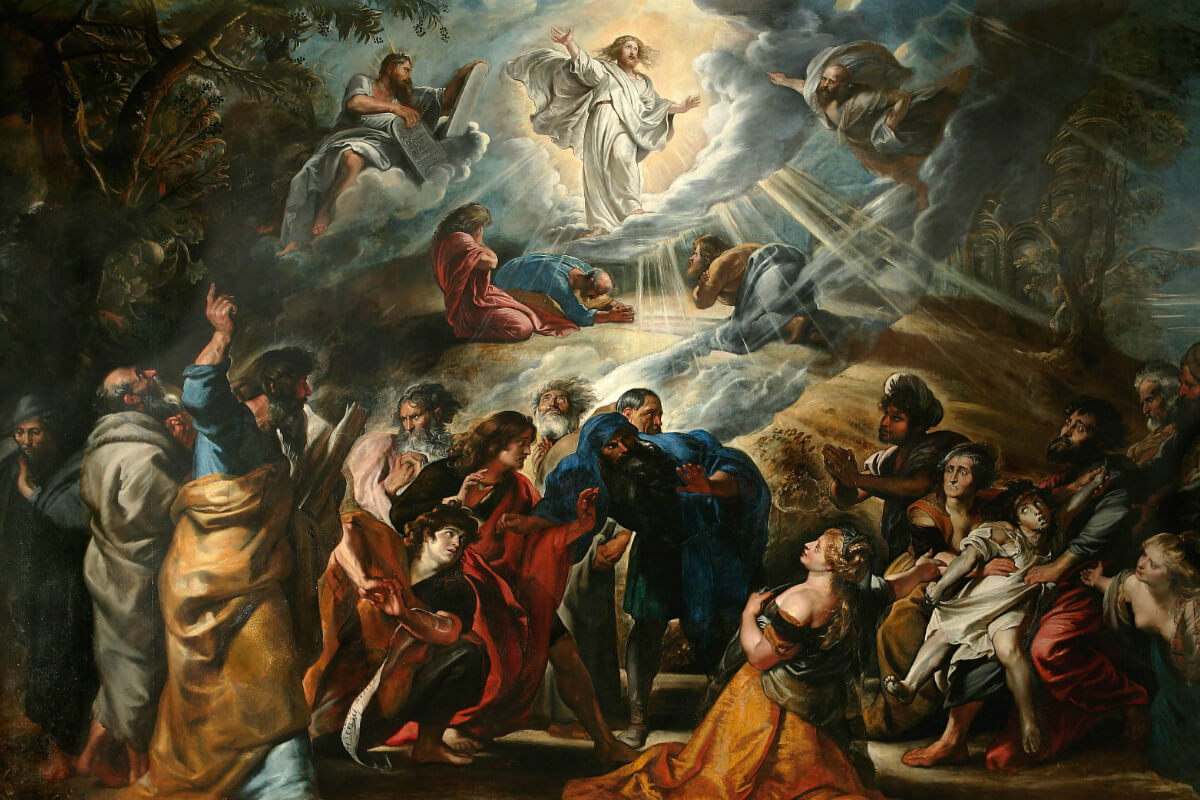
Moses is one of the most beloved figures in Israel’s history. He was the reluctant leader who led the people out of Egypt after they suffered in slavery for centuries. He was the one who led them to the region of Sinai where he served as their mediator when the Lord ratified a covenant with them. He was the one who stood beside them when most of the nation refused to enter the Promised Land and had to traverse the Sinai wilderness for forty years as punishment.
 In many ways, he was the premier leader of Israel, even with all his faults. His character became so respected that even Scripture itself testifies that Moses was the humblest man of his day (Num. 12:3).
But as great as Moses was, he was simply a foretaste, a precursor, to Jesus in his role as prophet, deliverer, and lawgiver. Let’s consider how Jesus fulfills each of these roles first initiated by Moses.
THE ROLES OF MOSES IN THE EXODUS STORY
1. Prophet
One clear title that can be ascribed to Moses is that of a prophet. Throughout the Old Testament, prophets spoke on behalf of God. Whether through words spoken or written, prophets were known for their famous line, “Thus says the Lord.” They weren't just some Joe off the street. No one could arbitrarily volunteer to speak for the Lord. They had to be directly called and selectively empowered by the Spirit to prophesy (1 Sam. 19:20; 2 Chron. 20:14; Ezek. 11:5); be subject to God’s command (Deut. 18:18-22); sometimes perform accompanying signs; and prove one’s authenticity by seeing one’s prophecies come to pass (1 Sam. 10:3-11; 1 Kgs. 13:5; 2 Kgs.19:29, 20:9; Jer. 28:15-17; Ezek. 33:33). Though Moses claimed to be a poor speaker, God called him to be his mouthpiece.
2. Deliverer
Moses played a second major role as a deliverer. In some ways, this was Moses’ most pertinent role because the need for such a person is stressed immediately in the Book of Exodus. The Hebrew people were in bondage. They were beaten, whipped, and overworked, with no hope in sight. Yet even though Israel did not expect Egypt to relent, the Lord provided a person they least expected to fight for their cause.
Moses’ arrival in Egypt and his position in the Egyptian hierarchy put him in a position to deliver the Israelites. God told him he would be sent to Pharaoh so that he could bring Israel, the Lord’s people, out of Egypt (Ex. 3:10). Though he wouldn’t do so in his own power, it is through Moses’ leadership that the Lord showed his might over Egypt and redeemed his people. Moses delivered Israel in the sense that his answer to the Lord’s call on his life was the means through which Israel was rescued from the clutches of slavery.
3. Lawgiver
Finally, Scripture presents Moses as Israel’s lawgiver. This responsibility emerges after the Exodus, when Moses is adjudicating disputes among the people, serving as an elder-judge once they embarked on their journey to the Promised Land. Eventually, the responsibilities increased at such an alarming rate that his father-in-law advised him to delegate some of his duties to qualified elders among the people. That way, Moses had a buffer so he wouldn’t be overwhelmed with every complaint among the masses.
Then, as they approached Mount Sinai, Moses was the one who brought the first draft of Israel’s Bill of Rights—the Ten Commandments—before the people. These rules served as the fundamental basis for the later drafting of the entire Law, which was Israel’s official constitution as God’s newly redeemed nation (cf. Ex. 20:1-17).
Moses became the bridge between God’s heavenly court and the nation of Israel. In a sense, then, Moses’s role as a lawgiver tied his other roles of deliverer and prophet together. By revealing God’s commandments to the people, Moses proclaimed God’s words like a prophet and gave them an outline for how they could have deliverance from the slavery of sin.
JESUS AND THE ROLES OF MOSES
Because Moses was a towering figure in the history of Israel, it’s only fitting that the New Testament has much to say about how his ministry parallels and is even transcended by, Jesus Christ. The easiest way to see this is by simply observing how Jesus replicates the actions of Moses––he served as Israel’s premiere prophet, deliverer, and lawgiver. Let’s look at a few examples.
1. Jesus is the final Prophet
The prophetic office is a great place to begin considering how Moses and Jesus overlap in the biblical story. For starters, Jesus was like Moses in that he met all the criteria one would look for in a prophet. This is not to insinuate that he was merely a prophet, though. That was a mistake many in Jesus’s day made. He was the divine Son of God incarnate, the Messiah of Israel.
At the same time, this does not mean he failed to be the true and better prophet of Israel. Indeed, he was the ultimate prophet. As opposed to being one to whom the “Word of the Lord” came, as it did to Moses and all the other Old Testament prophets, Jesus, as the divine Son, was the Word itself. He embodied the final word of the Father as the Savior who was sent to bring salvation to all those who believe (Jn. 1:1-2; Heb. 1:1-2).
Jesus also acted like other prophets through his words and actions. He announced woes of judgment against unrepentant sinners, while at other times offering words of encouragement to those in need. He sometimes performed parabolic actions to illustrate a point about Israel’s condition, like cursing a fig tree that bore no fruit or kicking people out of the Temple who were consumed with commerce instead of prayer and worship. Likewise, the Gospels are full of accounts where Jesus performed miracles––so much so that his followers asked him to be like the great prophet Elijah and call down fire from heaven (Lk. 9:52-55).
Finally, Jesus predicted future events like prophets often did. Predicting his death and resurrection and the destruction of the Temple in Jerusalem (while also comparing the two) is the most striking example.
2. Jesus is the final Deliverer
The New Testament identifies Jesus as the deliverer of a new Exodus. Moses was called to lead the first exodus so God’s people could escape slavery from Pharaoh, their cruel Egyptian taskmaster. Nevertheless, there was a more powerful dictator that plagued the lives of the Israelites—their own rebellious hearts. The people of Israel were sinners whether they were in Egypt or the Promised Land. So even though Moses could lead the people out of Egypt, he couldn’t mend their spiritual brokenness.
Therefore, a deliverer who could do this would far surpass Moses, and this is why the New Testament often describes Jesus in this way. Israel’s redemption from Egypt in the Exodus became a sort of prelude to a future deliverance from Satan’s kingdom and the corruption of sin.
More parallels with the Exodus continue as Jesus’ ministry launches. Some of them begin at Jesus’s baptism where he is identified as the Father’s beloved Son, which echoes the same title ascribed to Israel when Moses was summoned at the burning bush (Ex. 4:22). Afterwards, Jesus, the true Israelite, was led by the Spirit into the wilderness to be tempted by the devil. Satan tempted him with food when he had been fasting for forty days. But whereas Israel complained about food and water, Jesus chose to wait patiently for his Father’s provision to meet his needs.
This portrayal of Jesus as being faithful where Israel failed continues throughout Matthew, Mark, and Luke, especially in light of the prophet Isaiah’s contrast between Israel as a rebellious servant of the Lord as opposed to an unidentified suffering servant who serves the Lord faithfully (Isa. 52-53). Jesus is identified as the suffering servant who endures punishment for the sake of his people; brings the acceptable year of the Lord where Israel finds deliverance from physical maladies, death, and sin; and dispenses the Spirit to his people.
Jesus is greater than Moses because the exodus he pioneers is a serious upgrade from the first one.
3. Jesus is the final Lawgiver
Finally, the New Testament sometimes used Mosaic overtones to describe Jesus as a type of lawgiver. For instance, when we read of Jesus being on hills or mountains, the event of Moses delivering the Law seems to be in the background. One example comes in the Sermon on the Mount (Matt. 5-7). Here Jesus is offering insights into the kingdom he represents, just as Moses gave instruction to Israel on how they were to behave as God’s redeemed nation. Jesus gives credence to the Law when he says he has come to do something no one had ever been able to do—keep all of its moral demands, as well as fulfill all of its expectations.
Never in this sermon does Jesus appeal to an explicit quotation in the Old Testament and contradict it. Everything Jesus taught was in harmony with the moral fiber of the Law that Moses delivered to Israel. Yet in this sermon, Jesus criticized things people “had heard that had been said.” When he did, his response was always “but I say unto you.”
The other mountaintop experience that carries Mosaic overtones is the Transfiguration. After revealing his divine glory to three of his disciples and having an astounding meeting with Moses and Elijah, Jesus returned to the bottom of the mountain to see that his disciples were having trouble performing an exorcism. Just as Moses came down from Mount Sinai with the Ten Commandments only to find Israel committing idolatry and debauchery, Jesus came down from his own heavenly encounter to be faced with the weak faith and failure of his disciples. As the one with authority, Jesus then cast out the demon and provided instruction for his followers on how to be effective servants when faced with similar ordeals in the future.
In both of these events, Jesus provided instruction for his listeners that carried authority because he was the one who spoke them.
FINAL SALVATION IN JESUS
Moses no doubt holds a major spot in Israel’s hall of fame. He is beloved as the nation’s first great prophet, its great deliverer through the Exodus, and the solemn lawgiver who stood between heaven and earth at Mount Sinai. Yet as cherished as he was and as crucial a role that he played in biblical history, his accomplishments ultimately directed people to a greater prophet, deliverer, and lawgiver who would be the Savior, not of Israel from Egypt, but of believing Jews and Gentiles from sin and death.
As impressive as defeating Pharaoh and Egypt was, making a spectacle of Satan and his demonic hoards by defeating the curse of death was far greater. In Moses’s case, his greatness as a leader was only a precursor to the supremacy of the Savior. John the Gospel writer was right when he said that while Moses gave the Law, God’s final saving grace and truth came through Jesus Christ (Jn. 1:17).
This article is adapted from They Spoke of Me: How Jesus Unlocks the Old Testament, Rainer Publishing (January 26, 2018).
Brandon D. Smith works with the Christian Standard Bible, is an editor for Bibles & Reference at Holman Bible Publishers, and co-hosts the Word Matters podcast. He is currently writing his Ph.D. dissertation on a Trinitarian reading of the Book of Revelation under the supervision of Michael Bird. He also serves as Editorial Director for the Center for Baptist Renewal. You can read his blog at https://secundumscripturas.com

God Loves Me—Right?

The worship band starts up and you sing lyrics you’ve heard a hundred times before: “How deep the Father’s love for us, how vast beyond all measure, that he should give his only Son, To make a wretch his treasure.” But the words catch in your throat.
You don’t feel like a treasure. In fact, you haven’t felt God’s love at all lately.
IS GOD’S LOVE EQUAL?
You would never say God doesn’t love you, but you’re not sure he loves you as much as someone like Charles Spurgeon, William Carey, or even the people up front leading the music. They've served God in obvious ways, so God is probably more accepting of them, right?
Maybe you’re tempted to believe there are two levels of God’s love. First, the love that exists between Father, Son, and Spirit. This love is eternal and perfect, the fullness of what our earthly love points to. This is the deluxe package of God’s love. Second is God's love for us. You know, the basic package.
We feel like there’s a difference between God's love for his Son and his adopted children like some wrongly believe that parents have a greater love for their biological children than their adopted ones. But Jesus speaks a better word to us.
God doesn’t just love you as much as any other brother or sister—he loves you as much as he loves his Son.
JESUS’ COMFORTING SPIRIT
Jesus describes the Father’s love for him—and for us—in John 14. Sensing the disciples' uneasiness as he discusses his return to the Father, the Savior comforts his followers with a promise: "I will not leave you as orphans; I will come to you" (John 14:18).
How will Jesus come to them while he’s in heaven? Through his Spirit. The sending of the Spirit unites believers to Jesus. That Spirit signals to the disciples, and to us, that we’re not alone: "In that day you will know that I am in my Father, and you in me, and I in you" (John 14:20).
Jesus’ ascension and the giving of his Spirit are testimonies that God has not left us alone. Our triune God has broken into this sin-wrecked world in order to reclaim his people.
Jesus did not merely accomplish his earthly work and then tell the disciples, "Y'all stay strong. I'll see you when you die or when I return." The Father sent the Spirit to unite us to Jesus, to conform us to the image of Jesus, and to hold us firmly to the hope that is in Jesus.
If you possess the Spirit of Jesus, then you possess the unadulterated, unfiltered love of God.
HOLY AND BLAMELESS
God does not begrudgingly forgive you. He won’t stand with arms crossed at the gates of the new heavens and new earth with a frown as you sulk by. Those three words—"you in me"—are a glorious promise that what is true of Jesus is true of us. Our sin has been taken away and when God looks at you, he sees Jesus, who is "holy and blameless" (Eph. 1:4).
At the beginning of John 14, Jesus assures his followers:
Let not your hearts be troubled. Believe in God; believe also in me. In my Father’s house are many rooms. If it were not so, would I have told you that I go to prepare a place for you? And if I go to prepare a place for you, I will come again and will take you to myself, that where I am you may be also (John 14:1-3).
Did you catch that? The disciples are anxious about Jesus’ departure and fear what’s next. He comforts them by assuring them they will dwell in the Father’s house. Not in some rickety shack out back; no cupboard beneath the staircase. We are promised a room of our own in our Father’s house with our brother Jesus.
SONS AND DAUGHTERS
When we come before the Father, we do not come as mere servants of his Son; we come as sons and daughters ourselves, not because we are by nature sons and daughters, but because we have been wrapped in Jesus’ sonship.
But when the fullness of time had come, God sent forth his Son, born of woman, born under the law, to redeem those who were under the law, so that we might receive adoption as sons. And because you are sons, God has sent the Spirit of his Son into our hearts, crying, “Abba! Father!” So you are no longer a slave, but a son, and if a son, then an heir through God (Gal. 4:4-7).
What does this mean for our fellowship with God? It means you don't get the scraps of God's love. You get the prime cut. When you’re brought into union with Jesus, you are united in love with the eternal fellowship of Father, Son, and Spirit.
Sure, we’re still sinful people, and there will be a day when we experience that fellowship to a greater degree. But you can rest today in the promise that you share in this triune fellowship.
This is why Christians are called to live a life of holiness. Those who have tasted from the pure waters of triune fellowship are foolish to return to the stale, festering waters of sinful desires.
“You shall be holy, for I am holy,” is not a burden to shoulder, but a result that flows from being caught up in the divine love of Father, Son, and Spirit. But we’re prone to forget the beauty of heavenly love, choosing instead to chase pale imitations of it through relationships, possessions, and experiences that only bring disappointment and despair.
REMIND YOURSELF OF GOD’S LOVE
If you long for God’s love, remind yourself:
- Christ himself mediates every prayer you utter (Rom. 8:34).
- God is not an absentee Father; he has made himself known through his Word.
- Your church is a proclamation of God’s love represented as a family comprised of brothers and sisters from every nation, tongue, and tribe, all equipped with spiritual gifts.
- God demonstrates his faithfulness through every sunset, sunrise, and rainbow. It is the daily soundtrack that God “called you out of darkness into his marvelous light” (1 Pet. 2:9).
If Satan throws the fiery darts of shame and guilt at you, don’t despair. There’s an empty tomb that speaks a better word than your guilt. It speaks of redemption and grace. It speaks of forgiveness. It speaks of love.
As Psalm 136:26 says, “Give thanks to the God of heaven, for his steadfast love endures forever.”
Cody Cunningham is one of the pastors of Immanuel Community Church in New Orleans, Louisiana. He also is on staff with Reaching and Teaching International Ministries, an organization that provides theological education for pastors overseas. In addition, Cody is a husband, dad, avid reader, and coffee lover. You can read his other writings at codycunningham.com.

The FOMO You Should Really Fear

These days, it seems like there are fewer things that unite us than divide us. But there is one thing we share in common: we all hate the thought of missing out. We hate the thought so much that we had to come up with an acronym to identify the feeling—FOMO. An acronym for Fear of Missing Out, FOMO is a shorthand way of expressing our fear of being forgotten or ignored. For example, for pastor-nerds like me, FOMO is the anxiety I get when I miss a big parachurch conference everyone’s posting and tweeting about. FOMO affects the places we go, the people we engage, the things we purchase, the media we consume—everything.
But what if I told you that FOMO is simply fear misplaced? And that missing out is actually a good thing for your spiritual life?
HOW MISSING OUT IS GOOD FOR YOUR SPIRITUAL LIFE
To understand how missing out is actually a good thing for your spiritual life, we first have to know what the aim of spiritual life is. When someone places their faith in Christ, they are saved and called “to a holy calling, not because of our works but because of his own purpose and grace, which he gave us in Christ Jesus” (2 Tim. 1:9; cf. 1 Thess. 4:7). For the Christian, their “new self” in Christ is to be characterized by holiness (Eph. 4:24). Remarkably, we have been graciously invited to “share in his holiness” (Heb. 12:10).
J.I. Packer has said, “The nature of holiness is transformation through consecration.” Two things happen when Christ makes us holy: we are transformed and consecrated. But transformed into what, exactly? And consecrated from what?
One of the undeniable implications of pursuing authentic, Christian holiness is doing without certain things—missing out on some of what we used to enjoy as we set aside ourselves for honorable use in the Kingdom (consecration), so that we can be transformed into the image of Christ (transformation). The apostle Peter explains that holiness is not only a personal transformation to a new self (1 Pet. 1:14-15) but also a communal consecration to a new people (1 Pet. 2:9).
FOMO is one of the most urgent holiness problems facing us today. It causes many of us to participate in things that belong to our old self or our old environment. We’re tempted to chalk it up to “sin nature.” We explain away our being “of the world” as really an attempt to be “in the world” for Christ. When we cave to the fear, it interrupts the process of our transformation.
The Christian’s life simply cannot look the same as it once did, but missing out on the things that caused us to sin before Christ is good. Missing out on the destructive things the world tells us we need is good.
THE FOMO YOU SHOULD REALLY FEAR
There is a FOMO that's far more haunting and serious. The worst FOMO of all is thinking that we’ve been living the Christian life when we haven’t. It can be startling, horrifying even, to read Jesus’ final words of warning in the Sermon on the Mount:
“Not everyone who says to me, ‘Lord, Lord,’ will enter the kingdom of heaven, but the one who does the will of my Father who is in heaven. On that day many will say to me, ‘Lord, Lord, did we not prophesy in your name, and cast out demons in your name, and do many mighty works in your name?’ And then will I declare to them, ‘I never knew you; depart from me, you workers of lawlessness’” (Matt. 7:21-23).
What greater horror is there than realizing you've bought the lie that new life in Christ means your life doesn’t have to look that much different? That salvation in Christ is only theoretical and not practical?
We’re all afraid to miss out on the next big thing or that cool experience everyone else is having. But these are simply misplaced fears. Instead, we should fear missing out on the Kingdom of God.
HOW TO KILL FOMO AND ENJOY MISSING OUT
How do we move past the temporal fears of missing out and start to enjoy the process of transformation Jesus is doing in us? Here are some ways we can kill FOMO.
Realize that being out of “the know” isn’t always a bad thing
None of us likes to feel uninformed. But I’m afraid we (myself included) are so immersed in the world’s happenings that we are hopelessly entangled in the “craving for controversy and for quarrels about words” (1 Tim. 6:4) that defines our daily news. This is one of the reasons social media and FOMO are so dangerous. We lament the hot-takes on Twitter yet we choose to throw ourselves into it every opportunity we get, doing the very thing we hate (Rom 7:15)! Start a routine of taking extended time away from social media or whatever puts FOMO in front of you. Doing so will refresh your soul and put out any growing fires of “envy, dissension, slander, and evil suspicions” in us (1 Tim. 6:4).
Fill the empty space
Just like removing fatty foods and sugary sodas from our diet and replacing them with healthy alternatives leads to physical health, choosing to miss out on what’s spiritually “unhealthy” and replacing it with what’s nourishing and strengthening will be to our long-term benefit. Imagine being more enraptured by the narrative of Scripture than, say, the latest episode of Game of Thrones. And imagine what it could do for your soul to make the switch.
Remember that your spiritual heroes did without
Do you admire the example of your lead pastor, an elder, your mentor, Charles Spurgeon, or another hero of the faith? Look closely and you’ll find that they have chosen to miss out on some things for the sake of Christian holiness. If they’re alive, ask them what steps they took to be in the world and not of it. Learn from their example. Ask for accountability. And ask what they gained in return.
IS IT WORTH IT?
When you do without, people notice. As mentioned above, we should not pursue holiness for the sake of people noticing us. But a natural byproduct of being set apart is being a city on a hill. This is most effective when in close proximity to people who get to experience our habits up close and personal, who get to see a transformation right before their eyes. And oftentimes, they want what you have.
In the end, missing out for the sake of Christ isn’t missing out at all. That’s because Jesus is satisfying and in his Kingdom, there is no missing out because there is no better place to be. Each of us will one day face the holy God of the universe and be called to account.
Until that day comes, I pray I won’t miss out on the riches of knowing him, following him, and sharing in his holiness in these days—even if that means I may miss out on something else.
Zach Barnhart currently serves as Student Pastor of Northlake Church in Lago Vista, TX. He holds a Bachelor of Science from Middle Tennessee State University and is currently studying at Midwestern Baptist Theological Seminary, seeking a Master of Theological Studies degree. He is married to his wife, Hannah. You can follow Zach on Twitter @zachbarnhart or check out his personal blog, Cultivated.

Marriage Is Different—Not Better Than Singleness

The idol of marriage weighs most heavily in my heart when I am overwhelmed with life,stressed with work, or feeling lonely in my community, because in those moments it’s easy for me to believe that a husband would fix so many of my problems, that he would lighten the load I’m struggling to carry. And while there’s some sprinkling of truth in this belief because there’s a line between believing things would be different and believing it would be better. And this distinction, of marriage being a better option than singleness, harms the health of the church. “People who are married might feel like they have to view marriage as superior to singleness, not just different from singleness, because they feel like they have to justify their marriages,” my friend Morgan says. “But what if they rushed into their marriages? What if there were impure motives or they were responding to family pressure and now regret it? Or they have doubts regarding their own marriage?”
If I’m doubting I made the right choice, it’s easier for me to make peace with myself if I can find the weaknesses in the other options I didn’t take. When I was at Liberty University my first year, I wondered if I chose the wrong college (because when you shove three eighteen-year-olds into a small dorm room and make them share a sink, one is forced to cling to the cross). There was a smaller school in my home state that I was constantly drawn back to when things at LU weren’t going well. In order to soothe my discontent, I would look up the other school online and criticize it in my mind: Look how small that gymnasium is. Can you imagine showering in there? I bet that girl is being paid to smile.
But here’s the thing—we don’t have to keep playing these roles. You don’t have to break down singleness in order to feel good about marriage. I don’t have to diminish the value of marriage in order to accept my single state. My happiness does not mitigate, or lessen, your happiness. And your identity is not a threat to my identity.
We don’t have to keep parading around marriages as the ultimate good in order to justify our undue emphasis on them. And for all of our efforts here, marriages are still falling apart. Abuse is still occurring within Christian homes, and divorces are still taking place. It seems that our idolization of marriages has done little to actually help them.
I want to share an e-mail with you from a male friend of mine who is married. He wrote it to provide a glimpse into the struggles of married life, to cut out the marriage PR. I hope that by reading it you’ll see what I see: that marriage comes with its own struggles. That marriage, like singleness, is different. It’s not better or worse; it’s a choice that can be made, a path that can be chosen, that has its own bumps and knocks along the way. And once all the flash is stripped away, it can be filled with suffering too.
The simple fact is, many, many Christians are unhappy and frustrated and even despairing in their marriages. But because of hang-ups or fear of how they’ll be viewed or financial reasons or just plain lying to themselves, they feel unable to do anything about it or get help for it. This makes it very difficult for them to create deeper relationships with single people, because it’s hard for a single person to understand that specific type of despair.
Marriage can be very ugly because it can make you feel like it takes some of the best parts of yourself and stomps all over them. It can turn perfectly good days into terrible ones because of stresses that have nothing to do with you and make no sense to you. It swallows your time and energy and effort. It can block you from things you’d like to pursue, ideas you’d like to try, risks you’d like to take.
I share this with you because it’s easy for singles to feel that they are on the outside looking in . . . lonely creatures peeking through the window into the warm, cozy lives of families. And that feeling is perfectly legitimate, because being intimately loved is certainly a wonderful thing, and it kills me that wonderful people like you aren’t having that experience.
But I think the other side is that sometimes (often!) married people feel as if they are the ones inside looking out: at freedom, and at opportunities for a loving relationship, and at a much more actualized life. They feel trapped in constant arguments, incredibly boring routines, financial inflexibility, constant judgment, and little to no hope that things will change. When they meet an attractive member of the opposite sex, they can’t spend time getting to know that person. When the opportunity for an adventure with friends comes up, it’s very difficult to make it happen because of the needs of the family. When the church needs money or help or volunteers, often one spouse is willing but the other is not.
I share these things because too many singles I know are hung up on the idea that marriage will somehow be better. And for some people, it is. But for some it is not. For me it is significantly harder. I wish I had known more.
Not all marriages are rosy bright, and I so appreciated my friend’s honesty in sharing this insight. As C. S. Lewis says, idols always break the hearts of their worshipers.[i] I’m not implying my friend is in this position because he worshiped his wife, but I am saying that marriage is hard enough already—why put even more pressure on that situation by setting it up for failure?
Perhaps the greatest rebuke to the idol of marriage is found in Luke 14:26: “If anyone comes to me and does not hate his own father and mother and wife and children and brothers and sisters, yes, and even his own life, he cannot be my disciple.” We all appreciate the support of family, and those who are married love theirs very much, but we must comparatively hate them. We must love them less than we love Christ. Our joy in these relationships must pale in comparison to, must be completely consumed in, our love of God. That’s what we’re called to here.
When dedication to one’s family is being praised from the pulpit as the highest virtue, we’ve missed something. And if we continue to emphasize saving and restoring marriages at the cost of ignoring or diminishing singleness, there will be very few marriages left to save.
[i] C. S. Lewis, “The Weight of Glory,” Verber, http://www.verber.com/mark/xian/weight-of-glory.pdf.
Excerpt from Party of One: Truth, Longing, and the Subtle Art of Singleness. Used with permission.
Joy Beth Smith is the author of Party of One: Truth, Longing, and the Subtle Art of Singleness (Thomas Nelson). Find her on Twitter @JBsTwoCents

She Went from Destitute to Daughter—and So Can You

Before Cinderella was the most sought-after footwear model in all the land, she was a despised maid. She was a mistreated, neglected stepdaughter forced to tend to her bratty sisters. This part of Cinderella's story highlights something many of us struggle with: shame—particularly, the shame that comes from being shunned. Whether it’s a high school clique that keeps you from sitting at their table or an evil stepmother who treats you cruelly, no one wants to feel despised.
Cinderella’s story points us to an older, richer one that also features a destitute woman. This woman, whose name we don’t know, had a physical reminder of her isolation—a continual flow of blood.
PORTRAIT OF A DESTITUTE WOMAN
Her condition made her unclean in the Roman-era Jewish culture. According to Jewish law, every woman was considered unclean during the period of her menstruation. This meant that no one could touch them because they would also be made unclean. If the menstruating woman sat on a chair, it became unclean and nobody else could sit on it, or they would become unclean. This poor woman had a perpetual menstrual flow, so she was perpetually unclean.
Therefore, she would have likely lived separately from everyone. She couldn’t be touched by anyone. If she were a young woman when she contracted this condition, she would never have been able to be married or have a family. If it happened later in her life, after she had a family, she would never have been able to touch her children, hug them or comfort them in her arms, or even hold their little hands. This condition had ruined her life and she was desperate to be healed from it.
She had subjected herself to painful procedures with multiple doctors, yet she had only grown worse. Her humiliation, rejection, and degradation must have been completely devastating.
But that wasn’t the end of her story.
A SICK GIRL AND A DESTITUTE WOMAN
The poor woman’s story begins as an interruption to the narrative of Jairus and his sick daughter (Mark 5:21-24; 5:35-43), but the two stories are intertwined. Jairus’ daughter was twelve years old and the bleeding woman had suffered for twelve years, though both parties were desperate for healing. Jairus was the leader of the synagogue, a well-known and respected man. He acted as a powerful advocate for his daughter by pleading with Jesus for her life. The destitute woman had no one to advocate for her.
Even still, somewhere in her broken life a glimmer of hope still flickered. So desperate was she for healing, that on hearing of Jesus’s power and that he was passing through her town, she risked everything to go and touch him.
She would have had to cover her face and sneak out of her house. When she entered the crowd, she would have made everyone she touched unclean. Had she been discovered, she could have been stoned. But still, she pressed on and pressed in through the crowd, nearer and nearer to Jesus.
As Jesus walked to Jairus’ house to heal his child, the bleeding woman pushed her way through the crowd, reached out, and touched the hem of his robe.
Immediately, she was healed.
THE GOSPEL HEALS AND ADOPTS
As this healing is taking place, we can imagine Jairus is eager for Jesus to hurry up so he can come and heal his daughter. Jesus, however, takes his time with this woman, even while the young daughter's life is hanging in the balance. Jesus’ unhurried approach shows that God has equal time and power for all. No one is more important to him than anyone else.
The beauty of this story, which captures so much of the gospel, is that Jesus wills that no one should perish, but that all should come to eternal life (John 3:16-17; 1 Tim. 2:4). Here, Jesus stops in the middle of a lifesaving mission for an important man’s daughter and heals an unknown, nameless, rejected, and unclean woman. He healed not only her physical ailment but her deeper, spiritual ailment as well. And he accepted her in a way she had never even dreamed of by calling her “daughter” (Mark 5:34).
The gospel heals and adopts. It heals us of our spiritual ailment—sin—and adopts us into the family of God (see Eph. 1:5).
The love of God stretches infinitely; it reaches into the hearts and lives of every person despite their social status, nationality, income, gender, or renown (Gal. 3:28). This is the gospel, the good news of Jesus Christ.
JESUS KNOWS YOUR NEED BETTER THAN YOU DO
The destitute woman’s faith was probably influenced by superstition. She had likely heard that some people believed Jesus to be the Messiah. There was a widely held belief at the time that if a person touched a tassel on the Messiah’s garment that person would be healed. Desperately holding onto this belief, the woman kept pressing in until she touched the clothes of Jesus.
And she was healed! This was all her dreams come true! All the suffering, all the doctors, all the years of isolation, rejection, and pain, came to an end the moment of her healing. As soon as she received healing for her greatest need, she turned to flee for home, intending to leave in obscurity. But Jesus had a different plan.
REDEEMED AS A DAUGHTER
Jesus understood the woman’s true need in a way she didn’t comprehend. And so, he calls her out of the crowd, saying, “Who touched me?” And she stopped.
Why didn’t she just keep running? Why did she stop and come back? Well, because it’s hard to run when the voice of God is calling you. The same voice that called Lazarus out of the grave called to this unknown, desperate woman, and at the sound of Jesus’s voice, she fell at his feet, trembling in fear, and told him the whole truth.
After she confesses, Jesus does something unheard of, yet wonderful—he reached down and touched her. The purest, most righteous man to have ever lived touched the unclean woman, claiming her as his own. The word “daughter” that Jesus uses here is a term of the most intimate endearment. It would never be used with a stranger. He uses it nowhere else in the gospels.
Jesus adopted this nameless woman into his family. He touched her uncleanness and called her precious daughter, and then he told her to go in peace.
When something dirty is touched by something clean, the clean thing becomes dirty. If you clean your car with a white rag, the rag will soon be black. Jesus took our “uncleanness,” to the cross with him. He became the dirty rag which washed us clean, and just like the woman in this story, he accepted us into his family.
While she had desperately wanted healing, and had thought that was her greatest need, Jesus knew the true needs of her life. He gave her public acceptance, healing, and peace. He called her “daughter.”
FLESH PRESSES, FAITH TOUCHES
This story shows us that God knows our needs better than we do. We may come to him imperfectly, as this woman did, not truly seeking to know him more but to lay hold of an answer to prayer. Yet he is still willing to accept us.
Augustine writes,
“Flesh presses, faith touches. He can always distinguish between the jostle of a curious mob and the agonized touch of a needy soul.”[1]
If your need is great enough to make you sincerely and desperately turn to God, if you, like this woman, will risk everything just to reach out and touch Jesus, he will meet your needs and more.
He will be your Savior. He will deliver you from your shame.
[1]Quoted from George Campbell Morgan, The Gospel According to Mark, (Eugene: Wipf and Stock, 1927), 127.
Jody Ponce is on the women's ministry team in Calvary Cork, Ireland. She is married to Ricky Ponce, and she is the mother of three young children.

Trade Your Cinderblock for The Rock of Ages

“And by your grace, I will live for you.” I remember praying these words—but not meaning them. At the age of nineteen, my then-girlfriend led me to Christ and I renounced the atheism of my earlier years. Those words—“And by your grace, I will live for you”—were the conclusion to the “sinner’s prayer” that marked my conversion. Every sentence leading up to that one I said with gusto. But this sentence was choked out, forced.
Like so many “professions of faith,” I was parroting lines given to me by my evangelist. So after saying, “Amen,” I followed up with her: “I’m not sure I’m up for the ‘living for Jesus’ part.”
DIME-STORE DISCIPLESHIP
She replied: “It doesn’t mean you have to give up everything you love; you’ll just want to do them for God and not for yourself.” I shrugged. “I guess that makes sense.” But deep down, I was unconvinced. I played in a punk band and I was not willing to give that up, even though I knew our gimmick was at odds with the Christian life (our album title, “Menace to Sobriety,” was an appropriate summary of our message).
For the next three years, I tried a dime-store imitation of discipleship—Jesus as Savior, myself as lord. I wanted to make a deal: Jesus, you die for me, but I refuse to live for you. I didn’t give Jesus my life, just my afterlife. I wanted an afterlife free from suffering, but a life with all the pleasures sin could provide. The only problem with this bargain is that grace so cheap (to borrow a term from Bonhoeffer) is really no grace at all.
We cannot “baptize” our existing sinful desires by blessing them in the name of God. The drunkard who converts to Christianity and returns to his booze with gratitude, thanking God for this “gift,” is no convert at all. We need our distorted desires to be expunged by a more captivating desire for Christ. We need to understand both our sin and his love in order to become true followers of Christ.
THE RAT RACE OF IDOLATRY
Jesus used a striking illustration for the seriousness of causing others to sin. He said it’s actually better to have a millstone tied around your neck and go for a “swim” in the Mediterranean Sea (Mark 9:42)! He then gives us several other extreme examples about keeping ourselves from the things that keep us from God (Mark 9:43-50).
How seriously do you take your sin? Your sin—and make no mistake, any false god (idol) we serve is sin—is bound to drown you. Holding onto your sin is like trying to tread water while holding a cinderblock in your hands.
For the next three years, I tried to be the lord of my life while claiming to be a Christian, and the futility of idolatry became more and more clear to me. When we serve idols we become their slaves (John 8:34). I’d be happy, I told myself, if I could just play CBGBs. When that goal was realized, it never fulfilled, so I’d create a new one.
Entrusting myself to the idols I served—this is the rat race of idolatry. We exchange the true God for a lie and worship creation instead (Rom. 1:24) of Creator. This never leaves us satisfied (Jer. 2:13), not in the long run, yet we return to our overlords once again, expecting a different result. The cycle repeats ad infinitum. If it sounds like insanity, that’s because it is.
DISTORTED TASTES
The alcoholic knows his drink of choice is drowning him; he simply can’t slake the desires of his tongue with anything other than booze. The tongue wants what the tongue wants. We can’t simply starve our desires and expect to be satisfied.
To tire of our taste for sin, we need to acquire a taste for something new (Ps. 34:8). We need new tastes entirely, like the thirsty woman of Samaria who found Jesus so utterly satisfying to her palate that she dropped her water jug at the well (John 4:28). Our desire for lesser gods can only be overcome when a desire for the true God (Ps. 27:4) eclipses them.
We need something from outside to break that cycle if we’re ever going to be set free from slavery (John 8:32). Praise God that he has sent us the remedy to this terminal disease (Is. 53:5)! Jesus came to shake us out of the drunken, circular stupor of idolatry. He calls us to exchange the backbreaking burdens of our sinful idolatry for his life-giving, light yoke of discipleship (Matt. 11:30). He invites us to trade our taste for sin that never satisfies for his living water that never stops satisfying.
The functional saviors we cling to for life are, in actuality, no saviors at all. While they promise us deliverance, behind the veneer of power and pleasure, lies only death (Rom. 3:23). Like drowning men clutching cinderblocks, we hold on to our idols as they drag us to the bottom of the sea (Jonah 2:5).
Jesus stands there—a lifesaver!—but in order to grab onto him, we must let go of the cinderblocks. Otherwise, we perish.
A CINDERBLOCK-TAKING SAVIOR
The decision to follow Christ is costly and hard (Matt. 7:14), and should not be made lightly (Luke 14:28). We must be willing to exchange our ugly sin for the beauty of our Savior (Luke 14:33).
The good news is this: Jesus, while never yielding to the temptation to worship these false saviors, suffered the full brunt of the consequences for doing so. Though he never sinned (Heb. 4:15), he suffered on the cross for all of my sin (2 Cor. 5:21).
If the consequence for clinging to a cinderblock in the ocean is to drown, Jesus grabbed the cinderblock and held on until he breathed his last (Mark 15:37) so that we could breathe in the living God (John 20:22). The cross he bore, he bore for me.
Jesus is a patient, long-suffering, determined searcher of the lost sheep for which he came to die. The grace he offers is not cheap because it cost him his very life. Every drop of his precious, unblemished blood was required to make payment for sin.
My thirst for punk rock fame could only be put to death by understanding the depth of his love for me. He was thirsty (John 19:28) so that I never have to be (John 7:38). I don’t have to keep returning to a broken cistern; he is enough for me (Jer. 2:13).
THE BARGAIN OF GRACE
Once we begin to come to grips with how costly it was for Jesus to acquire us (Phil. 2:8), we gain a new perspective on how little we are actually giving up in return. When he calls us to pick up our cross and follow him (Luke 9:23), it is a call to death. But in putting ourselves to death, we are promised new life (Rom. 6:4)!
That new life is on the other side of the cross. If we want to follow him into glory, it means following him through pain and suffering. The way to Christ is the way of the cross. When I wanted to broker a deal with Jesus in which I gave him my afterlife but not my life, I wanted the ends without the means.[1] If we want to be glorified with Christ in the new heavens and earth, we must cling to him in the present. He promises us trials (John 16:33), but he promises to be with us (Matt. 28:20). He promises us persecution now (John 15:20) but paradise later (Rev. 2:7); The cross now (Luke 9:23) but crowns later (James 1:12).
Jesus is better; he is worth laying down our own sinful desires. The bargain Jesus offers us is better than the dime-store bargain of the devil. Satan tempts us, saying, “deny your maker and I will make you like him and give you this world” (Luke 4:5-7). Don’t trust the master liar (John 8:44); this deal is a sham.
TRADE YOUR CINDERBLOCK FOR THE ROCK OF AGES
Renounce your idols and all their cheap promises. Instead, follow Christ, who promises we will one day rule with him as his coheirs after we suffer with him (Rom. 8:17). Lay down your life, lest it slip through your fingers. Renounce everything you have, everything you worship that is not Christ, because he is better!
So therefore, any one of you who does not renounce all that he has cannot be my disciple. (Luke 14:33)
Sometimes it’s hard to let go of the life-sucking cinderblocks; they’re all we’ve ever known, so we keep clinging to them even as we plunge toward the depths. But Christ is strong enough to lift these burdens off our back and give us his burden, instead.
His burden is the cross. The cross is death. But to die is gain because Christ is everything (Phil. 1:21).
Jesus, take these idols that drown us. Give us yourself, Jesus. You’re everything. We lay these cinderblocks down so we can be raised with the Rock of Ages.
[1]Note the emphasis on “knew you” in Matthew 7:23.
Sean Nolan (B.S. and M.A., Clarks Summit University) is the Family Life Pastor at Christ Fellowship Church in Forest Hill, Maryland. Prior to that, he served at a church plant in Troy, New York for seven years and taught Hermeneutics to ninth and tenth graders. He is married to Hannah and is raising an army of toddlers. He blogs at Family Life Pastor. You can read all of Sean’s articles here.


Hear God’s Voice and Encounter His Presence in Your Bible Reading

Tell me about the book you’re reading. You’re only a few words in, but you already know a fair bit about it. You know it’s about the Bible—the title is a bit of a giveaway. You might remember the author and publisher. You probably read the blurb on the back cover. Maybe you ran your eyes over the contents page. At some point you examined it—perhaps in the store when you bought it or when someone gave it to you. If you ordered it online, then maybe you read some customer reviews. You can see it and feel it. Some people like the smell of new books, so you may even have sniffed it . . . now most of you have. After you’ve read a couple of chapters you’ll have an idea whether you like it or not. And if you make it to the end, you’ll be able to tell other people about it in an informed way.
 It’s easy to examine a book and find out about it. You can investigate it and interrogate it.
Now, I don’t want to alarm you, but there are almost certainly some bacteria on your book. If it’s any comfort, they were probably transferred onto the book (or e-reader) from your hands. Can you tell me about the bacteria on your book? That’s not so straightforward. You can’t see, hear or feel them. Hopefully you can’t smell them either, and I don’t recommend trying to taste them. Nevertheless, with a powerful microscope or some chemical tests, you could find out something about them. Like a book, they’re susceptible to scrutiny.
What about God? Tell me about God.
You might have all sorts of ideas about God. But what are they based on? You can’t see God through a telescope or under a microscope. You can’t go and knock on his door to ask him some questions. You can’t discover him in the jungle or on the ocean floor. He’s not like other subjects of study. He’s not susceptible to scrutiny.
For one thing, he’s a spirit. He has no body and therefore no physical presence. Even more significantly, he’s outside our universe. The Large Hadron Collider in Switzerland is the world’s largest machine and largest experiment feeding results into the largest network of computers. The irony of all these superlatives is that it’s designed to detect the smallest things we know about—subatomic particles. It’s detecting the aftereffects of particle collisions. But no apparatus could be constructed to “find” God, because God doesn’t exist within our material world. What would our experiment look for? In 2012 the Hadron Collider found evidence for the Higgs boson, a particle that had previously only been postulated. It was nicknamed “the God particle.” But it wasn’t a “piece” of God or evidence of his existence.
God is beyond our comprehension and outside our field of study. We might postulate his existence as the most likely explanation of effects we can see—things like the complexity of creation or answers to prayer. But we could never prove our hypothesis. We can’t stick God under a microscope or in a test tube.
So left to ourselves, we would remain totally in the dark when it comes to God. We have no way of bridging the gap between us and God.
So my request that you tell me about God should be an impossible task. The only way we can ever know anything about him is if he communicates to us. God himself must bridge the gap. We can’t study him. But maybe he can talk to us.
And God is not silent.
Knowing God is not completely without parallel in our world. Suppose I said, “Tell me about yourself.” Here’s a subject you do know something about. In fact, arguably you’re better informed on this topic than anyone else. The more you tell me about yourself, the more I’ll know about you.
But wait a moment. Do you really want to spill the beans to me? After all, we’ve only just met. It’s up to you what you tell me. How much I discover about your dreams, hopes, ideas, beliefs, desires, and plans all depends on how much you tell me. I can’t control what information comes my way. Only torturers can force information from people, and even then the reliability of that information is doubtful. In this sense the speaker is sovereign when we communicate.
It’s the same with God. We can know about him because he speaks to us. But God remains in control of the process. We talk about “grasping” an idea. But we don’t “grasp” God—not even when he reveals himself.
How does God talk to us? . . .
Let’s come back to the bacteria on your book. What would it take to ask them to get off? You could try saying, “Please get off my book.” Presumably the sound waves would reach them. But bacteria don’t have ears. Can they even sense sound waves? And even if they could, what language do they speak? Even if you could find a common language, do they know what a book is? In so many ways the gulf between you and your bacteria is too big to bridge. It’s a picture of the problem facing any attempt at communication between God and humanity.
And yet God in his greatness and grace does speak to us. In fact, he speaks in many different ways: in creation, in history, in the Bible, through preaching, and supremely through the person of his Son. People sometimes ask, “If God exists, why doesn’t he reveal himself more clearly?” But God is revealing himself all the time. The real question is, “Will you listen?”
Taken from Bible Matters by Tim Chester. Copyright (c) 2018 by Tim Chester. Published by InterVarsity Press, Downers Grove, IL. www.ivpress.com
Tim Chester is a pastor of Grace Church in Boroughbridge, North Yorkshire, and a faculty member with the Acts 29 Oak Hill Academy. He was previously research and policy director for Tearfund and tutor in missiology at Cliff College. Tim is the author of over thirty books, including The Message of Prayer, Closing the Window, Good News to the Poor, and A Meal with Jesus. Visit Tim’s website and read his blog or follow him on Twitter.