

3 Tear-Wrought Lessons on Suffering

If you haven’t experienced pain or sorrow or loss, you’re either young or dead. We’re all faced at some point with the fallenness of our world and brokenness of our own hearts. A parent buries a child, a family is ripped apart by divorce, a spouse is shattered by a diagnosis. It seems we might break under the weight of such pain.
When the pain gets so heavy we don’t think we can bear it, we ask the inevitable question, “Is this worth it?”
Paul has a startling answer to that question in Romans 8:18: “I consider that the sufferings of this present time are not worth comparing with the glory that is to be revealed to us.”
Is this some kind of Christian pep talk? No, Paul is not sharing a limp-wristed inducement, but tear-wrought lessons from his considerable suffering (see 2 Cor. 11:23-28). He shares three lessons we can all learn from as we face a world that’s not as it ought to be.
LESSON 1: SUFFERING HURTS
Paul first acknowledges suffering by calling it suffering. He doesn’t diminish the reality of sorrow and loss and sin. He calls it what it is—suffering. And sometimes considerable suffering, at that.
We often run from or ignore sorrow and disappointment. Or we try to somehow minimize it, numbing our pain. These coping methods won’t really help us cope at all, not in the long run, because we’re running to ourselves to fix our problems instead of running to God. But when we run to God and his Word with our pain, we discover a Father who acknowledges our pain and a Son who experienced it.
God knows our pain. He is not lounging in a La-Z-Boy in heaven while we’re struggling to keep our heads above water. Hebrews 4:15 reminds us “we do not have a high priest who is unable to sympathize with our weaknesses, but one who in every respect has been tempted as we are, yet without sin.”
When we lose a loved one, when we cry until we can’t cry anymore, when we suffer abuse at the hands of others, when we endure chronic pain, we can run to a Savior who in every way knows what we’re experiencing and sympathizes with us.
Suffering hurts. And Jesus knows it. Run to him and listen as he validates your pain and acknowledges your suffering.
LESSON 2: GLORY HEALS
Paul’s second lesson is that our suffering—considerable as it is—is hardly worth comparing to the weightiness of the glory that is to be. Elsewhere he says that “this light momentary affliction is preparing for us an eternal weight of glory beyond all comparison” (2 Cor. 4:17). Light affliction?! Is Paul invalidating his first lesson that our suffering is truly terrible? No. He’s saying that relative to eternal glory with Christ, our afflictions, no matter how unbearable, will seem momentary.
Paul says our glory will not only be eternal, but it will be weighty. This seems like a strange combination of words. We know suffering can be weighty, but glory?
Though it sounds foreign, when we think about the joys of a lifetime of marriage, of raising children from infancy to adulthood, or of deep and long-lasting friendships, the word weighty seems fitting. Or consider even a moment of happiness—when your new spouse says “I do,” or you hold your newborn or newly adopted child for the first time or enjoy a meaningful conversation with a close friend. Certainly words like fluffy, light, insignificant, or faint don’t describe these pleasures.
No, the joy we experience in such blessings is real, substantial, significant, and large. Real joy is weighty. And it is precisely the weightiness of such joys that make our grief so weighty. Yet it seems like the weight of pain always outweighs joy, doesn’t it? Can the weight of joy or glory really outweigh the heaviness of our trials, like Paul says?
If a glory this heavy seems impossible, consider this. The same God who provided the joy you’ve experienced with your spouse or parent or child or friendship is the same God who knows what eternal glory awaits you—and he says they can’t be compared! The glory that God has prepared for every one of his children is that heavy.
Eternal joy is greater than our suffering in length of time and in quality. Christian, catch God’s perspective. See that eternal joy is weightier than even our greatest sufferings here and now.
LESSON 3: FAITH HELPS
What is it that makes this eternal, heavenly glory so transcendently, seriously glorious? That it is centered on Christ (Col. 3:4; 2 Thess. 2:13; 1 John 3:2). Admittedly, to the skeptic, this may sound more anticlimactic than floating around on clouds and playing harps. But for anyone who has seriously considered the character of Jesus Christ, and especially for those who have found in Christ the only perfection that will satisfy a truly good God, this resonates. The joy of a consummated relationship with Christ is weightier than any suffering on earth will ever be.
The joy of heaven is not just that there will be "no more death or pain or tears." The joy of heaven is that there is no more sin to keep us from living with and being like Jesus Christ completely and forever. Unhindered and uninterrupted fellowship with Jesus is the greatest joy heaven has to offer.
Suffering will exist, for now, no matter what your worldview. But if you don’t believe in God, then you will just be looking for another solution to the suffering, another way through the suffering.
The eternal glory Paul speaks of will also happen no matter what we think about God. One day this world and our suffering will come to an end, and one day believers in Christ will be enabled to live with him forever. No one can keep this from happening.
Faith in Jesus Christ is not only the means of salvation; it is also the means by which we enjoy salvation’s promises and assurances even now. Faith is the umbilical cord that connects our infant-like perspective on suffering to the nourishment available from a God who knows what it’s like to suffer as we do.
Recognizing the bigness of God, and of his grace through Jesus Christ, will feed our souls in the midst of this momentary suffering by granting us assurance of a glory infinitely weightier than even the most crushing pain.
IS YOUR SUFFERING WORTH IT?
Is your pain and suffering worth it? Is your crippling anxiety and grief worth it?
Yes. Your suffering is truly suffering. Your pain is truly heavy. But if you’re in Christ, you have a Savior who has experienced everything you have and more. He knows exactly how you feel and precisely what you need. He knows your suffocating at the hands of suffering, and he wants you to set your eyes on the eternal weight of glory he’s preparing for you.
May the weighty joy of the Christian faith be yours, now and for all eternity.
Justin Huffman has pastored in the States for over 15 years, authored the “Daily Devotion” app (iTunes/Android) which now has over half a million downloads, and recently published a book with Day One: Grow: the Command to Ever-Expanding Joy. He has also written articles for For the Church, Servants of Grace, and Fathom Magazine. He blogs at justinhuffman.org.

Believer, Your Leaders Needs Your Prayers

I saw him stretched out on the floor behind the curtain, his face touching the concrete. The worship music blasted through the speakers while the few congregants sang in response. His sermon was ready, but he wondered what difference it made. The church wasn’t growing. He wasn’t paid. He faced pressure from his friends, his staff, and himself.
Can God do anything through me? he wondered.
Gospel ministry is a glorious weight, and every leader needs help holding it up. Paul, recounting the opposition and sufferings he faced, made a desperate plea to the Corinthians: “You must help us by prayer” (2 Cor. 1:11).
It's hard to ask for prayers from the concrete floor, but your ministry leaders have been there. Some might be there now.
They might not ask, so I’m asking on their behalf: Brothers and sisters, pray for your leaders.
THE LORD’S WORK IN THE LORD’S WAY
Francis Schaeffer opens the fourth chapter of No Little People with these lyrics from a song sung during his seminary graduation:
From ivied walls above the town
The prophet’s school is looking down.
And listening to the human din
From marts and streets and homes of men:
As Jesus viewed with yearning deep,
Jerusalem from Olive’s steep,
O, crucified and risen Lord,
Give tongues of fire to preach thy Word.
It’s fitting for a seminary graduation. Leaders want a burning desire to fuel the Word of God coming from their mouths. But it doesn't take long to realize inner desire isn’t enough. The flesh is no help at all (John 6:63). Only the Holy Spirit can spur you on and sustain you at the same time.
The Spirit’s leading of Jesus during his earthly ministry was the model for how he guides all God’s leaders along the same path: suffering, rejection, crucifixion, resurrection.
You must march through the valley of the shadow of death to find the green pastures beside still waters, the place all leaders want to take their people. It’s here, on resurrection’s path, that ministry makes its mark.
Schaeffer understood the difficulty: “Because the world is hard, confronting it without God’s power is an overwhelming prospect. But tongues of fire are not to be had simply for the asking. The New Testament teaches that certain conditions must exist. In short, they come down to this: we must do the Lord’s work in the Lord’s way.”
With your expectations, conversations, and suggestions, are you helping your leaders do it God’s way? Or is the pressure to perform so high that they’re tempted to take shortcuts to appease the crowd?
Doing the Lord’s work in the Lord’s way is a treacherous road. Relying on God alone isn’t more comfortable for your leaders than it is for you—but the church depends on their faithfulness.
A PRAYING CHURCH
Who is sufficient for these things? Not peddlers of God’s word, that’s for sure. Trusting one’s ministry to God alone is for sincere men and women who have been commissioned by God, in whose sight they speak in Christ (2 Cor. 2:17). It's a high calling—and a difficult one.
But difficulty and glory are not enemies of God. Jesus said of Paul, "I will show him how much he must suffer for the sake of my name” (Acts 9:16). It was foolishness to the world, even as it was the wisdom of God (1 Cor. 1:25). Paul’s response was not gloom but joy (Phil. 4:10–13).
But Paul knew Christianity was not his personal religion. It was Jesus’ kingdom movement, calling Jew and Gentile alike into a new family. In a family, everyone’s needs are shared. To fight the good fight, Paul knew he needed his family’s help. He needed a praying church.
To do the Lord’s work in the Lord’s way, every leader needs a praying church. I've never met a leader that is too encouraged. Gospel leaders do not assume they are sufficient on their own.
It's likely no one is more discouraged about the state of your church than your leaders. You don't have to tell them everything that's wrong. They know and feel much of it already.
The church must realize it fights on spiritual ground. Maybe your leader needs practical tips—but not before they need your prayers. No ministry is more needed, and no ministry more overlooked, than the ministry of prayer.
A SPIRITUAL BATTLE
“Imagine,” Schaeffer said, “the Devil or a demon entering your room right now. You have a sword by your side; so when you see him you rush at him and stab him. But the sword passes straight through and doesn’t faze him! The most awesome modern weapon you could think of could not destroy him. Whenever we do the Lord’s work in the flesh, our strokes ‘pass right through’ because we do not battle earthly forces; the battle is spiritual and requires spiritual weapons.”
The flesh, the world, and the devil conspire against every leader. They need an army of holy warriors who pray with gospel defiance against the enemy, declaring that “the weapons of our warfare are not of the flesh but have divine power to destroy strongholds” (2 Cor. 10:4).
We cannot take a sword to a demon fight, but that doesn’t mean we have to rely on our fists. Scripture tells us we can put on the armor of God himself (Eph. 6:14-17). The individual Christian must put it on, but it must be used for the good of those who lead.
The key that upholds it all is prayer: “Praying at all times in the Spirit, with all prayer and supplication” (Eph. 6:18). A personal prayer life keeps God’s armor on the body.
To that end, Paul says, “Keep alert with all perseverance, making supplication for all the saints, and also for me, that words may be given to me in opening my mouth boldly to proclaim the mystery of the gospel, for which I am an ambassador in chains, that I may declare it boldly, as I ought to speak” (Eph 6:18-20) .
God’s armor is not just for solo missions. It is for the front-line battle as we stand firm in one Spirit, with one mind striving side by side for the sake of the gospel (Phil. 1:27).
When you pray for your leaders, you are playing no small part in the story of redemption. God uses good soldiers, and he knows every one by name (John 10:3).
MOMENT-BY-MOMENT RELATIONSHIP
Like all Christians, every leader needs a moment-by-moment relationship with God. In our day of professionalized ministry, many assume closeness with God is a given. But talking about God is not the same as walking with God, and the closer you are to ministry, the wider the trap grows. The enemy loves a church leader who treats God as a theory.
Paul fought against theorizing God. He knew the gospel was of first importance (1 Cor. 15:3). Knowing Jesus and him crucified mattered above all (1 Cor. 2:2), walking in a manner worthy of the Lord, fully pleasing to him was the only life worth living (Col. 1:10).
He also knew to endure to the end, he needed the prayers of his people. So when he wrote to his churches, he asked for prayer to stay faithful (Eph. 6:20), to be delivered (Rom. 15:31, 2 Thess. 3:2), to bear fruit (Col. 4:3, 2 Thess. 3:1).
What Paul wanted most—what every gospel-centered leader wants most—is to serve the Lord with gladness, resist temptation, and do the Lord’s work in the Lord’s way. If Paul needed the prayers of his people, don’t your local church leaders need yours?
You can put your leader on the floor, or you can lift them up. Which will you choose?
“Brothers and sisters,” Paul pleaded, “pray for us” (1 Thess. 5:25). Your leaders plead the same.
David McLemore is the Director of Teaching Ministries at Refuge Church in Franklin, Tennessee. He also works for a large healthcare corporation where he manages an application development department. He is married to Sarah, and they have three sons.

The Best Generosity Story Ever

I don’t think that this will be a huge shock to you, but human beings aren’t naturally generous. If sin causes us to live for ourselves, and it does, then one result of this obsessive self-focus is the effect it has on the way we think about and use our money. For most of us, the thing that drives the vast majority of our joys and sorrows when it comes to money is what it’s doing or not doing for us.
When we think of money, we tend to think first of ourselves: what do I need, what do I want, what dream can this money finance, what would I like to do that I have never done before, etc. I am not suggesting that we are never generous but that, for most of us, when it comes to money, generosity is a snapshot in a long video of self-interest.
A STORY OF GENEROSITY
But the biblical story is a generosity story. No words capture the essence of this story better than these: “For God so loved the world, that he gave . . .” (John 3:16). Having money in the proper place in your heart and life is not just about good budgeting and freedom from debt; the biblical standard is much higher. You know you have money in the right place in your heart when the culture of acquisition has been replaced in your heart with a culture of generosity, where joy in giving overwhelms joy in getting. Could it be that the primary purpose for money in your life is not that you would live but that, as God has lavishly done in your life, you would give? Could it be that we need something fundamentally deeper than a commitment to a good budget and reasonable spending? Could it be that what we really need is a brand-new understanding of the purpose for money, one driven by the gospel story?
Let’s unpack the generosity story, which runs throughout the main body of Scripture. It really is true that the narrative in the Bible is a story of God’s giving, giving, and giving again. If you read your Bible through the lens of generosity, you will be blown away by how lavishly generous your Lord is.
THE GENEROSITY OF CREATION
How can you even summarize the incredible gift of the physical creation? Whether it is the beauty of a sunset; the design of animals of every color, shape and size; the beauty of a single flower, we have been blessed way beyond our ability to recount.
In creating the world, God created a means by which we would be aware of him and learn things about him. One of the most precious things about the gift of creation is that it was purposefully designed to reveal the most important thing ever—the existence and character of God. Creation is the generosity of God on physical display for all to see.
THE GENEROSITY OF THE COVENANT
Hear these amazing words that God spoke to Abraham: “I will make of you a great nation, and I will bless you and make your name great, so that you will be a blessing. I will bless those who bless you, and him who dishonors you I will curse, and in you all the families of the earth shall be blessed” (Gen. 12:2–3). This covenant confounds the normal way we think of things. It confronts us with the fact that God makes covenant with us, with all of those glorious promises, not because of what is in us but because of what is in him.
Thus it is with generosity. Generosity is the result not of the good in the one receiving but in the good-heartedness of the one giving. His response to wayward, idolatrous human beings is to lavish the blessings of his presence and promises on them, blessings and promises that not one of them would ever have the ability to earn. God’s covenant blessings and promises are his generosity on display.
THE GENEROSITY OF FREEDOM FROM SLAVERY
It’s the loving generosity of God that would cause him to raise up Moses and harness the forces of creation to be faithful to the promises that he made to Abraham and his descendants. Whereas our generosity is fickle and often failing, but not the Lord’s. His generosity is faithful and perseverative, so he never ever forgets, fails, or turns his back on anything he has promised. With a generous and faithful heart, the Lord unleashed his almighty power in a display like the world had never seen before and rescued his children from captivity, defeating the feared army of Pharaoh on the way. Because God makes generous promises, he is generous in the use of his power to fulfill those promises.
THE GENEROSITY OF THE CROSS AND FORGIVING GRACE
This really is the ultimate definition of generosity. There is nothing that could compete with Christ’s willingness to suffer injustice, torture, and death for us. What could be more generous than for a perfect man to be willing to bear the penalty of people who ignore his presence, steal his glory, and rebel against his divine authority? But Jesus wasn’t just willing; he found joy in doing so. So it is with generosity, which is never begrudging, never forced, and motivated more by joy than by duty.
THE GENEROSITY OF ETERNITY
Not only does God generously bless us with spiritual riches in the here and now, but he invites us to an eternity that is rich beyond our imagination. In generous love, he opens to us the doors of the new heavens and the new earth, where sin, suffering, and sorrow will be no more, and we will live in peace and harmony with him and one another forever without end.
It really is true that the great redemptive narrative is itself the world’s best and most important generosity story. This means that your hope in life and death rests on the fact that your Lord is a bountifully generous King, who sent his Son to set up a kingdom marked by its generosity of love, grace, forgiveness, daily mercy, and the faithful supply of all we need. So when he invites and calls us to seek his kingdom rather than work to store up physical earthly treasures, he is calling us not just to value spiritual things more than we value earthly things, but to be part of his generosity mission on earth. So much of the way sincere Christians look at money, finances, and budgeting seems to miss this gospel theology of generosity.
THE GOSPEL OF GENEROSITY
Without this gospel theology of generosity, discussions of money become about how to steward what God has given you, how to keep out of debt, how to fulfill your contracted financial obligations, how to have financial stability, how to anticipate your financial needs upon retirement, and how to ensure that you give God a tithe. None of these things is wrong, and all of them are helpful in some way, but the whole plan is devoid of the larger considerations of the call to be God’s ambassadors on earth. The normal plan is functionally devoid of gospel perspective and vision, and because it is, it focuses money and finances on personal need rather than on God’s grand gospel agenda.
Could it be that when it comes to finances, we have the whole thing upside down? When we think of money, we tend to think of it as God’s primary means of providing for us and, oh, yes, he has called us to give. Could it be that Scripture teaches that God’s primary purpose for money is that we would be tools of his generosity mission on earth, and, oh, yes, he also uses it to daily provide for us? Matthew 6:19–34 sets up a clear contrast between storing earthly treasures while obsessing about personal needs and seeking God’s kingdom. Jesus teaches that financial sanity begins with believing that you really do have a heavenly Father who will supply what you need. The radical message of Jesus is that that burden is his and not ours.
Content taken from Redeeming Money: How God Reveals and Reorients Our Hearts by Paul David Tripp, ©2018. Used by permission of Crossway, a publishing ministry of Good News Publishers, Wheaton, Il 60187, www.crossway.org.
Paul David Tripp is the president of Paul Tripp Ministries, a nonprofit organization. He has been married for many years to Luella and they have four grown children. For more information and resources visit paultrippministries.org.

You Don't Need a Passport to Reach the Nations

I make it my ambition to preach the gospel, not where Christ has already been named, lest I build on someone else's foundation, but as it is written, “Those who have never been told of him will see, and those who have never heard will understand.” – Rom. 15:20-21
I was twelve when I first read these lines from Romans. The unstoppable advance of the gospel immediately captivated me.
Stories of missionary heroes like David Livingstone, Hudson Taylor, and John Paton flooded my mind as I considered what gospel-pioneering work would look like.
With a Bible in one hand and a machete in the other, I envisioned myself blazing a trail through the dense African bush, fighting off snakes and lions to reach remote tribes with the gospel. I was convinced this was the life God was calling me to live.
Twenty-five years later, I’m still just as excited about reaching the unreached. But my role in this work has looked entirely different from my childhood dreams.
DASHED DREAMS OF REACHING THE NATIONS
Initially, passion for the gospel’s advance led my wife and me to leave the comforts of family, friends, and homeland to church-plant in a Muslim village in West Africa. But our baby daughter’s struggles with malaria led us back to the States.
I was crushed.
My childhood dreams of reaching the unreached had been dashed.
Or had they?
These days, I’m not sweating bullets under the scorching African sun. Instead, you can usually find me shoveling snow on yet another frosty day in western New York. I’m not halfway across the continent, but a few miles up the road at the local university, studying the gospel with young men and women who’ve never heard the good news. Instead of cutting my way through a jungle with a machete, I’m digging my way through conversations with chopsticks.
Through this season of ministry, I’ve discovered something that never occurred to me when I first read Romans 15. I had always thought of the unreached peoples as only being “out there.” But the truth is, they’re very much here, too.
We don’t have to cross the ocean or cut down a trail to get to the nations. The nations have come to us.
THE UNREACHED IN OUR BACKYARD
One of the most dynamic mission fields of our time might easily be one of the most overlooked. This past year, more than one million international students from all over the world attended colleges and universities in the U.S. Many of these bright, ambitious men and women came to us from countries closed to traditional missionary endeavors.
Some will be only here for a year. Others, for quite some time. After completing their studies, many will go on to become influential leaders.
An article from the Washington Times stated that nearly 300 current and former world leaders once occupied American classrooms before ascending to prominence in their home countries.
The potential to see the gospel advanced globally through international student ministry is truly staggering!
AN EXCITING—BUT CHALLENGING—OPPORTUNITY
Almost anyone involved in international student ministry will tell you that most of these students are curious about religion. Unlike their American counterparts, international students are open to discussions about Christianity.
And they’re eager to make American friends. Being far from home, many long for a sense of community. They are an ideal mission field that is ripe for harvest!
Making disciples of the nations within our nation, however, is not for the faint of heart. The challenges can be overwhelming.
Since English isn’t their first language, communication can be complicated. Most of these students have cultures and worldview perspectives that are drastically different from ours. Some come from countries completely closed to the gospel and therefore lack basic categories for basic biblical concepts. Even those from “Christianized” countries often have a seriously distorted understanding of the gospel.
Patience, love, and a long-haul mindset are essential if we’re going to reach these men and women for Christ.
HOW YOU CAN REACH THE NATIONS AT HOME
If you’ve read this far, you might be thinking, “Micah, I get what you’re saying. Reaching these people sounds awesome, but kind of scary.” Maybe you’ve never interacted with someone from another country. Perhaps you’re worried that you won’t know what to say or how to act. How would you even begin?
If you’re near a local campus with international students, let me encourage you to consider the following:
Partner with local campus ministries
Partnering with a student ministry on campus is probably the best place to start. There are a number of campus ministries effectively reaching international students. Our church has been able to establish a healthy, working relationship with one such ministry.
Through our partnership, we’ve had numerous opportunities to make connections and develop meaningful relationships with students. Some of them have come to know the Lord and are now radiant followers of Christ. Others are attending gospel studies led by some of the men and women of our church.
Working together, I’m thankful that my church body can multiply our time, efforts, and resources to advance the gospel.
Meet the international student advisors at your local college
I recently talked with a young man who is involved in a thriving international student ministry at his local church. When I asked him how his church started their outreach, I was struck by the simplicity of his response:
“We met with the international student advisors and asked them how we could help students adjust to college life. They were happy to have us help with things like picking up students from the airport, showing hospitality, and helping students learn about the city.”
Through simple acts of service, members of this church established relationships with both students and faculty that have opened doors for disciple-making ministry.
Organize an ESL conversation club
Opportunities to meet Americans, make friends, and practice English are usually big hits with international students, especially those with families. With a little planning and training, nearly anyone can organize an effective ESL (English as a second language) conversation club. Select a few conversational topics that might be of interest to students. Open your gathering with a few ice-breaker activities to help everyone feel comfortable with one another. Divide the students up into smaller groups where they can receive more personalized attention and opportunities for discussion.
As relationships are established, encourage volunteers to follow up with students in their groups to set up one-on-one gospel studies.
REACH THE NATIONS RIGHT WHERE YOU ARE
God may not be calling you to cross the ocean to reach the unreached. Instead, he might be asking you to drive a few miles up the road.
Through international student ministry, you can labor so that “those who have never been told of him will see, and those who have never heard will understand”—and you won’t even need a passport.
Micah Colbert and his wife, Debbie, live in Buffalo, NY with their three children. In addition to planting and pastoring Gospel Life Church, Micah also works part-time as an ESL instructor in the city. Currently, Micah is working on developing disciple-making materials to help churches effectively engage in international student ministry and ESL outreach. You can visit his website at www.internationalbiblestudy.com.

Lessons From a Prayer Warrior

This is not an article for spiritual giants who spend three hours a day on their knees, attend every prayer meeting, and pack each spare moment with petitions and praises. If this is you, feel free to stop reading now (and pray for the rest of us).
This is an article for those of us who think the word “PRAY” is the most jarring four-letter word uttered in the church. It’s for those of us who struggle to pray, who are afraid to pray, or who feel guilty about our crummy prayer lives.
I get it. I struggle to pray, too. I don’t consider myself a prayer warrior or a prayer giant. I’m more of a prayer toddler.
But I want to learn to pray. Not set any prayer records—just learn to pray. I want to be a man known for prayer. When you don’t know how to do something, you ask an expert. So that’s what I did.
EAVESDROPPING ON A SAINT
A few years ago, I approached one of the matriarchs in our church, a woman twice my age who is considered a prayer warrior both inside and outside our church. “Will you meet with me—regularly—and teach me how to pray?” I asked.
She looked pleased and surprised. “Well, I don’t know about teaching you anything. But how ‘bout we get together, and we’ll talk to Father? I’d like that.”
For a few years she and I met for two hours every week. Talking and praying. Praying and talking. There was no formal agenda, no didactic teaching, no lectures. Just a man enjoying the privilege of being invited into this saint’s conversation with God.
ALWAYS A STUDENT
God taught me some crucial things about prayer in those days, things I’m still learning:
Prayer is about relationship. As Jesus often pointed out, God primarily identifies himself to us as “Father,” which is how my prayer mentor addressed him and talked about him—constantly. His presence as her Father was real. Even in her late 70s she prayed like a child sitting in his lap. She was always overjoyed to be with him. There was nothing better for her.
She has a childlike faith—the kind Jesus told us is a prerequisite for citizens in his kingdom. This has been an important and growing reality for me to grasp. As Paul E. Miller wrote in his excellent book, A Praying Life, “Oddly enough, many people struggle to learn how to pray because they are focusing on praying, not on God.” When I struggle with prayer, I wonder if I’m even thinking of God at all.
God cares about everything, no matter how small. Because she knew him intimately as “Father,” my prayer mentor would speak with him about everything. Most topics were fairly mundane. I was expecting her to lead me in high and lofty prayers of vision and outreach and mission and world-moving.
Her prayers extended half a world away—to her kids and grandkids in another state, to a missionary in Uganda—but even then, her prayers had dirt on them. They were earthy; smeared with fingerprints and splattered with mud.
But if God is our Father, doesn’t he care about these intimate details? Won’t he meet us in them? And when he does, won’t we truly know he cares?
When I get home from work, my three- and six-year-old girls, can’t wait to tell me about the cat that was in the backyard, the Calico Critter toys they were playing with, and the bird nest they created in their nature study. I can simply write them off and call them to more “important” things, or I can take their hands, get down on my knees, and revel in their childish simplicity.
Thinking God too important for seemingly “simple” things is actually a subtle form of pride. We consider ourselves too important to give him our attention and time—too self-sufficient to ask him for help. But Jesus said to pray, “Your kingdom come, your will be done, on earth as it is in heaven” (Matt. 6:10).
Heaven comes to earth in our prayers, therefore our prayers ought to be earthy. Because we are involved in conversation with the God who sovereignly oversees everything, you better believe he cares about what’s important to you and me.
Real, deep prayer is biblical prayer. My prayer mentor is a woman immersed in God’s Word. Her prayers drip with the Bible. She devours it. She spends time in it for hours each day. She speaks and prays the Word.
I’ve known younger, less mature believers with active prayer lives. They talk with God throughout the day. They ask him for simple things and see him answer their prayers. They claim to hear from him, but oftentimes their claims seem unfounded and “out there.”
I have noticed that these dear friends—though attuned to God’s presence in everyday life—haven’t become deeply attuned to God’s Word. They have yet to mature through time spent listening to God in the Scriptures. As they do so, I can’t wait to see the kind of prayer warriors they will become.
My prayer-warrior mentor often claimed to hear from God. But when she told me what she heard, it was so intertwined with the Scriptures it was hard to doubt she was hearing from God Himself.
God often uses unanswered prayers to redirect my prayers toward his heart. My mentor has said numerous times: “Father loves to give good gifts” (see James 1:17). All gifts from God are good—even ones that are painful, unwanted, or unexpected—because they are from a good Father. When we learn to thank God even for the difficult stuff, we come closer to his will.
A friend was recently experiencing a high level of anxiety due to some unusual circumstances. I had been praying the issue would be resolved and her anxiety lessened. When I heard the issue was not resolved as hoped, I was reminded her anxiety would probably increase. Here’s where God took me in prayer: “Father, please use this delay and disappointment as an opportunity for continued growth in trusting you with her anxiety.” I don’t know if I would have seen the situation in the same way years earlier.
Some people pull more weight with God than others. This isn’t a very popular sentiment in our egalitarian society. It doesn’t mean some have better standing before God; we all stand in Christ’s righteousness. It simply means prayer warriors are those who have spent a lot of time with their Father.
As a result, they are increasingly able to love the things he loves. When they pray “your will be done,” they really mean it—they want his will to be done more than anything. And they have a clearer understanding of what that will is, which makes their prayers to the point and more powerful.
Their prayers are answered more often because they’re praying along with God’s heart: “The prayer of a righteous person has great power as it is working” (James 5:16b). When my prayers go unanswered, I find it’s largely because they were the wrong prayers to begin with. Not that I shouldn’t have prayed them (we have to start where we are), but we become giants in prayer when we are able to untangle our wills from our prayers and instead wrap them up in our Father’s.
FIND A PRAYER MENTOR
I learned all of these things from time spent with a person, not an article or a book. In the end, I have only one piece of advice about prayer: find a prayer mentor.
Look for someone who loves Jesus intensely. They probably have gray hair. Their Bible will be well-used and worn-out. Most likely, they won’t think they can teach you anything.
Don’t let that stop you because they’ll teach you about the most necessary thing (see Luke 10:38-42).
Mike Phay serves as Lead Pastor at FBC Prineville (Oregon) and as a Staff Writer at Gospel-Centered Discipleship. He has been married to Keri for over 20 years, and they have five amazing kids. You can follow him on Twitter (@mikephay) or check out his blog.

Want to Know God's Will for Your Life? Start With This Question

If you’ve ever said, “I just want to know God’s will for my life,” this book is for you. If you’ve ever gazed at the trajectory of your life and wondered if you were headed down the right path or off a cliff, keep reading. By the time you finish these pages, I hope you will never have to question what God’s will is for you again. Or, at least, not the way you may have asked it in the past.
It’s a uniquely Christian musing, this question of God’s will. Those who have never called on the name of Jesus Christ are not the least concerned with discovering its answer. It reveals a believer’s awareness that, to be a follower of Christ, not every option is open to me: whatever the way forward, it is not wide but narrow. God has a will for my life, and based on my unsuccessful history of trying to follow the way that seems right unto man, I had better do my best to discern what that will is.
THE PROBLEM WITH ALWAYS WANTING TO KNOW GOD'S WILL FOR YOUR LIFE
But that discernment piece is tricky. When we reflect on what our lives were like apart from Christ, we tend to focus on the poor decisions we made and their ensuing consequences. How we spent our time, our money, and our efforts plays before us like a blooper reel, but instead of making us laugh it forces us to whisper, “Never again.” Before we believed, we did what felt right or what seemed rational to our darkened minds. But now we know our feelings deceive us and our self-serving logic betrays us. No worries, though. Now we have a direct line to God. We’ll just ask him what we should do.
 Without meaning to, we can begin to regard our relationship with God primarily as a means toward better decision-making. We can slip into a conception of God as a cosmic Dear Abby, a benevolent advice columnist who fields our toughest questions about relationships and circumstances. Because we do not trust our judgment, we ask him who we should marry or which job we should take. We ask him where to spend our money or which neighborhood to move into. “What should I do next? Keep me away from the cliff, Lord. Keep me on the narrow path.”
These are not terrible kinds of questions to ask God. To some extent, they demonstrate a desire to answer the question “What is God’s will for my life?” They show a commendable desire to honor God in our daily doings. But they don’t get to the heart of what it means to follow God’s will for our lives. If we want our lives to align with God’s will, we will need to ask a better question than “What should I do?”
A BETTER QUESTION TO HELP YOU DISCOVER GOD'S WILL
We Christians tend to pool our concern around the decisions we face. If I pick A when I should have picked B, then all is lost. If I pick B, all will be well. But if Scripture teaches us anything, it is this: God is always more concerned with the decision-maker than he is with the decision itself. Take, for example, Simon Peter. When faced with decision A (deny Christ) or decision B (acknowledge him), Peter failed famously. But it is not his poor decision-making that defines him. Rather, it is the faithfulness of God to restore him. Peter’s story serves to remind us that, no matter the quality of our choices, all is never lost.
This makes sense when we pause to consider that no decision we could ever make could separate us from the love of God in Christ. God can use the outcome of any decision for his glory and for our good. That is reassuring. Peter was faced with two choices—one of which was clearly unwise. But often we must choose between two options that appear either equally wise or equally unwise. Often the answer to the question “What should I do?” could go either way.
Which brings us to the better question. For the believer wanting to know God’s will for her life, the first question to pose is not “What should I do?” but “Who should I be?”
Perhaps you’ve tried to use the Bible to answer the question “What should I do?” Facing a difficult decision, perhaps you’ve meditated for hours on a psalm or a story in the Gospels, asking God to show you how it speaks to your current dilemma. Perhaps you’ve known the frustration of hearing silence, or worse, of acting on a hunch or “leading” only to find later that you apparently had not heard the Lord’s will. I know that process better than I’d like to admit, and I also know the shame that accompanies it—the sense that I’m tone-deaf to the Holy Spirit, that I’m terrible at discovering God’s will.
But God does not hide his will from his children. As an earthly parent, I do not tell my kids, “There is a way to please me. Let’s see if you can figure out what it is.” If I do not conceal my will from my earthly children, how much more our heavenly Father? His will does not need discovering. It is in plain sight. To see it we need to start asking the question that deals with his primary concern. We need to ask, “Who should I be?”
THE ORDER MATTERS
Of course, the questions “What should I do?” and “Who should I be?” are not unrelated. But the order in which we ask them matters. If we focus on our actions without addressing our hearts, we may end up merely as better behaved lovers of self.
Think about it. What good is it for me to choose the right job if I’m still consumed with selfishness? What good is it for me to choose the right home or spouse if I’m still eaten up with covetousness? What does it profit me to make the right choice if I’m still the wrong person? A lost person can make “good choices.” But only a person indwelt by the Holy Spirit can make a good choice for the purpose of glorifying God.
The hope of the gospel in our sanctification is not simply that we would make better choices, but that we would become better people. This is the hope that caused John Newton to pen, “I once was lost but now am found, was blind, but now I see.” It is what inspires the apostle Paul to speak of believers “being transformed into the same image from one degree of glory to another” (2 Cor. 3:18). The gospel teaches us that the grace that is ours through Christ is, by the work of the Spirit, transforming us increasingly into someone better.
But not just anyone better. The gospel begins transforming us into who we should have been. It re-images us. Want to know what it should have been like to be human? Look to the only human who never sinned.
Content taken from In His Image: 10 Ways God Calls Us to Reflect His Character by Jen Wilkin, ©2018. Used by permission of Crossway, a publishing ministry of Good News Publishers, Wheaton, Il 60187, www.crossway.org.
Jen Wilkin is a speaker, writer, and teacher of women’s Bible studies. During her seventeen years of teaching, she has organized and led studies for women in home, church, and parachurch contexts. Jen and her family are members of the Village Church in Flower Mound, Texas.

'I Don't Know How You Do It': God's Grace for Foster Parents

As I stood there watching him sleep, I was reminded of the terrible reality that there are 430,000 children just like him in foster care across our country—and not nearly enough families to take them in. I had tiptoed into the room so I wouldn't wake him. Laying on a mattress wrapped in his red 'blankey' was a napping three-year-old little boy. While typically an explosion of energy, loudly bouncing around from one toy to the next, he lay there asleep and looked so peaceful.
We had received a call from Child Protective Services (CPS) a few days before saying there was a child in need of a temporary home. We accepted, and it wasn't long before a blue-eyed boy with long reddish-brown hair entered our lives.
'I DON'T KNOW HOW YOU DO IT'
Fostering is hard. A child comes into our home, alters the norm of our everyday lives for a number of weeks or months, and then by government order leaves as quickly as he or she came. Many find it difficult that we regularly let children we've grown attached to go back home, usually never to see them again. People often say to us, "I just don't know how you do it." That bewildered statement implies that we have some special gift or ability that others don't have, but the truth is, we don’t.
Foster care is hard at every level. It's hard when you first get a child. When a worker brings by a snoozing child at 3 a.m., your family is forced to make quick adjustments. Numerous scheduling changes have to be made. It might mean pulling the spare bed out of the attic, or it might mean running to the store for diapers and wipes.
And yes, it's hard when you've grown close to a child and they return to their family. Reunification is always the goal, so we rejoice when it happens, but that doesn’t make it easy. The last child was a part of our family for nearly a year. We celebrated her first birthday. We watched her take her first steps and heard her first words. Then one day the court decided it was time for her to go home, and just like that, she was gone.
GIVING US MORE THAN WE CAN BEAR
The challenges of foster care from beginning to end are often more than we can bear. It’s a struggle to incorporate another child into our family dynamic. The behavioral issues are frustrating and overwhelming at times. Juggling home inspections, doctor appointments, therapy sessions, and visitations can quickly zap our strength. It’s heart-wrenching to hear a child crying in the middle of the night, “My mommy doesn’t love me anymore!” while trying to convince her that’s not the case. We become well acquainted with our own weaknesses when we face these burdens.
On one occasion, I was exhausted and just about at the end of my rope. Already wondering if I was in over my head, I walked into our foster child’s room (who was supposed to be sleeping) and he had destroyed the room. I’m typically not a crier, but I wanted to weep at that moment. As I cleaned up the mess, I uttered to the Lord, “God, we need your help.” At that moment, I was reminded of my own helplessness and weakness.
But in our weakness, we are reminded that Christ is strong (2 Cor. 12:10). The Alpha and Omega never sleeps or slumbers (Psalm 121:4). He sees every tear shed and frustration expressed. By his power, not only did he speak everything into existence, but he continues to hold all of creation together by the power of his word (Col. 1:16-17). He is the one who sends forth the lightning and provides for the ravens. At his command the eagle mounts up, and he measures all the waters of the earth in the hollow of his hand. The nations are like a drop in a bucket to him, he stretches out the heavens like a curtain. He calls the stars by name, and because of his strength, not a single one goes missing (Job 38-40; Isaiah 40:9-31).
I’m not strong enough to face the challenges that come with foster care, but he certainly is. The great promise for the believer is that this powerful God will never leave us nor forsake us (Deut. 31:6; Heb. 13:5). We live moment by moment, depending on him and trusting that he will give us the exact amount of grace needed for each trying time.
HIS GRACE IS SUFFICIENT
I trust that the Lord, in his sovereignty, brings these children to our home. He sees every child’s unique situation and struggles. It's easy to doubt this, though. In spite of the teaching of the popular cliché, the Lord will give more than we can handle at times. He is gracious to take us to the end of our strength so we that we learn to rely on his. Without his grace, we couldn’t do it. We couldn’t handle another heart-breaking "good-bye." We couldn’t survive another long day filled with the challenges of foster care. Thankfully though, in those moments, his grace proves to be enough.
The staggering number of children in foster care can make us feel powerless. We often want to bring massive change all at once, but the Lord doesn't always work that way. While I wish I could help all the children in foster care, I simply can't.
But as I stood in my room that day watching that little boy sleep peacefully with his red blanket, I realized that even though we can't bring mass change, perhaps the Lord can use us to make a massive change in his life. We can't help all 430,000, but we can help this one.
That’s why we foster—to overwhelm the life of one child with the love of Christ for as many days as we get to share with him.
A LIGHT IN THE DARKNESS
Scripture reminds us often of the Lord's heart for the vulnerable and oppressed, especially orphans (James 1:27). His heart breaks for the 430,000. And as God's people, ours should too. We should be the most willing to die to our comforts, our dreams, and our convenience for the sake of the vulnerable and orphaned.
I recognize not everyone can take a child in, but we can all serve foster children in some way. There are ministries that provide creative ways for anyone to contribute by ministering to foster families and CPS workers. Some help collect needed items (clothes, car seats, etc.) that foster families can use, or help provide “parent’s night out,” where they offer childcare. Others adopt CPS workers and try to minister to them through encouraging notes and gifts. There may not be a ministry like this in your community, and if so, there's an opportunity to start one through your local church.
It’s not easy, but the Lord’s grace is sufficient. His strength is perfect to overcome every frustration and obstacle in foster care.
In our short time of fostering, we've cared for babies with meth in their system; we've had children from homes where they were left to live in their own feces; we’ve received precious children that bear the image of God, from dysfunctional and broken homes.
When you engage in foster care, you get a front-row view of the depravity of man. You get a glimpse into the darkness. But it's in the darkest places that the church's light can shine the brightest.
James Williams has served as an Associate Pastor at FBC Atlanta, TX since 2013. He is married to Jenny and they have three children and are actively involved in foster care. He is in the dissertation stage of a Ph.D. in Systematic Theology. You can follow James Twitter or his blog where he writes regularly.

The Essence of a Gospel-Soaked, Faithful Teacher

How did we get to a place where Christians turn against Christians in the name of political power? How did we get to a place where we demonize one another by oversimplifying our beliefs and convictions?
How did we get here? By quarreling over words and secondary matters to the neglect of what matters most; by not faithfully teaching and demonstrating those things which matter most. Without faithful teachers, God’s people have few, if any, guardrails against worldly pursuits and thinking.
But what does it look like to be a faithful teacher of God’s Word? In 2 Timothy 2, Paul paints three compelling pictures of a faithful teacher for his young protégé, Timothy: the unashamed worker, the clean vessel, and the Lord’s servant. Taken together, these three pictures convey the essence of a gospel-soaked, faithful teacher.
THE UNASHAMED WORKER
The first picture Paul gives Timothy of a faithful worker is a sharp contrast between a good and bad workman:
"Do your best to present yourself to God as one approved, a worker who has no need to be ashamed, rightly handling the word of truth. But avoid irreverent babble, for it will lead people into more and more ungodliness." – 2 Tim. 2:15-16
The good workman does his best to present himself as one approved. He is diligent about the work of teaching. He reads good books, takes classes, and disciplines himself to learn God’s Word. The good workman is humble. He knows he needs his instruction just as much as those he teaches. The good workman is careful to ensure he is presenting the Bible’s truths clearly and accurately. He knows the more clearly he presents God’s Word, the more powerful it is.
The bad workman, on the other hand, gets lost in endless controversies, inevitably entangling others in their foolishness. Their talk spreads like gangrene, infecting people everywhere it goes. Quarreling over such things as secondary or tertiary matters creates divisions and hurts the people you teach.
Don’t get tangled up in the parts of the Bible that are unclear when there is so much that is clear. Be like the good workman: present yourself as one approved, with no need to be ashamed, rightly handling the word of truth.
THE CLEAN VESSEL
Next, Paul explains that a faithful teacher is like a clean vessel:
"Now in a great house there are not only vessels of gold and silver but also of wood and clay, some for honorable use, some for dishonorable. Therefore, if anyone cleanses himself from what is dishonorable, he will be a vessel for honorable use, set apart as holy, useful to the master of the house, ready for every good work."– 2 Tim. 2:20-21
“Vessels” refers to containers that would be found in one’s home in Paul’s day, like Tupperware in ours. Some vessels would have been used for honorable things, like eating, whereas others would have been used for dishonorable things, like washing feet.
We have a Tupperware cabinet in my kitchen (you know, the cabinet where every container falls out every time you open it). One of the “vessels” in that cabinet is a yellow, plastic bowl we use for thawing raw meat. I wash the bowl every time we use it, but even though I cleaned it, I’m not about to eat out of it. Why? Because that would be gross. That bowl is used for a dirty, or dishonorable, task.
In the same way, people are used for either honorable or dishonorable tasks. Without Christ, each of us was a vessel for dishonorable use—we were far from God and probably cared little for others. We were slaves to sin and set ourselves apart for dishonorable use.
But in Christ we have been made clean through the blood he spilled on the cross. Jesus’ death, resurrection, and ascension justify us in the sight of God once our faith is in him. We have been cleansed, made holy, and are now set apart for honorable use.
Honorable vessels are “useful to the master of the house, ready for every good work.” As believers, we are useful to God in the sense that we are equipped to do good works here and now for people made in the image of God in a way that brings him glory (Eph. 2:10).
The words Paul uses—“honorable” and “set apart”—indicate that his clean vessel picture is about holiness. Paul wants to remind Timothy, and us, that holiness matters.
Holiness has fallen on hard times, though. We want to be accepted, so we wink at the number of drinks we have when we’re out with friends. We’re loose with our tongues, or we’re quick to laugh at a crude joke. But each time we participate in sin, we’re making dirty what Christ has made clean; making dishonorable what God has set aside as honorable.
Believer, pursue holiness and set yourself apart as useful to the Lord Jesus Christ.
THE LORD’S SERVANT
Paul’s third picture of a faithful teacher is the Lord’s servant:
"So flee youthful passions and pursue righteousness, faith, love, and peace, along with those who call on the Lord from a pure heart. Have nothing to do with foolish, ignorant controversies; you know that they breed quarrels. And the Lord's servant must not be quarrelsome but kind to everyone, able to teach, patiently enduring evil, correcting his opponents with gentleness. God may perhaps grant them repentance leading to a knowledge of the truth, and they may come to their senses and escape from the snare of the devil, after being captured by him to do his will."– 2 Tim. 2:22-26
Paul first tells Timothy to “flee youthful passions and pursue righteousness, faith, love, and peace, along with those who call on the Lord from a pure heart.” This is related to holiness, and it relays the Bible’s most basic instruction for how to deal with sin: to flee from it. As fast as you can.
Most of us have an overinflated sense of how strong we are. We think we can stand up to temptation and beat sin through sheer strength or willpower. But we can’t—that’s why Jesus had to die for us.
The Lord’s servant is not prideful. He knows he needs the grace of Jesus and the power of his Spirit to stand up to temptation. Sin and its consequences are scary enough to the Lord’s servant that he wisely runs the other direction. Instead of running to temptation, he should run to righteousness, faith, love, and peace. These are the fruit of the Spirit—attributes he will cultivate in us as we pursue them alongside him.
The Lord’s servant should also be gentle. In contrast to the devil’s quarrelsome servant, the Lord’s servant should be “kind to everyone, able to teach, patiently enduring evil, correcting his opponents with gentleness.” Think of your relationship with the people you lead: are you kind to them? Patient with them? Do you endure their questions and hardships? Are you gentle in your conversations and sensitive to their struggles?
The world is filled with impatient, prideful, power-hungry leaders. God’s Kingdom should house leaders who are just the opposite. That doesn’t mean you shouldn’t correct people when necessary—Paul clearly states that Timothy should be correcting his opponents. But he should be doing so in gentleness, because “God may perhaps grant them repentance leading to a knowledge of the truth, and they may come to their senses and escape from the snare of the devil, after being captured by him to do his will.”
Be patient with your flock. Be kind to them. Love them. And if they have strayed, instruct them in gentleness, and perhaps they will come to their senses and find their way back to the truth.
JESUS IS THE FAITHFUL TEACHER
Faithful teachers should be like a good workman, a clean vessel, and a servant of the Lord. And if, like me, you feel woefully inadequate to be all of these things, then take heart, because you don’t have to be.
You don’t have to be the perfect workman, the cleanest vessel, or the greatest servant because Jesus is.
Jesus is the perfect workman who never shrank back from declaring the truth and correcting false teaching. He never mishandled the Word of truth. He never quarreled over inessentials and never tired of telling his people of God’s goodness and their need for salvation.
Jesus is the clean vessel who presented himself pure and blameless before the Father. He was an honorable vessel his entire life but willingly gave himself up to dishonorable treatment on our behalf. He was willing to be dishonored so that we could become honorable through him.
Jesus is the Lord’s servant who was perfectly pure, never sinning though tempted in every way as we are. He was focused, never straying from his mission to bring the gospel to bear on all mankind through his sacrificial death on the cross. He was gentle, treating the lowliest of men and women with the highest amount of dignity. He patiently corrected, continuously endured.
Jesus is the faithful Teacher. He is the only leader who can do all of these things. And it is only by looking to him and relying on him that we will become the faithful leaders he means for us to be.
Grayson Pope (M.A., Christian Studies) is a husband and father of three, and the Managing Web Editor at GCD. He serves as a writer and editor with Prison Fellowship. For more of Grayson’s writing check out his website, or follow him on Twitter.

Why Gospel-Centered Community is Key to Reaching Millennials

In March 2017, PBS NewsHour interviewed Casper ter Kuile, an irreligious researcher from Harvard Divinity School about how Millennials are interested in spiritual matters, but not in traditional religious community settings. Casper says that Millennials are disregarding traditional religious congregations because they “don’t appeal to him,” and that he’s not alone—a high percentage of Millennials are doing the same. Casper says that he has found “countless examples” of Millennials finding new ways to create community that fulfill the same functions a religious community has, but without the religion. Some examples he lists are CrossFit, Afro Flow Yoga, and simply sharing a meal together. He says, “You may dismiss these communities as simple entertainment, but we’re convinced that this is the new face of religious life in America.” Casper’s right. His equation of a local church and CrossFit or yoga is unfortunate and inaccurate from our evangelical perspective, but in the eyes of many Millennials, finding community in a Sunday morning “Afro Flow Yoga” class is not really all that different from finding community in a local evangelical church—in fact, from their perspective, it’s better because their yoga friends don’t judge people like they believe a local evangelical church or other religious community would.
THE DIFFERENCE BETWEEN COMMUNITY AND GOSPEL-CENTERED COMMUNITY
 For many Millennials, community alone, even if that community is built upon the superficial foundations of workouts or meals, is what provides the transcendent experience their souls so desperately seek.
For many Millennials, the community is the end in itself. The feeling of “belonging to something greater” is simply derived from hanging out with more than one person. “Greater” is almost used as a quantitative term, not a qualitative one. Even at it’s best, non-Christian Millennial community does community service work that might be “something greater” but is ultimately temporary.
For Christians, community is not the end itself. The feeling of “belonging to something greater” is actually derived from belonging to something greater, something better, something eternal. Unfortunately, what irreligious Millennials do not understand is that communities built around yoga mats or dinner tables cannot parallel Christian communities because, while they may look similar, their foundations are different—their reasons for meeting are different.
The foundation for an irreligious Millennial community is the shared interests in food or workout regimen. The foundation of an evangelical Millennial community is the gospel of Jesus Christ, and this community simply works itself out around dinner tables or church buildings. Millennials have their problems, and it’s fair to call them out on those. But when it comes to how they want to do church, Millennials’ preferences align with much of what we see in the New Testament. Just two examples are Acts 2 and Galatians 6. In both chapters, the local church functions more like a loving family than a rigid institution. Acts 2 shows us what it looks like when a church is drawn to repentance and generous giving so that the church might be unified in its pursuit of Jesus. Galatians 6 encourages Christians to bear one another’s burdens and to persist in doing good for the benefit of those who are in the faith.
So what does gospel-centered community look like? Gospel-centered community is built on the gospel (duh), but the gospel is a complex reality that has multiple facets and countless implications.
2 FOUNDATIONS OF GOSPEL-CENTERED COMMUNITY
First, gospel-centered community is built on sacrifice. The heart of the gospel is sacrifice. The good news is that Christ gave himself up for the sins of the world. Jesus Christ lived the perfect life we can’t live and died the horrible death we should have died so that, by his sacrifice, we can live with God forever. What does this sacrifice look in our church community, though? Does it mean we should be giving our lives for people? Possibly, but obviously that’s not very common.
Gospel-centered community requires us to sacrifice our time, our money, our emotions, our homes, our hobbies, and a host of other things we might rather keep to ourselves.
Gospel-centered community looks like sacrificing your time on a Saturday to help someone in your small group move, taking up money to help pay for a car for a single mother in the church, or hosting a missionary on furlough for a couple of months. All of this sounds uncomfortable, and that’s because gospel-centered community does not make comfort a high priority. Gospel-centered community, being built on the gospel, is characterized by the sacrificial love that members of the community have for one another, not by the toleration of selfishly maintaining personal comfort.
Gospel-centered community is not natural for many of us because our sinful hearts prevent us from wanting to care about others more than ourselves. We must rely on the sanctifying power of the Holy Spirit to empower us to maintain the selfless, sacrificial love for others that gospel-centered community requires. This is no easy feat, and it requires much prayer.
Second, gospel-centered community is built on unconditional love. Next to sacrifice, nothing is more central to the gospel than love. Really, they are quite related. The unconditional love of God is what ultimately led him to sacrifice his Son to pay for the sins of the world. This love is unconditional because it is not based upon who we are or what we do. In the same way, as we think about gospel-centered community and what it might look like in our churches, gospel-centered community does not love conditionally. Our love for those in our church or in our small group must not be based upon what others can do for us. Our love for those in our church or small group must be based upon what Christ has done for us and for them. This sort of unconditional love means we cannot be content with each other discovering our “own truth” or doing whatever we think may be right. This sort of unconditional love requires us to spur one another on to holiness (Hebrews 10:24). We must love one another so deeply that we grieve when we see a brother or sister in Christ run astray the gospel.
It’s pretty clear how we show this love to others: we love people no matter who they are or how they might be different from us. Furthermore, unconditional love must withstand disputes and fights within the church community. The church is made up of a bunch of sinners, and the sin that involuntarily oozes out of our mouths and our hands will inevitably burn others like a sort of radioactive acid. When such filth and pain accompanies Christian community, the temptation is to bail on the local church. We must not do this.
Christ died on the cross for the people spitting at him and the people praying for him. We ought to love our community enough to endure the sins of the community. Christ loved us enough to save us from our sin by dying on a cross constructed in sin. We ought to love each other enough to forgive and love as he has.
If we are to benefit from the sacrificial love of gospel-centered community, we must also love sacrificially for the sake of our community. This can be burdensome. Sacrificial love is rarely easy—after all, it is sacrificial. But, by the grace of God, sacrificial love brings joy in its wake. Loving others as Christ has loved us is a worshipful, God-glorifying experience.
Chris Martin was born in Fort Wayne, Indiana. He earned his undergraduate degree in Biblical Literature from Taylor University in 2013 and his Master of Divinity degree from Southeastern Baptist Theological Seminary in 2017. He started blogging when he was in the eighth grade and he continues to write online through various outlets today. He works at LifeWay Christian Resources in Nashville, TN and lives outside Nashville with his wife, Susie, and their dog, Rizzo.

What if Pastors Stopped Sharing the Gospel?

What if, at a major continental conference, we asked every pastor in North America not to lead another person to Christ for the remainder of their ministry? If someone wanted to enter the Christian faith at their church, the pastor would redirect them to his people. It would no longer be the pastor’s responsibility to reach or attract unbelievers. If anyone was going to come to Christ, it would require direct participation from the individuals within the church body.
This is obviously a hypothetical situation for the purpose of illustration. But consider it for just a moment: if pastors stopped sharing the gospel and bringing people to Christ, what would happen to the church? With pastors pulling back, would church growth come to a screeching halt?
A CHURCH IN DECLINE
Plateaued and declining churches outnumber growing ones four to five in North America,[1] and denominations are reporting that high percentages of their churches are reaching few. America’s largest denomination, the Southern Baptist Convention, reported in 2016 that 47 percent of their churches baptized two or less.[2]
You might think that reducing the pastor’s mission scope could have nose-dive level repercussions. Pastors are, after all, the main communicators of the gospel in our churches today. They also tend to be the most educated and socially adept people in God’s assembly (not that they don’t have some relational quirks and awkward tendencies). For those two factors alone, the mission of the church could substantially suffer if pastors were to stop sharing the gospel. But could it be that we'd see something surprising occur within the body of Christ?
What if across the wide spectrum of the Church, a mood of solemnity took place? A spontaneous-heart-and-knee-drop holy moment, where the church body in every region rises from its seats, comes to God’s altar, and with contrite and repentant hearts cries out, “Lord, we sense your Spirit in this. You are calling us to fulfill the very thing written in your Word. Lord Jesus, as your body, with our pastors now stepping down, we are ready to step up—to bear responsibility for bringing the gospel to the whole world! And we are willing to learn from our pastors all that is necessary to do that task more effectively.”
Seeing this heartfelt outpouring, pastors, too, all over the land might drop to their knees, exclaiming: “Lord, you have entrusted me with your people. I have been given the highest call to be their shepherd, but also the leader of your army. So Lord, make me a powerful equipper. Use me to unleash through them your symphonic gospel. May we see revival like the church has not seen since its first-century inception!”
Can you imagine this? I can.
BACK TO REALITY
Before you get too overwhelmed, there will be no such conference. No pastor has to stop living on mission; they can continue to be God’s messenger and minister of the gospel, uniquely called and qualified.
What I hope you get from this hypothetical scene of gospel-less pastors is a sense of how “pastor-centric” our congregations are. I believe the average church is far too dependent upon their leaders. From consultations with various church leaders, it seems to me that the lack of belief in church member’s mission abilities, coupled with inadequate training, is hindering the church’s potential impact at such a scale that it is unprecedented. Right now, North America has more unsaved people outside the immediate “joining circle” of the church (won’t attend with a simple invitation) than ever before. And our culture is continuing its plunge into pluralism.
A recent LifeWay study revealed that only 6 percent of churches are growing at the population rate of their communities.[3] Another survey from Christ Together found that 73 percent of respondents (all of whom were believers) were ineffectual with any non-believer.[4] The way churches are set up, with the pastor being the prime conduit of the gospel and a high ratio of church members being unengaged and ill-equipped for their gospel disseminating role, is not going to cut it any longer. Major cultural sectors will remain unreached unless God’s people rise into a new level of missional prowess.
I submit we have entered a new mission-necessitating era for the church’s growth. Yet even with the plateaued or declining numbers in so many congregations, many pastors are trying to do mostly the same “come and see” attractional devices to draw outsiders to check out their churches, when what is happening culturally has rendered this singular strategy insufficient.
MOBILIZING MEMBERS FOR MISSION
I played four years of college football and will always be a huge NFL fan. Though I am not part of the New England Patriot’s bandwagon, one day I listened to an interview with Patriot players who mentioned what their hoodied master, legendary coach Bill Belichick, required of them: “Do your job! Don’t worry about what anyone else is doing. We need you to do your job, each one of you, and on every single play. Fulfill your responsibility, and we’ll compete at the highest level.”
What if the church adopted a similar playbook? What if pastors truly embraced their role as given in Ephesians 4:11–17? What if pastors heard the call to “Do your job! Equip the saints. Stop stepping on their mission responsibility. Do what Christ is calling you to do and expect them to do their roles.”
It was Paul, under the Spirit’s inspiration, who was first to see this divine architecture in its most nascent form. God’s infinite wisdom conveyed the eternal plan for how his church would redeem the whole world. In Ephesians 4, Paul discloses a simple top-down-and-out structure designed to create the highest level of mobilization. It is so simple it’s easy to miss: God has given gifts to equip the members for his ever-expanding work.[5]
GETTING EPHESIANS 4 RIGHT
Despite specific instructions from this Ephesians 4 passage, teaching pastors still do the bulk of the mission enterprise. Too often, a church is measured by its preaching prowess, not the messaging exploits of her people. Too often the pulpit leads others to Jesus, not the people. Too often it is church staff, not the men and women in the pews, who are baptizing. Why do we settle for roles that diverge from Scripture, as well as the equipping example of Christ, who raised twelve everyman types to lead his movement?
I long to see pastors switch their metrics and begin measuring themselves by their equipping effectiveness and their people’s mission fruit. To get there, we would have to stop reinforcing a dependency upon leadership and a sequestering of viable mission skills, and instead devote ourselves to creating solid structures for achieving the member’s empowerment.
I am not proposing a restriction on pastoral proclamation, of course. But I am proposing a focused effort to train and mobilize the men and women in our churches to be the primary agents of gospel proclamation. If we make this shift, we will find ourselves closer to God’s ecclesial design, we will unleash the potential of our movement, and we will see a resurgence of the people’s “acts” that made Christ’s name famous in the first place.
Gary Comer is the author of six books, including the newly released, ReMission: Rethinking How Church Leaders Create Movement. He founded Soul Whisperer Ministries, an organization dedicated to helping churches develop missionally. Gary is a motivational speaker, faith-sharing skills trainer, community group campaign catalyst, discipleship path designer, and development consultant. His ministry is also international, involved in training leaders in the United Kingdom, Kenya, Egypt, and India. Connect with Gary at soulwhispererministry.com, or on Twitter/Instagram at @gcomerministry.
[1] Jared C. Wilson, The Prodigal Church: A Gentle Manifesto against the Status Quo (Wheaton, IL: Crossway, 2015), 35.
[2] Kevin Ezell, Southern Baptist Life, 2016.
[3] Rebecca Barnes and Linda Lowery, “7 Startling Facts: An Up Close Look at Church Attendance in America,” Church Leaders, April 10, 2018. Available at: https://churchleaders.com/pastors/pastor-articles/139575-7-startling-facts-an-up-close-look-at-church-attendance-in-america.html/2
[4] Ryan Kozey, “Your Church on Mission: What’s It Going to Take?” (presentation at Southwest Church Planting Forum, October 29, 2014).
[5] Read JR Woodward’s Creating a Missional Culture for insight into the five top equipping gifts.

Big Lessons from a Wee Little Man
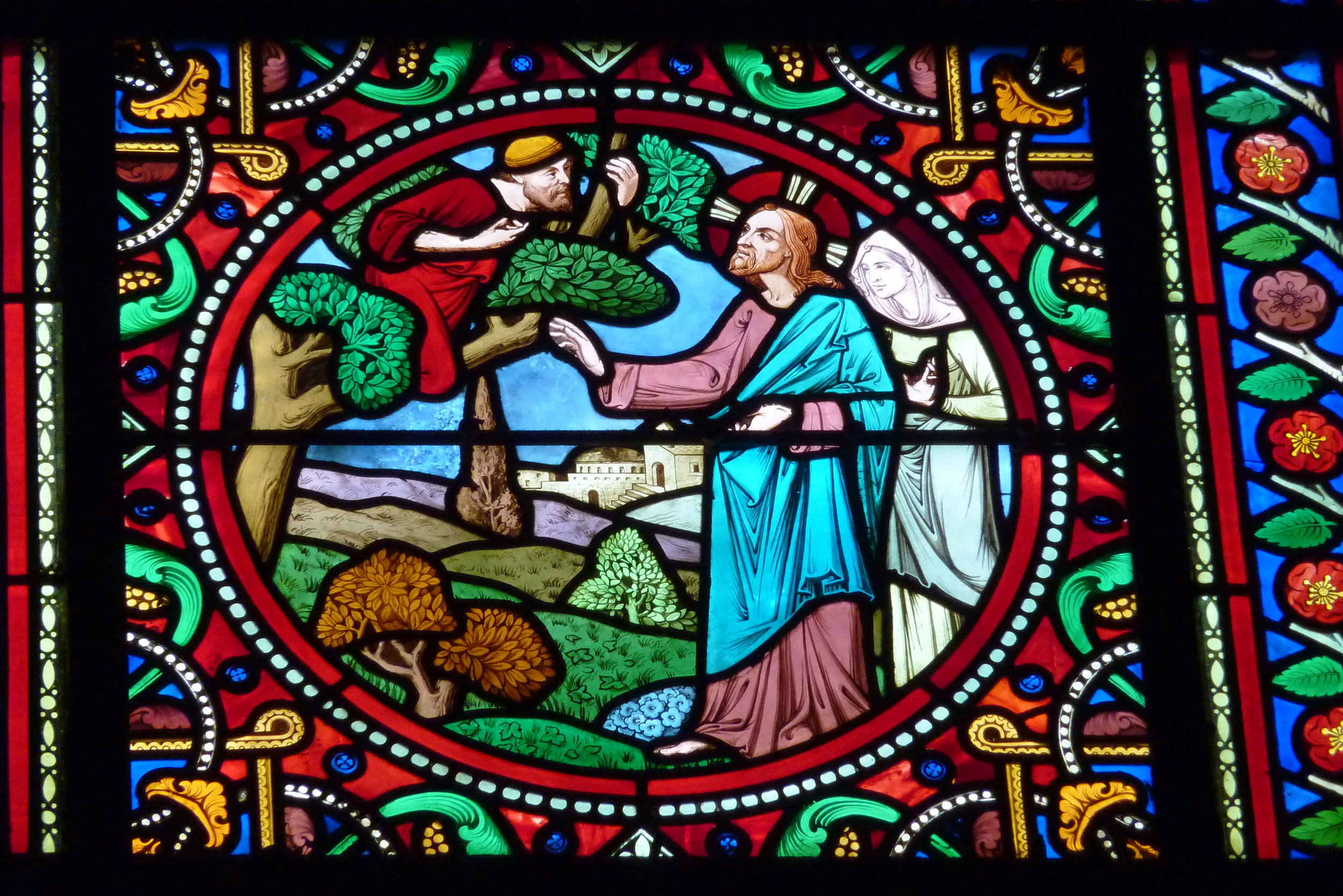
On my best days, I stand 5’6”. My wife, in a display of self-sacrifice typical of her, wore flats in our wedding so as not to—quite literally—show me up. The bond I feel to Zacchaeus, then, should come as little surprise. We have relegated his story from Luke 19 to the cute side of Christianity. If you grew up in an evangelical church, odds are you remember this tune:
“Zacchaeus was a wee little man, and a wee little man was he. He climbed up in a sycamore tree, for the Lord he wanted to see.”
A song like that never quite dislodges itself from your head, yet adult believers rarely sing it back or spend time considering Zacchaeus. Revisiting his brief moment within the story of Jesus reveals significant lessons and serious stakes. Zacchaeus isn’t just for children’s church or puppet shows—his interaction with Jesus raises implications we might rather avoid.
A RICH MAN BROUGHT LOW
Let’s quickly re-acquaint ourselves with Zacchaeus, this time with less music.
The first details Luke shares about Zacchaeus are his vocation and class. He clocked in and out as a tax collector, a vocation despised all along history’s continuum from Jesus’ day up through our own. It’s safe to assume Zacchaeus tried to dodge the question, “So, what do you do?” in social situations, though the story suggests he wasn’t invited to many parties.
Luke spells out Zacchaeus’ status as a matter of fact: “He was rich.” But his wealth didn’t come with a place of honor. As Jesus, the provocative religious teacher, walks through Jericho, Zacchaeus wants to see the man for himself, like everyone else in town. But he found himself crowded out and unable to see the mysterious rabbi.
“He was trying to see who Jesus was, but he was not able because of the crowd, since he was a short man. So running ahead, he climbed up a sycamore tree to see Jesus, since he was about to pass that way” (Luke 19:3-4).
On his way by, Jesus looks up and calls out, “Zacchaeus, hurry and come down because today it is necessary for me to stay at your house” (Luke 19:5). Jesus invites himself over to Zacchaeus’ house, pleasing the diminutive tax collector and flustering the crowd, who know not only what Zacchaeus does for a living, but what he’s like.
Jesus’ welcome and acceptance are not lost on Zacchaeus. Immediately, he pledges to give half of what he owns to relieve the poor and, hinting at ongoing sin, says he’ll repay “four times as much” as he has extorted from others (Luke 19:8).
Jesus, who always knew what he was doing, acknowledges he was after Zacchaeus’ heart from the jump and declares that salvation has come to Zacchaeus’ home. Then Jesus restates his mission and locates Zacchaeus within it: “For the Son of Man has come to seek and to save the lost.”
SEEING JESUS
Zacchaeus’ story isn’t about climbing trees. It’s about a change of heart, a reorientation of desire that expresses itself through action. If like Zacchaeus, we want to experience salvation, then his response to Jesus warrants deeper reflection.
Zacchaeus’ response to Christ was a desire to change the way he lived. Zacchaeus had little public credibility left, but he was willing to debase himself further to see who Jesus was. Paul puts the same desire in his own words: “More than that, I also consider everything to be a loss in view of the surpassing value of knowing Christ Jesus my Lord” (Phil. 3:8).
We sing words like these on Sunday mornings. In our public prayers, small groups, and coffee shop conversations, we claim we want to see and know God. But how many of us actually look for Jesus everywhere we go? How often do we consider knowing him—intimately, completely—as important as knowing about him?
Zacchaeus should be commended. Once he had even an inkling of who Jesus was, he put aside everything to see him more clearly. Will we follow his lead?
REJOICE AT AMAZING GRACE
Jesus’ outstretched hand of friendship to tax-collecting Zacchaeus laid the crowd’s heart bare. Rather than be amazed that Jesus wanted to spend time with this sinful man, they recoiled.
And so it is with us. We believe God can save the well-mannered pillar of our community. They’re already so good and so decent, we reason. We even recognize his intent with those on the other end of the spectrum, the poor or homeless person with whom we have no history.
We express less enthusiasm when Jesus begins to draw someone we can’t stand, someone who has hurt us, or someone we’ve watched lay waste to their relationships.
The childhood bully, the cheating spouse, the cheerleader for another political tribe. Can we find it within ourselves to recognize grace at work within them? Or will we grumble like the crowd, shaking our heads and wagging our fingers at Jesus?
A WHOLE GOSPEL
Even if you’re able to make peace with the story so far, Zacchaeus has to go and do something that completely meddles with our comfortable ideas of call-and-response, conversion, and repentance.
The evidence that he already has seen something in Jesus, that the Spirit truly is loosed within his heart, comes as he promises to restore what he has stolen and make others whole (v. 8).
We plunder others all the time, even when we don’t recognize it. We pinch a little dignity, steal a piece of their reputation in the eyes of others. What if the gospel, as it works within us, directed us to make others whole?
Our movement toward healing and restoration is not a means of earning favor with God. We can only make others whole because God has made us whole. He has restored all that sin, death and the locust has taken—and now, out of his storehouse supply (Phil. 4:19), we can play our small part, imitating him by doing the same.
BIG LESSONS FROM A LITTLE MAN
How different would our lives and relationships look if we adopted Zacchaeus’ mindset? We would repay any honor we’ve stolen, with interest (Rom. 12:10). Forgiveness withheld would be replaced with reconciliation. What we extract through shame and guilt would find its recompense in acceptance and affirmation.
Following in the footsteps of Zacchaeus, bending our gospel encounter into real life, we would pursue a whole and unified church by making others whole.
Zacchaeus was a wee little man, and he only gets ten verses in Scripture. But the lessons therein loom large. Disciples who truly want to see Jesus would do well to hear ourselves in his song and sing it over and over.
Aarik Danielsen is the arts and music editor at the Columbia Daily Tribune in Columbia, Missouri, where he also serves Karis Church as a lay pastor. Find his work at facebook.com/aarikdanielsenwrites and follow him on Twitter: @aarikdanielsen.

A Roadmap for Faith Among the Faithless

Most of us know Esther’s story from Sunday school lessons, storybooks, and cartoons. But there’s a real problem with most of these versions. They’re mostly wrong. Not all of them. Just most of them. They make Esther sound like Daniel. They present her as if she is a pillar of virtue, a gorgeous, dignified Jewish girl who wins the heart of the king through the beauty, humility, and character imparted to her by her noble cousin Mordecai. When a crisis comes, she is more than ready to sacrifice herself for the Jewish people, confident that doing God’s will is more important than saving her own skin.
At the very least, her story is more complicated than that. And much darker. It’s less VeggieTales and more Game of Thrones, with a lot more sex, murder, and impaling than the usual version of the story would imply. (There’s actually quite a bit of impaling.) Mordecai and Esther’s motivations are sometimes murky and sometimes blatantly self-serving. Unquestionably, Esther and her cousin are profoundly compromised people when we meet them, having abandoned most of their Jewish identity for a Persian one.
THE SCANDAL OF ESTHER
Martin Luther hated the book of Esther, wanting it struck from the canon. He said, “I am so great an enemy to the second book of the Maccabees, and to Esther, that I wish they had not come to us at all, for they have too many heathen unnaturalities. The Jews much more esteemed the book of Esther than any of the prophets; though they were forbidden to read it before they had attained the age of thirty, by reason of the mystic matters it contains.”
 For Luther, it was too Jewish, too heathen, and too scandalous. Yet these characteristics are what make the book so interesting.
Aside from Luther’s anti-Semitism (though one should be extremely wary of glibly setting that aside), the “too Jewish” charge is an interesting one. An annual feast called Purim commemorates the story of Esther, and in some communities, it’s the most celebrated feast and biggest party of the year. Why is that?
One answer is because for much of the history of the Jewish people, from Esther’s day to our own, Jews lived without a land of their own. They were in exile, looking for hope, for the promise that Yahweh hadn’t abandoned them. That’s the whole point of the story of Esther. Even in the darkest moments, when God seems absent, we can trust that he hasn’t abandoned us.
Novelist Walker Percy once wrote, “Why does no one find it remarkable that in most world cities today there are Jews but not one single Hittite, even though the Hittites had a great lourishing civilization while the Jews nearby were a weak and obscure people?”3 There’s something miraculous in the fact that God has sustained the Jews through multiple attempts to wipe them off the face of the earth, and the story of Esther attests to that miracle.
THE REAL MESSAGE OF ESTHER
For Christians, the story is a reminder that God doesn’t abandon his people, no matter how dark their circumstances, how compromised their hearts are, or how hidden he may seem.
Hiddenness is a theme that shapes the whole book of Esther. Mordecai and Esther have hidden identities. Haman—the story’s villain—has hidden motives. More important, God himself is hidden throughout the book. His name isn’t mentioned once, and his absence is a key feature of the story. God’s hiddenness is what makes Esther such an important book for our day too, a day when belief in God feels always resisted, always contested, when everything seems to have a natural explanation, and when our own experience often makes us feel as though God is, indeed, absent.
Luther’s charges—that it’s too heathen, too scandalous—are actually part of what makes the book brilliant. Other biblical characters, like Daniel, Joseph, and the apostles in the book of Acts, all exhibit tremendous faith in the midst of a hostile environment, and God shows up in dramatic, miraculous ways. But Esther and Mordecai are far frailer, more compromised, more human. They’re conflicted, out to save their skins and advance their careers or their social status. There is almost no religion in the book, only a call to fast that we can assume is also a call to prayer. So this is not a story about virtue and character, but about someone who has become acclimated to a godless world and has grown quite comfortable with it. It’s about compromise and crisis, and God’s way of preserving and renewing faith in the midst of it all.
DARE TO BE AN ESTHER?
When I was a kid in Sunday school, we used to sing a song called “Dare to Be a Daniel.” If you understand what’s happening in Esther’s story, you’ll never tell someone “Aspire to be an Esther.”
Yet this reality brings up a final reason this story is so important for us, especially now. Because if we’re honest, we do aspire to be an Esther—but for all the wrong reasons.
Esther embodies everything we think will make us happy. She is beautiful, rich, powerful; she has immense sexual charm and charisma; and she has a legion of servants at her beck and call. She’s kind of the Kim Kardashian of the Old Testament.
Why is Kim Kardashian so famous? Why does she show up on magazine covers, and why do entertainment shows and websites document her every move? It’s because her way of life is compelling. We think she has achieved the “good life”: fame, success, money, sex, power.
Esther embodies the same life . . . right up until her spiritual crisis comes (and Esther’s crisis, we’ll see, is every bit as spiritual as it is political). At that point, Esther has to reckon with God and her place as one of God’s people. She has to choose between power and weakness. Between safety and vulnerability. Between living a life of comfort and risking her life in hopes of saving her soul.
A STORY FOR OUR TIME
In [Faith Among the Faithless], I’ll retell the story of Esther. You’ll notice that I don’t quote the text much, and that’s intentional. For many of us, this is a familiar story, and I want to make the familiar strange, or at least fresh. If I have taken too many liberties, I apologize. I come from a long line of storytellers, and storytellers tend to emphasize the parts they like best. Here, I am not so much trying to entertain as to bring to your attention some of the details. I also hope to help you see these characters in their glorious, broken, and sometimes terrifying humanity.
I also want to retell the story because I think it is one of the best stories in Scripture. The characters, ironies, and plot twists make the story read like an Elmore Leonard novel. And . . . I hope that the elements of this story might surprise you a bit once again.
Most of all, I hope they give you a sense of the way forward in this strange in-between space we occupy. Whatever happens in the years and decades to come, we can be sure that faithfulness looks pretty much like it did three thousand years ago.
Sometimes it looks like Daniel: a steady path of spiritual formation and obedience. But sometimes, and perhaps more often than not in the world we occupy today, it looks more like Esther: a path of awakening, risk, vulnerability, and, ultimately, hope.
Content taken from Faith Among the Faithless: Learning from Esther How to Live in a World Gone Mad by Mike Ciosper, ©2018. Used by permission of Nelson Books, Nashville, TN.
Mike Cosper is the executive director of Harbor Media, a non-profit media company serving Christians in a post-Christian world. He served for sixteen years as a pastor at Sojourn Community Church in Louisville, Kentucky, and is the author of Recapturing the Wonder, The Stories We Tell, and Rhythms of Grace. He lives with his family in Louisville, Kentucky.

Are You Ashamed of the Gospel?
I share the gospel like it’s a gift card at a kid’s birthday party—an obligatory present I hope they don’t open in front of me. Know the feeling?
If so, then we’re in good company.
Timothy was a young man in over his head and out on his own. He was being sent into the marketplace, the town square, and people’s homes to tell them that Jesus was crucified, buried, then rose from the dead after three days and that this was good news for them, who were sinners by nature and separated from God.
A SPIRIT OF FEAR AND TIMIDITY
Timothy, the young mentee of the Apostle Paul, was known to be a reluctant leader who was often timid and fearful. For some reason, he was prone to sickness, so much so that Paul mentioned his “frequent ailments” and told him to stop drinking water only and instead to drink a little wine, which was helpful for controlling stomach infections in that day (1 Tim. 5:23). On top of that, Timothy was young for his position of influence.
Because of his natural bent towards timidity, his recurring sickness, and his youth, Timothy was tempted to be ashamed of the gospel. That was a bit of a problem for the man whom Paul commissioned to guard the gospel in Ephesus, where he had recently founded the church.
Timothy was being asked to take the gospel of Jesus into a culture that didn’t want to hear about it. The people of Ephesus were living in one of the wealthiest places in the world. Many of them would have been living comfortable lives and were perfectly content to appease the gods so they could continue their pursuit of pleasure and happiness.
Things were going pretty well for the Ephesians, so who needed God? Who wants to hear about a suffering God that was killed on a cross then raised from the dead, and is now calling us to lay our lives down and follow him?
No wonder Timothy was timid and tempted to be ashamed of the gospel.
And no wonder we’re timid and tempted to be ashamed. Surely you see the parallels in his task and ours? Like Timothy, you and I are called to take the gospel to work and into people’s homes in a time where many are apathetic or hostile to what they think of as Christianity. They’re not quite sure what it is, but they know they don’t want anything to do with it because they’re doing just fine. After all, they’ve got a roof over their head, a job that pays, and a smartphone in their pocket. Why add God to the mix when things seem to be going okay? Why can’t they just keep pursuing the American Dream?
These cultural pressures make it seem so difficult to share Jesus with our neighbors and friends and family, even though we believe it to be good news for them. Why is it so hard?
REMEMBER THE GOSPEL
Fortunately, we have a record of Paul’s advice to Timothy. In his second letter to the young Timothy, Paul writes,
“Therefore do not be ashamed of the testimony about our Lord, nor of me his prisoner, but share in suffering for the gospel by the power of God, who saved us and called us to a holy calling, not because of our works but because of his own purpose and grace, which he gave us in Christ Jesus before the ages began, and which now has been manifested through the appearing of our Savior Christ Jesus, who abolished death and brought life and immortality to light through the gospel.” – 2 Timothy 1:8-10
In this exhortation, Paul tells Timothy to remember the gospel. He tells Timothy not to be ashamed of the gospel because God saved and called him to a holy calling. God set Timothy apart. God called Timothy not because of his own merits but because of God’s own purpose and grace in Christ.
The same is true of you, if you’re a believer. God has set you apart. God did that not because of your own merits but because of his own purposes and grace which he gave us in Christ, which was his plan all along. Now that plan has manifested itself through the life, death, and resurrection of Jesus, the Messiah who conquered death and brought us life and immortality.
Paul was reminding Timothy of the gospel he believed. He was calling Timothy to preach it to himself, for it is in remembering the gospel we believe that we receive the power to proclaim it. As we preach the gospel to ourselves, we are reminded of its powers and God’s grace, and it gives us the strength to preach the gospel to our friends, family, coworkers, and neighbors.
Paul knew this from experience. He braved angry mobs and academic elites. He faced people from his own culture and background. Oh, and most of these people wanted to kill him. Yet he stood strong and shared the gospel with them anyways. How?
FINDING CONFIDENCE IN THE GOSPEL
Later in this passage, Paul tells Timothy exactly where he gets his boldness from when he says, “...I am not ashamed, for I know whom I have believed, and I am convinced that he is able to guard until that day what has been entrusted to me” (2 Tim. 1:12).
Paul isn’t ashamed of the gospel because he knows the power and majesty of the One he believed in. Paul’s faith in Christ convinced him that God is able to guard what has been entrusted to him, which was the transmission of the gospel to the nations.
Paul knew Jesus. He didn’t feel like he was on his own when he shared the gospel. He knew that God was ultimately in charge of the gospel he had been entrusted with—and God cannot fail. Even before time began, God had one plan for all of humanity—to rescue and redeem them by the blood of Jesus so that people from every tribe, tongue, and nation would bow down before him and scream out, “Holy, holy, holy is the Lord God almighty!”
Paul knew he was a chosen instrument. He knew he was important and loved by God. But he also knew that God could take the gospel to the nations with or without him, so it was simply an honor to participate in its spread during the short time he had.
The courage to share the gospel comes from the gospel. That’s what Paul means when he says to “share in suffering for the gospel by the power of God” (2 Tim. 1:8). God gives us the gospel, saves us by the gospel, then gives us the power to share the gospel.
DON’T BE ASHAMED
Are you ashamed of the gospel? Are you afraid to tell people about Jesus? Then remind yourself of the God who saved you.
When I’m fearful of sharing the gospel, I must remind myself of what I was like before knowing Christ—I was dead in my sins in which I once walked, following the course of this world, following the prince of the power of the air, carrying out the desires of my body and mind, and was by nature a child of wrath (Eph. 2:1-3). But God, being rich in mercy, because of the great love with which he loved me, even when I was dead in my trespasses, made me alive together with Christ—by grace I have been saved (Eph. 2:4-5)!
Oh, when I remember that God willed for his own Son to be crushed (Is. 53:10) that he might inherit broken, imperfect sinners like me, how can I not share his gospel? Father, keep the taste of your grace always on my lips and let me not shrink from lavishing it on your children. Remind me of the grace and mercy you poured out on me as I go and pour it out for someone else.
Grayson Pope (M.A., Christian Studies) is a husband and father of three, and the Managing Web Editor at GCD. He serves as a writer and editor with Prison Fellowship. For more of Grayson’s writing check out his website, or follow him on Twitter.

The Best Worst Day Ever

They had known him his whole life. As his aunt and uncle, they had watched him grow from a little boy into a man who had faithfully provided for his widowed mother and siblings. Then, as his public ministry began, they had followed him and had come to believe, however crazy the thought might seem, that their nephew, Jesus, was actually the Messiah, the One who would redeem Israel. But then the unthinkable happened. Right when they thought things were finally coming together, when Jesus had entered Jerusalem to songs of “Hosanna,” he had been betrayed, arrested, tried, and executed. The shock, fear, and grief that came crashing into their hearts would have been indescribable. Their dear nephew was dead. The Romans had done it again. Their nation would remain under their cruel oppressors.
And so, after a few days in hiding and mourning, when the Sabbath ended and they could travel, Cleopas and probably his wife, (another) Mary[i], began their journey home to Emmaus. It had been the worst weekend of their lives. But everything was about to change.
BURNING HEARTS
As they made the journey along the dusty road home, they were joined by a stranger. “What are you talking about?” he inquired. “Don’t you know what’s happened these last few days?” they answered.
They proceeded to describe how their dreams had been crushed beneath Rome’s heel. But then, as the stranger spoke to them, their hearts began to glow and then burst to flame again. Later they would say to their friends, “Did not our hearts burn within us while he . . . opened to us the Scriptures?” (Luke 24:32).
What set them on fire? What changed them? The resurrection and their new understanding of the Scriptures.
That Jesus would have risen from the dead was completely unthinkable to them, even though they had actually heard stories from those who had seen the empty tomb, and even though he had foretold it. They simply didn’t have a category for understanding what had just happened. So Jesus had to open both the Scriptures and their understanding. And that’s just what he did, “beginning with Moses and all the Prophets, he interpreted to them in all the Scriptures the things concerning himself” (Luke 24:27). And as he did this, their hearts, once shattered, cold, and unbelieving, were set ablaze.
In one short conversation, Jesus explained the meaning of the Old Testament to them. Although they were certainly familiar with it and undoubtedly knew that it foretold a Messiah who would bring redemption, they had misread it. They had assumed the Christ would be a powerful king who would establish an earthly kingdom, exalting their nation and expelling their oppressors. They had misread all the stories about Abraham, Israel, Moses, David, and Daniel as being about them and their ultimate earthly success. And it was their misreading that caused their confusion and sadness. So he opened their eyes and they began to see.
Filled with excitement and joy, they made the journey back to Jerusalem and brought the news to the eleven disciples. And then, the Lord “stood among them” (Luke 24:36) and repeated the same conversation with the whole group. He “opened their minds to understand the Scriptures” (Luke 24:45).
IT’S ALL ABOUT JESUS
What was the meaning of the Scriptures? What had Moses, the Prophets, and the Psalms been about? They were actually about the gospel.
Thus it is written, that the Christ should suffer and on the third day rise from the dead, and that repentance and forgiveness of sins should be proclaimed in his name to all nations, beginning from Jerusalem (Luke 24:46-47).
The entire corpus of the Old Testament was about the gospel, the good news of Jesus Christ, the God-Man who would become one of us, live perfectly, die shamefully, then rise and ascend bodily. It was about mankind’s need for redemption, as seen over and over again in the epic failures of every one of its “heroes.” It was about the suffering that everyone deserved and the patience and forbearance of the Lord who had held out his hands to a disobedient and contrary people “all day long” (Rom 10:21). And it was about the child of the woman who would trample under and crush Satan, the tempter (See Gen. 3:15).
But how would this happen? Shockingly, it would happen through the suffering of the only One who didn’t deserve to suffer, the Sinless Son. As much as his disciples had believed that Jesus was the Christ, they had missed this message entirely.
ARE WE MISSING THE POINT?
And so do we. We miss the message when we try to turn the Bible into morality tales that tell us how to have our best lives now. Be like Moses! Dare to be a Daniel! we’re told. We miss the message when we use it like tarot cards, predicting our personal future: Should I move to Atlanta? What does this verse say? And we miss the message when we read the Bible as though we’re doing our algebra homework, so we can get a good grade from God for the day.
The Bible, both Old and New Testaments, are about Jesus, our need for redemption from sin, new life, and his mission supply all that we need. It demonstrates the truth that all people are fallen and in need of redemption from outside ourselves. And it shows us where that redemption comes from: the second Person of the Trinity who took upon himself our flesh and our debt, lived the life no one had ever lived, died the death we all deserved, and then broke the power of the curse of sin for disobedience by rising on the third day.
What turned the disciples’ worst day into their best? Nothing less than the gospel. And when we read it the way he taught them to, our hearts will blaze into zealous fire too!
Elyse Fitzpatrick is a frequent speaker at churches, retreats, and large conferences such as The Gospel Coalition and True Woman. She has an MA in biblical counseling from Trinity Theological Seminary and has authored 23 books on daily living and the Christian life and lives with her husband in San Diego, California. Learn more at www.elysefitzpatrick.com.
[i] http://www.jesus.org/death-and-resurrection/resurrection/who-were-the-disciples-on-the-road-to-emmaus.html

6 Breathtaking Examples of Motherhood from History

Fifteen years ago, I was eight months pregnant and hungry—not just for food, but for godly wisdom on how to raise children who know and love the Lord. My husband and I had no idea how to be distinctly Christian parents to this baby that was on her way into our world. We spent my first Mother’s Day at a parenting conference, which began a lifelong quest to find out how moms before me raised their children in the Lord. History offers today’s Christian women “older women…to teach what is good…that the word of God may not be reviled” (Tit. 2:3-5).
Here are six historical moms who show us what it looks like to raise our children in the Lord.
MONICA – mother of Augustine of Hippo (332-387)
Monica mothered a man who became one of our most influential church fathers. Augustine shaped not only many of the doctrines central to the Christian faith, but his clear thinking and theology forged the church of the next millennia. Augustine was not always a follower of Christ, however. As a young adult, he rejected his mother’s faith with disdain. Unwed, he lived with a woman, fathered a child, and pursued a life of hedonism.
Monica’s early hopes were for her son to live a life of status and privilege, but they evolved into a drive to see her son saved. At 31, Augustine was in the midst of a noteworthy career in philosophy, education, and rhetoric when skepticism gave way under the Bishop of Milan’s influence and the power of his mother’s prayers as he surrendered to the Lord Jesus Christ.
Augustine was fully aware that his mother’s prayers were instrumental in his conversion. In his autobiography, Confessions, Augustine said, “My mother placed great hope in [God],” and she “was in greater labor to ensure my salvation than she had been at my birth.” He praises Monica’s persistent prayers on his behalf throughout all of his works. After her death, he grieved that she was "now gone from my sight, who for years had wept over me, that I might live in [God's] sight."[1]
Lesson for moms today: Labor in persistent in prayer (Phil. 4:6) for your children and rightly see their salvation as utmost of value. Invite God to change your worldly goals for your kids into Christ-centered ones.
SARAH EDWARDS – wife of Jonathan Edwards, mother of eleven (1710-1758)
Sarah was married to Jonathan Edwards, a Reformed preacher and theologian, and a key player in the First Great Awakening. The legacy of the Edwards’ home life is famously exhibited in a list compiled in 1900 of the life work of their eleven children and their descendants: college presidents and professors, lawyers and physicians, judges and senators, public servants from mayors to a U.S. vice president, authors, and hundreds of ministers and overseas missionaries. Sarah’s motherhood impacts every corner of American history.
Jonathan was known to be driven and passionate. He spent as many as thirteen hours a day studying. Visitors to the Edwards’ home report that though Jonathan was indeed involved in family life, the brunt of household duties—rearing the children and tending to guests—fell largely on Sarah. However, she created a happy home, an environment built on routine, rigor, and discipline.[2]
Lesson for moms today: Serve your family wholeheartedly, as to the Lord, trusting him to make himself known through you for generations to come (Col. 3:17). Through everyday acts of service, mothers can make a historic—and eternal—impact through their children.
SOJOURNER TRUTH – former slave, abolitionist, activist, and mother of five (c. 1797-1883)
Sojourner was born a slave in New York and first sold away from her parents at the young age of nine. Later she married an older slave, bore five children, and was widowed. In the years just prior to emancipation in New York, Sojourner was promised freedom by her master, who reneged after she completed the work they agreed upon. In response, Sojourner took her infant daughter and walked to freedom in broad daylight, saying that she had nothing to hide, as freedom had been promised to her. Her master eventually caught up with her, but her remaining year of servitude was purchased by an abolitionist family.
Shortly after gaining freedom, Sojourner learned that her former master had illegally sold her five-year-old son to a slaveholder in Alabama. Incensed, Sojourner set out to demand the return of her son. She personally navigated the judicial system in Alabama, took the issue to court, and won—making her the first black woman to win a case against a white man. Reunited with her son Peter, they moved to New York City where Sojourner heard the gospel and believed. Following her conversion to Christ, Sojourner said, “The Spirit Calls me and I must go.” She set out to be an abolitionist, women’s rights activist, and preacher of the gospel.[3]
Lesson for moms today: Pursue justice—no matter the cost. Be brave and committed to the truth. Love righteousness and justice (Ps. 33:5), not just at home, but all around you.
AMY CARMICHAEL – mother of hundreds (1867-1951)
Born in Ireland, Amy’s first ministry experience was in Belfast amongst “Shawlies”—impoverished girls who worked in the mills and could only afford to wear shawls rather than hats. After hearing Hudson Taylor speak, Amy felt called to missions overseas. She served briefly in Japan before an illness forced to return home. She suffered from neuralgia, a disease that caused great pain and weakness and required weeks of bedrest.
Despite her poor health, Amy remained steadfast in answering God’s call to share his love overseas. She set out for Bangalore, India in 1895 where she joined a band of Indian Christian women who traveled from village to village sharing the gospel. Amy worked hard to become fluent in Tamil and understand the Hindu religion and culture.
Along with her teammates, she established the Dohnavur Fellowship, which became a home for children rescued or escaped forced servitude in Hindu temples. Over time, Amy became Amma, or “mother,” to hundreds of rescued babies, children, and teenagers. About twenty years into her maternal role, she fell and was so badly injured that she was forced by restraints to stay in her bedroom for the rest of her life, which lasted another twenty years. That time, though undoubtedly painful on many levels, was not wasted. Amy welcomed little ones into her room and penned nearly 40 books.[4] [5]
Lesson for moms today: Lack of biological children doesn’t preclude you from being a mother. Be a mother to the motherless. Show your religion by loving the orphan (Jas. 1:27). Spend ourselves on the least of these. And don’t let anything stop you from proclaiming the gospel.
ALBERTA KING – mother of Martin Luther King, Jr. (1904—1974)
Alberta Williams King was a minister’s wife, an organ player and choir founder at Atlanta’s Ebenezer Baptist Church, member of the NAACP and YWCA, and mother of three children, including Martin Luther King, Jr.
In his autobiography, King said, “My mother confronted the age-old problem of the Negro parent in America: how to explain discrimination and segregation to a small child. She taught me that I should feel a sense of ‘somebodiness' but that on the other hand I had to go out and face a system that stared me in the face every day saying you are ‘less than,’ you are ‘not equal to…’ She made it clear that she opposed this system and that I must never allow it to make me feel inferior. . . . At this time Mother had no idea that the little boy in her arms would years later be involved in a struggle against the system she was speaking of.”
Six years after her son was assassinated, Alberta was gunned down while playing the organ at her church.[6]
Lesson for moms today: Champion the “somebodiness” inherent in all people because they are created in God’s image (Gen. 1:26-27) and teach your children to do the same.
ELISABETH ELLIOT – wife, missionary, and mother (1926-2015)
Elisabeth was born to missionaries and zealously pursued missions herself. After studying Greek in college, she went to Ecuador to share Christ with unreached tribes. Jim Elliot was also in Ecuador, and they were soon married. Along with a team of missionaries, the Elliot’s set out to locate and contact the Auca Indians who had previously killed everyone that tried to make contact.
When Elisabeth’s first and only child, Valerie, was ten months old, Jim and four other missionaries were speared to death when they reached with the Auca people. Undeterred from the mission, Elisabeth stayed in Ecuador with Valerie and continued pursuing ministry among the Auca.
Valerie recently said, “Because my parents prayed and hoped to bring Indians to the Lord, when my father was killed my mother had no plan or immediate thought she should leave Ecuador. Human fears would flood her mind, but verses from Scripture gave her peace and assurance we would be taken care of. Mother continued to work with the Indians and continued to pray for them. And the more that she prayed for them, the greater her love grew for these people in need of a Savior.”[7]
Lesson for moms today: Motherhood doesn’t preclude you from mission. Be a mom on mission. Go and make disciples of all nations (Matt. 28:19)—and take your children with you.
CONSIDER AND IMITATE YOUR LEADERS
The writer of Hebrews admonished early Christians to “Remember your leaders, those who spoke to you the word of God. Consider the outcome of their way of life, and imitate their faith” (Heb. 13:7).
These six women from history are leaders to the moms of today. Let’s imitate their faith as we seek to raise our children in the Lord.
Jen Oshman is a wife and mom to four daughters and has served as a missionary for 17 years on three continents. She currently resides in Colorado where she and her husband serve with Pioneers International, and she encourages her church-planting husband at Redemption Parker. Her passion is leading women to a deeper faith and fostering a biblical worldview. She writes at www.jenoshman.com.
[1] https://www.christianity.com/church/church-history/timeline/301-600/augustine-couldnt-outrun-mothers-prayers-11629656.html
[2] https://www.desiringgod.org/messages/sarah-edwards-jonathans-home-and-haven
[3] http://digital.library.upenn.edu/women/truth/1850/1850-16.html
[4] http://www.bu.edu/missiology/missionary-biography/c-d/carmichael-amy-beatrice-1867-1951/
[5] https://en.wikipedia.org/wiki/Amy_Carmichael
[6] https://kinginstitute.stanford.edu/king-papers/publications/autobiography-martin-luther-king-jr-contents/chapter-1-early-years

3 Ways Googling Hinders Your Growth and Your Church

Every day, I turn on my phone and scroll for wisdom. Sometimes it comes from friends that are friends in real life. Other times it comes from my carefully curated experts. There are some I go to for political analysis, and others for parenting advice. There are experts on theology, sexual abuse, and the commentators on racial division. They’re knowledgeable and instantly offer Biblical advice or encouragement.
But is this really what’s best for me or the church?
Not too long ago, if you had a parenting question you would call your mom. If you wanted a book recommendation, you would ask a friend, or if you had a question on a difficult passage of Scripture, you would wait to talk with your pastor or Bible study group.
Then the search bar arrived with its instant, reliable answers. The rise of social media makes the availability of information even faster as we can now turn to a host of people we have personally vetted to feed us answers. It is true that the internet is a wonderful tool in our day and age that enables us to gain wisdom and see the global church of Christ with incredible clarity. Still, there is an underlying danger when we start to use social media as our go-to for expert information. This pattern hinders not only our own growth but the growth of Christ’s church in several ways.
STEALING HUMILITY
One of the ways it hinders our growth is by robbing us of opportunities to learn through humility. When I’m in a tough spot with my young children, I’d rather send off a quick post to my homeschool group on Facebook than call an older mom in my church who has walked this path before me. I make all kinds of excuses, but in reality, I’d rather receive instant encouragement from strangers than become vulnerable and teachable in the community God has given me. The truth is it’s easier to turn to our friends on the internet for advice or even confess our sinful struggles because we do not live, worship, and learn alongside these saints each week. We feel safer and protected in our online bubbles, but our attempts to save face actually hinder our spiritual growth.
Often times the means of greatest growth and grace in our lives is not through the cheers of distant acquaintances, but through the humbling counsel of the people who know us the most. Of course, we can still use the internet for advice and even for friendships, but are there some conversations we aren’t having with saints in our local church because we fear to be vulnerable? Proverbs tells us that with humility comes wisdom (11:2), and three times in Scripture it is repeated that God gives grace to the humble (Prov. 3:34, Jas. 4:6, 1 Pet. 5:5, ESV). The cost of laying down our pride is worth the blessings of growth and grace we will receive in return.
THE BEAUTY OF THE BODY
Another way seeking all our answers online hinders our growth is by limiting our ability to see how the body of Christ works. There is a distinct difference in the way we feel the church through social media than through our local church down the road. I could ask my favorite author for a book recommendation, but their answer would not be as encouraging to me as when my pastor handed me a giant theology book and said, “Here you go, eat it one bite at a time.” While I have learned much from my favorite authors, they don’t know me like my pastor. He is the one who sees me each week and has heard my questions and what I’m passionate about. He knows how busy I am with three kids, which projects my family is working on, and he’s both challenging and encouraging me in a way that no far-off Christian writer ever could.
As brothers and sisters we are called to serve one another (1 Pet. 4:10, ESV), to encourage one another (Heb. 3:13, ESV), to teach one another, and to hold each other accountable (Col. 3:16, ESV). While these commands can be carried out on the internet, they begin and flourish in the local church.
What if along with racing to see those end-of-year book lists we stopped an elder and asked what book he recommends? What if we asked a godly teacher what reading plan she was going through? As we purposely take these questions to those around us, it blesses them as they are allowed to pour into us, while at the same time showing us the accountability of the body of Christ. No longer are we faceless avatars, but fellow laborers in our community. We assume the role of a saint who not only wants an answer but a chance to form deeper relationships in the body of Christ.
THE RISE OF CELEBRITY
Finally, seeking all our answers on our smartphones contributes to the Christian celebrity culture that continues to ravage the body of Christ. It’s easy to believe our favorite authors, the wittiest podcasters, or the famous pastors on our phones have it all together, that their words can be trusted the most. But the reality is that behind that screen they are the same, sinful, flawed, and gospel-needing people like those sitting next to us in the pews. We must remember it is not because of any special skill or importance that some are elevated, but it is because “God arranged the members in the body, each one of them, as he chose” (1 Cor. 12:18, ESV). Christ is the head, and he has made each member of the body in need of each other. Moreover, Paul tells us that the parts that seem weak are indispensable, and we should bestow the greatest honor on the parts which seem less honorable (v. 22, 23).
When we start to use our social media groups as our primary source of advice, we see Paul’s definition of the body of Christ upside down. We don’t see each other in desperate need of grace, but we instead elevate certain members and forfeit the value of the “lesser members” sitting next to us. This warped sense of the body of Christ feeds our own pride and eventually sets us up for crushing disappointment when any of our esteemed leaders show their faults. We can and should benefit from the wisdom of public leaders, but we must make sure to prioritize and esteem the local church members God has given us. When we do this, we protect not only ourselves, but also those very leaders in the public eye.
FINDING THE BALANCE
God is sovereign over the internet and our online relationships. We don’t need to pull the plug completely, but we do need to examine the balance we’re striking. There may be some tweets we shouldn’t send and some conversations we can wait to have face to face. In doing this, God strengthens not only our own congregation but the entire body of Christ.
Next time you’re tempted to ask your phone to function as your church, think of who in your church might be able to answer the same question.
Brianna Lambert is a wife and mom to three, making their home in the cornfields of Indiana. She loves using writing to work out the truths God is teaching her each day. She has contributed to various online publications such as Morning by Morning and Fathom magazine. You can find more of her writing paired with her husband’s photography at lookingtotheharvest.com.

Fixing Our Discipleship Deficiency

The gospel is the church's most precious gift to cherish, protect, and pass on. If we get the gospel right, we are on a holy and healthy journey into discipleship.[1] If we get the gospel wrong, we get everything wrong. Right now, we are experiencing a discipleship deficit. To her own detriment, the church in recent years has defined discipleship as optional, a choice and not a command.[2]
With the death of Christendom and the rise of secular postmodernity, the American church is now a mission field.[3] While Christianity is growing and flourishing in many parts of the world, it seems to be declining in America. The number of Christians and cultural strength of Christianity are both declining in the United States, even in the Bible Belt. The research and polling of George Barna and George Gallup consistently demonstrates that in terms of moral values and lifestyle choices there is little distinction between Christians and non-Christians within the United States.
Christianity in America seems to be compromised to the core.[4] How can this be?
GOSPEL BANKRUPTCY
Unfortunately, many pulpits lack the gospel and many pews lack discipleship. A church that is deficient in discipleship is deficient in its fundamental reason for existence.[5] The church must make Jesus’ final command her primary mission. In many churches, the Great Commission has been stated as the primary purpose of the church, but not obeyed. As Jesus’ last words, the Great Commission expresses his greatest passion and top priority. As stated in Matthew 28:18-20, the Great Commission is:
“And Jesus came and said to them, ‘All authority in heaven and on earth has been given to me. Go therefore and make disciples of all nations, baptizing them in the name of the Father and of the Son and of the Holy Spirit, teaching them to observe all that I have commanded you. And behold, I am with you always, to the end of the age.’”
Discipleship is, and always has been, Jesus’ plan A for the church—and there is no plan B. Robby Gallaty says, “A return to biblical discipleship will enact the reformation of the 21st century.”[6] God has not promised to bless good motives, dreams, and innovation. He has promised to bless his plan; his plan is that the church would be about making disciples who make other disciples.[7]
Robert Coleman, the author of The Master Plan of Evangelism, said, “The solution to our ineffectiveness as church is to train people to be spiritually mature, fully devoted followers of Christ, and in turn to have those disciples make more disciples.”[8] If the church is going to be good at anything, it must be good at making disciples.
AN AGE OF DISCIPLESHIP
In his book Discipleship Essentials, Greg Ogden writes, “I can only hope and pray that a century from now (if Christ has not returned) when church historians study the time in which we live that it will be called an age of discipleship.”[9] An age of discipleship characterized the early church—after the Great Commission—and can still characterize us.
Faithfulness to the Great Commission must begin with a true understanding of the gospel message. The gospel fuels the Great Commission. If Christians should be crystal clear about one thing, it’s the gospel. Christians are meant to be “unashamed of the gospel” (Rom. 1:16) because it is “the power of God for salvation” (1 Cor. 1:18) and is intended to be “of first importance” (1 Cor. 15:2).
Bill Hull has said, “One of the perennial tasks of the church is to reexamine the gospel we preach and believe, alert to ways it has been reshaped by the idols of our culture.”[10] Why? Because the gospel we believe will determine the disciples we make. We cannot make Christ-like disciples with a flawed gospel message. Pharisees were good at making disciples. Unfortunately, according to Jesus, they were making disciples of hell (Matt. 23:15). The Pharisees were perpetuating a false gospel that led to damnation. Consider the Apostle Paul’s warning in Galatians 1:9: “If anyone is preaching to you a gospel contrary to the one you received, let him be accursed.” As in the Apostle Paul’s day, false teachers and false gospels abound in our culture.
The goal of the Great Commission is to get the true gospel to all nations. Jesus said, “this gospel of the kingdom will be proclaimed throughout the whole world as a testimony to all nations, and then the end will come” (Matt. 24:14). Disciple-making will lead to the consummation of God’s Kingdom!
If you’re in a church setting that seems to have lost sight of the Great Commission, be encouraged because change is possible. I know because I’m watching it happen all around me. As a result of taking God at his Word and obeying it, I’m watching older men and women invest their lives in younger men and women. I’m watching families engage in foster care, adoption, and special needs ministry as a result of a God-given burden for the lost and marginalized. I’m watching our people serve the homeless and mentor children of our local public schools. I’m watching parents disciple their kids. I’m watching people obey God’s call to plant churches. Our people are praying more, giving more, and going more.
I am witnessing God awaken and empower his people to the importance of disciple-making. I am seeing God transition a traditionally non-disciple-making church into a disciple-making church. It seems God is doing this, not just in our church, but all over the world.
COUNT THE COST
To be clear, the cost of transitioning to a disciple-making church may be great, but the cost of non-disciple-making is much greater. If you are a church leader, allow me to offer some practical suggestions on transitioning to being a disciple-making church. These are things we either have done or are implementing, at Calvary Baptist Church:
- Define the gospel. Define the gospel as revealed by God through his Word. Communicate your gospel definition consistently (in spoken word and in writing) from all platforms, including the pulpit, small groups, meetings, etc. Define key terminology, such as “disciple” and “discipleship.” Don’t allow terms like “discipleship” or “making disciples” to become catchwords and lose their meaning.
- Develop a simple and clear disciple-making strategy. If you don’t have a plan to fulfill the Great Commission, you probably don’t intend to do it. Aim to minimize programs and maximize the process of disciple-making. Once developed, communicate this strategy clearly, consistently, and visibly. Make sure your people understand how you intend to lead them to make disciples. Lead in disciple-making by example. Realize there is no perfect or silver bullet strategy. Whatever your strategy, prayerfully depend on God to transform and grow people.
- Champion disciple-making. Lead your church to rediscover the importance of disciple-making through teaching, example, and individual conversations. Use all means necessary to call your members to be disciple-makers. Championing discipleship means conveying disciple-making as a lifestyle, not a program.
- Equip your people for the work of disciple-making. It seems many people in our churches understand the importance of disciple-making, but are paralyzed because they have no idea what to do or where to start. Relentlessly equip your people to make, mature, and multiply disciples of Christ. Train them. Challenge them. Lead them step-by-step.
- Celebrate “wins” in disciple-making. Your church will celebrate what you celebrate. Take every opportunity to celebrate the work God is doing in the area of discipleship.
- Be patient. Disciple-making is a marathon, not a sprint. The journey is the destination. Because the concept of disciple-making will always be new for some, they may be hesitant to get started, and slow to mature and multiply. At our church, we are in year seven of our transition and we are seeing more and more fruit because we are remaining patient and not giving up. Pray for God to awaken your people—as he has you—to the importance of discipleship.
- Trust God. Take God at his Word. The beauty of the command to “go and make disciples” is that the church is never left to do the work of God apart from the power of God. The promise of Jesus’ power ( 28:19) and Jesus’ presence (28:20) should give you assurance and confidence in making disciples.
BEAR THE FRUIT OF DISCIPLESHIP
This is not an exhaustive list, but it’s a good place to start. According to the Westminster Shorter Catechism, “the chief end of man is to glorify God and enjoy Him forever.” How does one glorify God? I believe Jesus provides the best answer in John 15:8, “My Father is glorified by this: that you produce much fruit and prove to be My disciples.”
God’s ultimate plan is for his children to bring glory to his name as disciples of Jesus Christ. As God brings history to an end, disciple-making is the only cause that will matter. Let’s count the cost of being disciple-making disciples, and then let’s get to work.
Dan Tankersley (M.A., New Orleans Baptist Theological Seminary) currently is Discipleship Pastor at Calvary Baptist Church of Dothan, Alabama. He is married to his beautiful bride Anna, and they have one son, Elijah. Dan's passionate about spurring God's people on to make disciples.
[1] Ibid., 14.
[2] Hull, Bill. Conversion and Discipleship. Grand Rapids, MI: Zondervan, 2016, 21.
[3] Hull, Bill. The Disciple-Making Church. Grand Rapids, MI: Baker Publishing Group, 2.010, 56
[4] Ogden, Greg. Discipleship Essentials. Downers Grove, IL: InterVarsity Press, 2007, 7.
[5] Ibid., 11.
[6] Gallaty, Robby. Rediscovering Discipleship. Grand Rapids, MI: Zondervan, 2015, 87.
[7] Harrington, Bobby and Josh Patrick. The Disciple Maker’s Handbook. Grand Rapids, MI: Zondervan, 2017.
[8] Putman, Jim and Bobby Harrington. DiscipleShift. Grand Rapids: Zondervan, 2013.
[9] Ogden, Greg. Discipleship Essentials. Downers Grove, IL: InterVarsity Press, 2007, 8.
[10] Ibid., 23.

The Acid Test of Our Profession

The acid test of our profession is this: What do you feel like when you are sitting in an air-raid shelter and you can hear the bombs dropping round and about you, and you know that the next bomb may land on you and may be the end of you? That is the test. How do you feel when you are face-to-face with the ultimate, with the end? –Martyn Lloyd-Jones[1]
The apostle Paul counsels Christians, “Examine yourselves, to see whether you are in the faith” (2 Cor. 13:5). Of the many different criteria one could utilize to determine whether someone is a true Christian, is any one test better than the rest? Martyn Lloyd-Jones, the Doctor, believes that one is. He calls it the “acid test” of Christianity: “the most delicate, the most sensitive test, the test of tests.”[2]
THE DOCTOR'S DEFINITION: THE ACID TEST
The Doctor begins by considering three different tests of genuine faith: (1) the doctrinal test, (2) the morality test, and (3) the experience test.[3]
The first, the doctrinal test, Lloyd-Jones calls “the test of orthodoxy.” He argues that orthodoxy is vitally important, and one cannot be a Christian without it, but it is inadequate by itself because one can have dead orthodoxy.
The second, the morality test, says that moral living is what matters because what people do is more important than what they say. Once again, the Doctor says that morality and conduct are absolutely essential; one cannot be a Christian without holy conduct. Yet one can live a moral life and not be a Christian. Nonbelievers can live highly ethical and moral lives. The test of conduct is not a test that can stand on its own.
The third test is the test of experience. Once again Lloyd-Jones agrees that experience is a vital part of the whole Christian position. One must be born again to be a Christian. But the cults also stress experience, and thus experience by itself is not a reliable guide. Lloyd-Jones mentions that one of the most dramatic changes he ever saw in a person’s life happened when a woman he knew joined the cult of Christian Science. “She was entirely changed and transformed—a great experience!”[4] If we put up experience as the ultimate standard, the acid test, we are left without any reply to these various cults.
In the end, the Doctor evaluates each test and pronounces that each one is essential but not sufficient to stand on its own. The three are not “delicate and sensitive enough to merit the term acid test.”[5] But the Doctor puts forth one great standard of analysis that does incorporate all the other assessments (mind, heart, and actions): the hope of glory. He argues that 2 Corinthians 4:17–18 is the acid test of Christianity: “For this light momentary affliction is preparing for us an eternal weight of glory beyond all comparison, as we look not to the things that are seen but to the things that are unseen. For the things that are seen are transient, but the things that are unseen are eternal.”
The particular sermon in which he makes this point was preached and recorded in 1969 in Pensacola, Florida, during a hurricane warning. The organizers moved up the Sunday evening service to 2:00 p.m. so that congregants could be in their homes by the time Hurricane Camille struck the city. The Doctor proclaimed that the ultimate proof of a Christian profession comes in moments that bring us face-to-face with time and eternity, life and death. Therefore, he addressed the impending danger of the hurricane in a direct way. One man present for the sermon said he had a sense that “the sermon was not in the Doctor’s plan but was one he had used during the Blitz and thought appropriate for the occasion.”[6]
Lloyd-Jones’s sermon references the Nazi Blitzkrieg upon London in World War II. The Nazis conducted an air strike in which they ruthlessly and relentlessly dropped bombs on London. The whole nation was ready to lose heart. People could find no hope in what they saw outside their windows. They could see no reasons to rejoice in the rubble. The Doctor says that the true criterion of Christianity is not how you feel in pleasant circumstances or while you are reading theology. It is how you respond to the worst circumstances.
THE REAL TEST
 The acid test of our profession is this: What do you feel like when you are sitting in an air-raid shelter and you can hear the bombs dropping round and about you, and you know that the next bomb may land on you and may be the end of you? That is the test. How do you feel when you are face-to-face with the ultimate, with the end?[7]
Next, Lloyd-Jones works back through the three assessments one by one to show that the hope of glory in the face of death is a sufficient answer to guarantee all of the others.
I suggest that this is the acid test because, you see, it covers my orthodoxy. The only people who can speak like this are those who know whom they have believed, those who are certain of their faith. Nobody else can. Other people can turn their backs upon disasters and whistle to keep up their courage in the dark, they can do many things, but they cannot speak like this without being orthodox.[8]
The hope of glory also covers the criterion of morality. “This test also guarantees conduct and morality, because the trouble with people who merely have an intellectual belief is that in the moment of crisis their faith does not help them. They feel condemned. Their consciences accuse them. They are in trouble because they know they are frauds.”[9]
The hope of glory also incorporates the proof of experience.
And in the same way this test also guarantees the experiential element, the life, the power, the vigor. People cannot speak like this unless these truths are living realities to them. They are the only ones who are able to look upon calamity and smile at it and refer to it as “our light affliction, which is but for a moment,” which “worketh for us a far more exceeding and eternal weight of glory.”[10]
The hope of glory gives probing proof of a true Christian profession because calamity will cause other, counterfeit hopes to come crashing down. When all earthly hopes are lost, a Christian still has hope because his hope is fixed not upon this passing world but upon the world to come.
Content taken from Lloyd-Jones on the Christian Life: Doctrine and Life as Fuel and Fire by Jason Meyer, ©2018. Used by permission of Crossway, a publishing ministry of Good News Publishers, Wheaton, Il 60187, www.crossway.org.
Jason C. Meyer (PhD, The Southern Baptist Theological Seminary) is pastor for preaching and vision at Bethlehem Baptist Church and associate professor of New Testament at Bethlehem College and Seminary. Prior to coming to Bethlehem, he served as dean of chapel and assistant professor of Christian Studies at Louisiana College. He is the author of Preaching: A Biblical Theology and a commentary on Philippians in the ESV Expository Commentary.
[1] Setting Our Affections upon Glory: Nine Sermons on the Gospel and the Church (Wheaton, IL: Crossway, 2013), 16.
[2] Ibid., 13.
[3] Ibid., 13–15.
[4] Ibid., 15.
[5] Ibid.
[6] John Schultz, forward to Lloyd-Jones, Setting Our Affections upon Glory, 9.
[7] Lloyd-Jones, Setting Our Affections upon Glory, 16.
[8] Ibid.
[9] Ibid.
[10] Ibid., 16–17.

Spelunking Our Way to Salvation

My favorite Batman movie is The Dark Knight Rises. And not just because it has Christian Bale, and not Ben Affleck, playing Batman. I love this film because it resonates with my soul. Batman’s back is broken in a battle against the evil Bane, and the Dark Knight is left for dead in a dark, inescapable pit. Bruce Wayne, our strong hero, is broken, hopeless, confused, and trapped in a deep cave.
Caves are dark, musty, disorienting, and lonely. And sooner or later, we all end up in one.
Not literally, of course. But in the course of life, our souls stumble into caves of brokenness, pain, hurt, grieving, and suffering. We feel like David fleeing his family, friends, throne, land—everything—because his son Absalom betrayed him. This is the cave.
LIFE IN THE CAVE IMPACTS EVERYTHING
Loss brings us to the cave. Loss of friendship, loss of dreams, loss of family, loss of hope. Often, loss is accompanied by even more loss, as friends, fans, and supporters who were around distance themselves.
The cave feels like rock bottom. The damp, cold, walls are all you have to cling to.
Life in the cave impacts everything.
Your finances, marriage, and career can be great, but it doesn’t matter—you’re in the cave. What brought you here hurt so deeply that the pain bleeds into every part of life.
If part of you is in the cave, all of you is in the cave.
WHAT DARKNESS BRINGS TO LIGHT
In the cave we are stripped of every hope other than Jesus. Hobbies, entertainment, food, and iPhones—none of these can help. They can distract from the pain, but some caves are just too dark to find comfort in distractions.
In the cave our pride is crushed. We become more aware than ever that Jesus—only Jesus—will never leave or forsake us. We are stripped of all the idols that are so prevalent outside.
In the cave we find out how much we really love Jesus, and how much we really trust him.
Caves are lonely, but you’re never alone in the cave. We have a God who does some of his best work in the cave. This makes even the darkest of caves beautiful.
The God of the Bible is a good God. He uses our pain and suffering, our brokenness, to bring about something beautiful. He uses all things for the good for those who love him (Rom. 8:28). He woos us in the cave.
CAVES REVEAL US
Spelunking is the exploration of caves. Spelunkers grope around in the dark with headlamps lighting their way. They never know what they might find, but in the end, the adventure reveals something about themselves.
I wouldn’t wish time in the cave on anyone, yet I wouldn’t trade my time there for anything. I’ve been in it more than once, and I would rather not enter it again.
Yet I know I would not know Jesus the same way I do today without times in the cave. Just as a miner delves deeper into the mountain to uncover flecks of shimmering gold, there is beauty in the depths of our cave because God is committed to mining our hearts and revealing the stone encasing them.
Caves reveal our hearts, and they reveal our closest friends. Jonathans reveal themselves to Davids in the cave. No friend can live there with you. Only you and Jesus can dwell there, but true friends can and will visit you in the cave. They will enter your pain, listen, pray, comfort, point you to Jesus and help in any way they can. It is these friends that help you see the dim, distant light that is the way out. These friends are priceless. They have seen the way out, and even though they don’t dwell in the cave, they can offer tremendous hope.
Jesus uses friends and family to help us take our first wobbly steps out of the cave. He uses them as a due north, a compass in the midst of a confusing, lost and dark time. That doesn’t mean everyone who abandons you is not a true friend. Certainly, some are inch-deep friends, but many just do not have the courage, maturity or time to visit you in the cave.
Some are in a cave of their own, and some are in such a time of joyful frolicking outside they don’t even recognize others are in caves. Don’t hold on to bitterness. While it reveals your truest and deepest friends, the cave also grows our compassion for those in caves and those who have no idea what this pain is like. We bear with one another and we grow in learning how to share one another’s burdens.
PURIFIED FOR COMMUNITY
While the cave is a very lonely place, the Lord never intends to use it for isolation, but as a furnace to melt away the impurities of superficial, self-centered community, purifying us for community with him and a newfound compassion for others.
Time in the cave deepens our longing for authentic Jesus-centered community, marked by dependence, brokenness, vulnerability, confession, and love. He reveals true friends, but also makes us into true friends, the kinds of friends that would visit others in the cave.
Jesus and Peter are restored after Jesus enters his cave, but Judas and Jesus were not. Finding the way out doesn’t mean every relationship is restored, but that every person is forgiven and Jesus is fully trusted to be the just judge. Confess all that you can confess, own all that you can own, and leave God to judge the rest. This helps us get off the floor of the cave.
Look to Jesus. Trust Jesus. Some things will reveal themselves over time as you wait upon the Lord. Sometimes the Absaloms show themselves to be Absalom, and the Jonathans show themselves to be Jonathan. Other times we never know. Either way, trust in Jesus. He is trustworthy.
THE ULTIMATE CAVE IS EMPTY
How do we know he is worthy of our trust? Because he willingly entered into the ultimate cave in order to keep us out of an eternal one.
Jesus left a heavenly paradise willingly to enter a cave on Earth. He was respected, followed, sought after and had a ministry that impacted villages, cities, towns and drew audiences from royalty to peasants and the sick. He walked with close friends, had moments of validation and appreciation both from people and from the Father. He knew life on Earth outside the cave.
He also knew ministry in the caves. He was a man of sorrows. He wept. He knew betrayal, abuse, false accusations, and abandonment. He knew physical, spiritual and relational pain and torment.
On the cross, he took on the sins of the world. He took every man, woman and child’s personal cave, all the sin they committed to get there, and all the sin committed against them that sent them there.
Jesus entered a very real cave. He was beaten, mocked, abused, abandoned and buried in a dark, cold, musty cave and left breathless, lifeless, dead. The king of heaven was crucified on a cross and buried in a cave. He didn’t have to do this. But he chose to out of love for us!
The Dark Knight Rises ends with Batman learning from his past and coming out of the cave stronger than ever. He defeats Bane, saves Gotham, and marries Catwoman.
Jesus is better. He defeated the ultimate cave. The stone was rolled away, the cave is empty, and Jesus is alive!
Jesus heals, restores, saves and resurrects. We have hope new life will come bursting forth from our deep, dark caves because Jesus Christ burst forth from his.
We get to ask for help, prayer, and friendship and be honest about our condition. And even in the darkest cave, we can have hope, knowing no cave is permanent for those who have trusted in Jesus.
And one day he will make all things new, even us. He will shine brighter than the sun, wipe away every tear, and turn every dark cave into a life-giving meadow! All creation will join together in worshipping and praising our King Jesus! And we will frolic for all of eternity, together in community, with him.
In the meantime, let us fix our eyes on Jesus, in both the meadows and the caves. Let us rejoice with those who rejoice, and mourn with those who mourn. Living like a true friend to those around us who are in the meadow or in the cave, always pointing to the one who truly will never leave them or forsake them, always pointing to Jesus!
Jake Chambers is the husband to his beautiful bride Lindsey, and a daddy to Ezra, Roseanna, Jaya and Gwen. Jake is passionate about Jesus and helping others meet and follow Jesus. He helped plant Red Door Church in San Diego and enjoys serving the local and global church through preaching, teaching, listening and praying.

Repentance: The First Step Out of Racism

Martin Luther King Jr. famously pointed out that Sunday mornings are “the most segregated hour in America.” Sadly, this still rings true as most churches in the West are still predominantly monocultural, despite neighborhoods around them becoming more and more diverse. The church, as an outpost of Jesus’ coming kingdom here on earth, is supposed to be a reflection of that final heavenly state. Yet many looking in might observe an unspoken reality of segregation inside our churches and mistakenly think following Jesus results in relationships between a bunch of people with the same skin color.
Some denominations and networks even urge their leaders to follow a “homogenous unit principle” that teaches how to gather a church core based on cultural commonalities further perpetuating this problem. That may be a savvy method for growing a business, but it is a thoroughly unbiblical way to build a church. How do we allow the scales to fall off of our eyes in order to long for the multicultural beauty of heaven to be realized here in our midst on earth?
A good place to start is to take to heart the vision of heaven’s citizens as being comprised “from every tribe and language and people and nation” (Rev. 5:9), and then asking God to change our hearts to actually desire and work to see that reality in our churches.
FROM PRIVILEGE TO PEACE
Another Martin Luther kicked off the Reformation with these words: “When our Lord and Master Jesus Christ said, ‘Repent,’ he willed the entire life of believers to be one of repentance.”
What place has repentance played in your spiritual journey? If it hasn’t played a central role, you might reconsider Jesus’ command to “repent and believe in the gospel” (Mark 1:15). This gospel says that apart from trusting in Christ’s death on your behalf and miraculous resurrection, the only thing you deserve is death and hell.
And if you’re white like me, the privilege you experience is a gift—not a right. What would it look like to humbly follow Jesus in casting aside your privilege to imitate him (Phil. 2:6-8) for the benefit of those “strangers” (Heb. 13:2[1]) in minority cultures around you?
Martin Luther King Jr. noted that “Injustice anywhere is a threat to justice everywhere. We are caught in an inescapable network of mutuality, tied in a single garment of destiny. Whatever affects one directly, affects all indirectly.” Now, fifty years after his martyrdom, those words are just as true as they were then. If we don’t seek to end injustice for those of other cultures, it is a threat to the existence of justice in our own bubbles. All humans bear the imago dei, and injustice to any of them is an assault on that image.
Many of the unchurched folks in America are seeking answers to systemic racism and injustice that mark those in minority communities. God has revealed answers to these problems in Scripture and in the person of Christ, who broke “down in his flesh the dividing wall of hostility” and created “in himself one new man in place of the two, so making peace, and [reconciling] us both to God in one body through the cross, thereby killing the hostility” (Eph. 2:14-16).
Those in a position of power and privilege should initiate this ministry of peace and reconciliation (2 Cor. 5:18).
UNITY IN BELIEF, DIVERSITY IN BELONGING
One day we will share God’s perspective. On that day we “shall know fully, even as [we] have been fully known” (1 Cor. 13:12). We’re given insight into that perspective in Revelation, where the people of God’s prayers look much different than ours. There, God’s people long for him to purge sin from the earth entirely. The prayer of the martyrs:
“They cried out with a loud voice, ‘O Sovereign Lord, holy and true, how long before you will judge and avenge our blood on those who dwell on the earth?’ ” (Rev. 6:10)
What’s remarkable about this passage is not that these martyrs are crying out for vengeance, but that they are doing so with one loud voice. Not many voices, but one—unified. They embody the “one man” of Ephesians 2 above.
These folks are with Jesus in paradise (Luke 23:43), and yet we are given a glimpse into their focus on the events transpiring on earth. They are eager for God to execute his vengeance on sin and injustice. So eager, in fact, that their pleas form one voice. So while we rate worship services based on what we get out of them, the saints in heaven are in solidarity that God’s wrath against wickedness and rebellion (which includes turning a blind eye to injustice) is an agenda item worthy of their fervent prayers.
If we sense a dissonance between our prayers and those of the saints in heaven, maybe that’s because we haven’t quite grasped that “network of mutuality” that exists between this earth and the new earth that is to come. Are we blind to injustice around us? Have we hunkered down in bunkers of believers to keep the world out? What kind of witness are we presenting to a world that is aching for reconciliation between races when the church—God’s proclamatory outpost—is silent on these matters?
LINKING THE LUTHERS
Jesus Christ came as the ultimate prophet in order to deliver us from ignorance. In recent months God has taken me on a personal journey in which he has opened my eyes to the injustice and pain of those in minority cultures. Having new insight into a topic to which I was formerly ignorant has burdened my conscience to share insights with others in majority cultures. It has also revealed places in which I myself have sins of a racial nature. God is gracious to forgive the repentant sinner and unite those who were formally hostile.
It may be uncomfortable to embrace, but the prayer for the earth to reflect heaven means striving for a diverse church. Uncomfortable? Absolutely. But violent? Never! And that’s where I see a huge link between the two Luthers.
Martin Luther the reformer understood that the church was to be comprised of a repentant people; a people that shun the ways of the world and its pride. He was adamant that the Civil Rights movement should be a peaceful one. He winsomely cast a broad vision in which black children played in harmony with white children. He knew his Bible, that’s where the vision came from. He was martyred for his zeal in proclaiming the coming peaceful kingdom.
What does it look like for us white folk to follow Martin Luther in repentance realizing our hands are not free from sin and blood? What does it look like for us to follow Martin Luther King, Jr. in seeking an end to injustice everywhere?
It’s easy to build a church on a “homogenous unit principle.” But any foundation other than Christ is sinking sand. The world is capable of imitating and building similar structures because they don’t require the work of the Spirit. The church that reflects heaven is a safe place for people of all backgrounds to belong because the only thing they will have in common is Christ.
When we agree on that, it will drive us to our knees to pray, be humbled, and welcome in those that are unlike us—because in our brokenness we have a lot more in common than we might see with worldly eyes. I’m praying for a Church in the West that reflects heaven: united in the belief that God saves sinners from his wrath, but diverse enough for all who believe to belong regardless of class or color.
[1] The Greek word translated “strangers” is “xeno” the root of “xenophobia.”
Sean Nolan (B.S. and M.A., Clarks Summit University) was born and raised in Upstate New York where he is now returning to plant Engage Albany, a church in the heart of the capital. Prior to that, he served at churches in Troy and Maryland and taught hermeneutics. He and his wife, Hannah, are raising three kids: Knox, Hazel, and Ransom. You can read all of Sean’s articles here.
[1] The Greek word translated “strangers” is “xeno” the root of “xenophobia.”