

Rhythms of Life-Giving Groups: Word and Prayer

When Jesus spoke, people listened. He didn’t come to put an end to the Old Testament law but instead to “fulfill” it—to bring it to completion and fullness by rooting God’s ways in the hearts of God’s people. In our community groups, we can encourage one another in a number of spiritual rhythms—Bible study, confession, prayer, and so on. But how might our small groups actually learn together how to meditate on God’s Word?
THE RHYTHM OF SCRIPTURE
Our community groups can go beyond increasing knowledge to actually cultivate and practice devotional Scripture reading together. Devotional Scripture reading, or biblical meditation, has often been described as a middle road between reading and prayer: Our minds are engaged in God’s Word, yet our words come directly from our heart and are expressed to our Father in prayer. This is a reading for the purpose of increased fellowship with God together.
Learning to Meditate Together
For centuries biblical meditation has been practiced both individually and communally, and we can restore this practice in our small groups today. The church fathers spoke of “descending with the mind into the heart”—a helpful phrase describing biblical meditation. Meditation engages the mind by focusing it on God’s Word. In the midst of a thousand concerns and thoughts, it directs our minds to stillness on God’s Word in his presence. Like a centripetal force, meditating on Scripture slowly pulls us inward toward the center of communion with God.
The best place to begin Scripture meditation, whether individually or in a group, is with the Book of Psalms. We must remember the Psalms were written for congregational use; they were penned to be read aloud, sung aloud, and prayed aloud with others. As Eugene Peterson once noted, just as a farmer uses tools to cultivate the ground and produce crops, so we can use our prayers to stir up our hearts and become more like Christ.
In other words, if our prayers are tools, the Psalms are our toolbox. God has given us 150 rich, impassioned songs and prayers for our devotional life. Unlike any other genre of the Scriptures, the psalms enable us to express ourselves, understand our own hearts, find perspective for our circumstances, give language to our emotions, and pray God’s Word back to him.
In our group prayer, we can pray the psalms to our Father in a powerful way—together, we can descend with our minds into our hearts.
Here are two recommendations for making the most of these prayers.
First Reading: Content and Meaning
Gather your group and introduce the topic of biblical meditation. Before beginning your reading and prayer time, ask the Lord to bless your time of reflection together.
In this first reading, read the psalm aloud. Since it was written to be read (or sung) aloud, there’s likely a natural rhythm and flow to it. The first time through, get a feel for the psalm’s content and pause for a moment whenever you see the word Selah. After the first reading, take about five minutes to ask basic questions about the psalm’s content and meaning. What was the psalm’s original context? Was the psalmist primarily writing a private prayer or a congregational song? How would you put the message of the psalm into your own words?
Second Reading: Application and Meditation
Remind one another that the goal of devotional reading is increased fellowship with God, not merely understanding the psalm. With a basic understanding of the psalm’s content and meaning, now read the psalm aloud again, this time more slowly and with longer pauses. As one person reads the psalm, the rest of the group can follow along in their Bibles or simply close their eyes and listen. The goal is to personally absorb the psalmist’s prayer as much as possible. When you reach a Selah, pause for a few moments and reflect silently on the previous stanza.
After this second reading, take twenty to thirty minutes to discuss the psalm’s movements in a more personal way. How do you resonate with the psalmist’s cries for help? Where do you see yourself similarly in need of God? What aspects of your life are driving you to seek refuge in the Father?
THE RHYTHM OF PRAYER
Descending Into the Heart
After your discussion time, close with prayer together. A great exercise for our prayer lives is to learn to reword and then pray the psalm aloud. Take turns doing this, putting the most significant or applicable part of the psalm into your own words and praying it to our Father. Use the language of the psalm and add your own requests, praise, and prayer for others. (This exercise will be awkward the first time or two, but don’t get discouraged.)
In our groups, we have found new life in this historic pattern. Slow, meditative reading of Scripture, heart-level discussion and application, and deep personal prayer have drawn us closer to God and to one another. Groups can practice this kind of Bible-based prayer with visitors and non-Christians present, so long as it’s explained well. We’ve found that outsiders expect us to be doing spiritual things, and are refreshed by a group of people who long to be more deeply connected to God’s presence.
Prayer Together
Of course, prayer in community group doesn’t always feel this majestic. In most community groups I’ve been a part of or led, prayer has become just a way of listing others’ needs out loud to God. We try hard to summarize Frank’s work situation, try not to be condescending as we pray for Jim and Amy’s struggling marriage, and make sure we “lift up” Sue’s second cousin’s knee soreness. My goodness, this doesn’t feel significant at all.
So, why is praying together important as a community group?
Think back to Jesus’s life and ministry again. In his famous teaching on prayer in Matthew 6:5-15, it’s important to note that the Lord’s Prayer seems to be instructing us in a prayer that we could offer together: “Our Father… Give us… Forgive us… Lead us…” Prayer certainly can and should be practiced in private, but it’s instructive that the pattern our Lord gives us in his most famous prayer is a shared prayer.
In the same way, our heavenly Father wants us to come to him together with our needs and problems. Following the pattern of the Lord’s Prayer, we have the opportunity to pray for each other’s needs and so intercede on their behalf. As we pray for others in their presence, they feel God’s love and presence. Similarly, we can pray boldly together for God to advance his kingdom and then live that prayer by faith together.
Think about it: Where did you learn how to pray? Probably from watching another person praying for you or around you. I learned prayer from my father around the dinner table, from my earliest community group leader when we blessed dinner, from my wife when our sons have been sick, from my pastors when we have gathered to plead with God for renewal in our midst.
Praying together is an essential aspect of community life and, along with the other rhythms and practices, it enables a life of growth in Christ.
Taken from Life-Giving Groups: "How-To" Grow Healthy, Multiplying Community Groups by Jeremy Linneman (Copyright 2017). Used with permission.
Jeremy Linneman is lead pastor of Trinity Community Church in Columbia, Missouri. He was previously a community pastor of Sojourn Community Church in Louisville, Kentucky for seven years. Jeremy's recent writing projects include Life-Giving Groups; How to Grow Healthy, Multiplying Community Groups and the Grace is Greater Small Group Kit. He and his wife, Jessie, have three sons and spend most of their free time outdoors.


That Awkward Moment When Shame Entered the World
We’ve all had weird, awkward moments with others. You probably hate those moments as much as I do. You say something but it doesn’t come out right, and what comes out is embarrassing. Your embarrassing little quip is then followed by what is probably a few seconds, but seems like an eternity of strained silence. You then feel the need to explain, but you just end up digging a deeper hole for yourself. You wish one of your listeners would rise to your rescue, but no one does. Finally something else happens that grabs everybody’s attention, and the horribly awkward moment ends. But it doesn’t really end for you; you carry it with you for the rest of the night. In fact, it is the pain of the moment that wakes you up the next morning. A few years later, that awkward moment has morphed into a humorous moment, and you retell the story over and over again to the delight and amusement of your friends.
THE FIRST AWKWARD MOMENT
I want you to think today about the most horribly awkward moment in human history. This one wasn’t a minor moment of embarrassment, and it will never morph into a humorous story. As you read the account, you know you are dealing with something so shocking and out of place that the world will never be the same again. Every time I read this account, I want to weep. Every time I think about it, I am hit with the painful thought that it really did happen and that we still see its results in our lives today. When you read it, you better know that this is not the way things were meant to be, or you will never understand the biblical story, and Christmas will never make the kind of sense that it should make to you.
Here is the Bible’s account:
And they heard the sound of the Lord God walking in the garden in the cool of the day, and the man and his wife hid themselves from the presence of the Lord God among the trees of the garden. But the Lord God called to the man and said to him, “Where are you?” And he said, “I heard the sound of you in the garden, and I was afraid, because I was naked, and I hid myself.” He said, “Who told you that you were naked? Have you eaten of the tree of which I commanded you not to eat?” The man said, “The woman whom you gave to be with me, she gave me fruit of the tree, and I ate.” Then the Lord God said to the woman, “What is this that you have done?” The woman said, “The serpent deceived me, and I ate.” (Gen. 3:8–13)
Adam and Eve had just endured the first awkward, embarrassing, shame-inducing moment between them. For the first time they realized that they were without clothing, and they felt instant shame. This is an immediate clue that their disobedience had destroyed their innocence, and human relationships would never be the same again. But that sad and shameful moment pales in comparison to what happened next.
THE AWKWARDNESS OF SIN
God was walking through the garden, and rather than being filled with awe and joy at the thought of his presence, Adam and Eve were filled with fear. Their reaction was weird, awkward, and unusual. They had been designed for intimate, moment-by-moment, loving, and worshipful communion with him. They were made to delight in God and he in them. They were created to live in an unbreakable bond of love with him. So their reaction seems strange and out of place. It tells us that something has gone drastically wrong.
God notices that they have not approached him with the usual expectant joy, and so he calls out to them, inquiring where they are. Adam answers and confesses that he was naked and afraid. The effects of sin are immediate and catastrophic. The bond between God and mankind has been broken. Fear has replaced love. Hiding has replaced communion. Adam and Eve have not only damaged their spirituality, but have lost a huge chunk of their humanity. It is a tragedy of historic and universal proportion. Made to live in the center of God’s love, people hide from him. In the psyche of every human being since lives this weird and uncomfortable battle between hunger for God and a desire to hide from him.
JESUS HAS BROKEN THE AWKWARDNESS
Sin has broken the most important relationship in all of life, the relationship between people and their Creator. This separation alters everything in each of our lives. That’s why it is so wonderful and encouraging to know that Jesus came to earth to be the Prince of Peace. Through his life, death, and resurrection, he would make peace between God and us. By his righteous life, he would earn our acceptance with God and purchase our right to be God’s children.
It is this vertical peace that then allows us to live in peace and harmony with one another. The fearful awkwardness between us and God has been forever broken by Jesus, so we can run with confidence into God’s presence and know that he will never turn us away.
Content taken from Come, Let Us Adore Him: A Daily Advent Devotional by Paul David Tripp, ©2017. Used by permission of Crossway, a publishing ministry of Good News Publishers, Wheaton, Il 60187, www.crossway.org.
Paul David Tripp is the president of Paul Tripp Ministries, a nonprofit organization. He has been married for many years to Luella and they have four grown children. For more information and resources visit paultrippministries.org.

Male or Female: Fidelity to Your Sexuality

Let’s probe a bit further into what it means that God created us male and female. But before we do that, we should take a small step back and consider something even more basic. Each of us is created either male or female. This may seem so obvious that it’s not worth stating, but given the challenges we face, it does need to be pointed out. It’s the clearest thing we can say about being created in the image of God. All of us are either one or the other. The tragic developmental anomaly of intersex notwithstanding, there really is no third option; there is just this basic dual reality.
SEXUALITY AS VOCATION
 When God created you in his image as male or female, he called you to a certain way of life—as either a male or a female. By virtue of being created in the image of God as male or female, you have a call on your life; you have a vocation. It is your most basic vocation, your most fundamental job in life: to joyfully embrace and faithfully embody your sexuality—whether male or female—for the good of others. God’s first call on our lives is to acknowledge rather than deny our sexuality. We are to rejoice in it rather than seek to downplay it. We are to lean into it fully rather than avoid it entirely. We are to use our sexuality to bless others rather than neglect it to the loss of others. And we are to embrace its limits rather than try to transcend it.
There is always the temptation to depart from God’s call on our lives as either male or female, to downplay or even deviate from who God has made us to be. Tragic things happen when we begin to despise our own sexuality and the bodies God has given us. When we fail to thank God for who he has made us to be and allow ingratitude to define our attitude toward God, the results can be very serious and sad. This is what Paul describes in Romans 1:21, where both men and women find their lives going off the rails in sexual ways, precisely because they failed to honor God or give him thanks.
Melinda Selmys, in her book Sexual Authenticity, describes how for years she wrestled with her own sexuality. She was a professed, practicing lesbian who underwent a profound transformation and eventually got married to a man. She explains how significant change came when she began to come to terms with her own sexuality and with who God had made her to be as a woman:
"I realized that my own sex was not inferior, that its strengths throughout the ages had always been strengths, that its contributions to the world were not second-class or insignificant. It was here, in this, that the cracks opened enough that I could risk falling in love with a man. Suddenly, I was not an interloper on his territory, trying to seize his castles and make them my own.
I had my own kingdom, my own square of land, my own integrity. I did not need to demand power: I had it. I did not need to take something of value away from him and hold it to ransom: I had valuable things of my own. At last, I understood something of who I was. Not lesbian. Not bisexual. Not gay. Not straight, either. But a woman, made in the image and likeness of God. In possession of myself, with the right and the ability to give the gift of myself to another, sincerely, in love."
To be created in the image of God as male and female means that each of us is either male or female. We are called to embrace who God has made us to be, whether male or female. We must be faithful to our calling as male or female and must own who we are sexually as one of God’s greatest gifts to us—for the good of others.
MALE AND FEMALE: COMPLEMENTARITY IN OUR SEXUALITY
The truth that God has made us male and female is very good news. God not only created two genders, male and female, with unique and glorious and mysterious differences; he made these two genders complementary. They don’t simply fit side by side, like peanut butter and jelly; they fit together in an interlocking pattern like puzzle pieces. They have been created for each other, to complete each other in the most profound sorts of ways. This means that to be faithful to your own sexuality, whether male or female, you can’t idolize your own sex—as though your sex is the be-all and end-all of the human race. Sure, there’s a place for donning the “Girls Rule” T-shirt or descending into the “man cave.” Yes, there’s a place for same-sex friendships and even a little “bromance.” But the relationships we have with those of our own sex should not replace or exclude the beautiful dynamic at work when we relate to those of the opposite sex.
We need opposite-sex relationships not only to complement and strengthen the other sex but to learn more about our own sex. Women learn who they are as women by interacting with other women but also with men. So, too, men learn who they are by interacting not only with other men but with women as well. Interaction with the opposite sex is essential to our growth and self-understanding as creatures made in God’s image as male and female. Karl Barth put it brilliantly: “It is always in relation to their opposite that man and woman are what they are in themselves."
Think about what this means practically. You won’t grow into the kind of person God wants you to become if you don’t have meaningful relationships with those of the opposite sex. You can’t, because the opposite sex isn’t just some strange creature from another planet, but it is God’s gift to you, as your complement, whether you are male or female.
Of course, one of the most obvious ways this interaction between the two sexes takes place is in marriage. But that’s not the only place we interact meaningfully (even if not sexually) with the opposite gender. If you are a man, you interact with the opposite sex all the time—mothers, sisters, friends, employers or employees, teachers, coaches, classmates, neighbors, aunts, cousins. So too, if you are a woman, you encounter men all the time—fathers, brothers, friends, employers or employees, teachers, coaches, classmates, neighbors, uncles, cousins.
Don’t overlook these opportunities to learn about what it means to be who God has called you to be, whether male or female. We should grow to appreciate the distinctive yet complementary strengths males and females bring to every task, whether planning a party, running a business, cheering from the sidelines of a soccer game, or raising a family. We should not only appreciate but be dazzled by these complementary differences.
Excerpt from Mere Sexuality: Rediscovering the Christian Vision of Sexuality by Todd Wilson (©2017). Published by Zondervan. Used by permission. Purchase a copy.
Todd Wilson (PhD, Cambridge University) has spent over a decade in pastoral ministry and is currently the Senior Pastor of Calvary Memorial Church in Oak Park, Illinois. He is the cofounder and chairman of The Center for Pastor Theologians, a ministry dedicated to resourcing pastor theologians. Todd has authored or edited a number of books including Real Christian: Bearing the Marks of Authentic Faith and The Pastor Theologian: Resurrecting an Ancient Vision. Todd is married to Katie, and they have seven children.

Featured Book | A Guide for Advent: The Arrival of King Jesus

As the season of Advent comes into view, we wanted to invite our readers to pick up our resource, A Guide for Advent: The Arrival of King Jesus. With essays that will help you  focus on the meaning and anticipation of the Advent season, this guide will help you walk closer to Christ as the day we celebrate his birth draws close.
Enjoy this excerpt from our Executive Director, Jeremy Writebol, and pick up the ebook or paperback in time for the first Sunday of Advent, December 3.
focus on the meaning and anticipation of the Advent season, this guide will help you walk closer to Christ as the day we celebrate his birth draws close.
Enjoy this excerpt from our Executive Director, Jeremy Writebol, and pick up the ebook or paperback in time for the first Sunday of Advent, December 3.
The Greatest Fear
What is the single greatest fear that most people have about the Advent season, especially Christmas Day? I doubt it has to do with finding the perfect gift. Nor does it seem like the inevitable holiday weight-gain would rank as the greatest fear. Debates over religion and politics at the dinner table might earn a higher rank but even those fights are nothing compared to a deeper fear of the soul.
I believe it to be the lack of presence. Not a lack of presents (or gifts) but a lack of presence. No one wants to be alone during this season. We sing songs about being home for Christmas. Many Christmas films riff on the theme of being separated from family and loved ones at Christmas. We cower at the thought of waking up to ourselves with no lit tree, no joyful laughter, and with nobody to share the day. Consider the very ghosts that haunted Scrooge in Charles Dicken’s A Christmas Carol, they haunted him with lonely Christmases. Studies indicate that depression hits widows and widowers deepest at the holidays. I can almost guess that a full 98% of people reading this article would prefer to have someone, even if they didn’t really like them, to be with on Christmas over spending it with no one at all.
What is it about Advent that reveals this fear in almost all of us? If we look at the very nature of what it means we will find the very reason being physically alone during this season troubles so many. At its core it is more than just remembering the coming of God into our existence, Advent is about the actual presence of God in our existence. It’s the one season that reminds us that God is with us. So, when we consider a season that tells us God is with us and yet functionally experience it in loneliness a massive discord hits. The discord, for most, isn’t with God. It’s within ourselves. We should be experiencing presence. We should be with others and God should be with us.
Presence on the Way
Four hundred years is a long time to wait. The United States of America has barely existed for half of that time. It would be nearly impossible to understand the absence and silence from God for that amount of time. However, that is exactly where the people of Israel were. National culture and identity would go through an immense rewriting if it had been four hundred years since you had a prophetic word from the national center of worship activity. Certainly brief and dim glimpses of recovery and hope came and recharged everyone’s expectations but they were just that, brief and dim. Sure, they had the prophetic words of old to lean on. Isaiah did promise Emmanuel, even if that was seven hundred years ago.
Then, rumors started cropping up. Angelic visitations occurred. Barren old women conceived. Kings from the East traveled West. A nation immigrated within itself because of a census. A virgin was with child. Then, the rumors died down. Things went back to normal for another thirty years until a shabbily dressed man like Elijah began to speak for God in the wilderness. He was no respecter of persons and called kings, priests, and publicans to repent. A nation finally received a prophetic word: “The Lamb of God who takes away the sin of the world is present. God is with us. Emmanuel has come.”
Yes, Emmanuel, God with us. He was attested to be God by his words and works by doing things only God could do. God with us possessing authority to drive out sin, devils, and death. God with us doing justice, loving the outcast and the stranger. God with us dinning with the drunkards, the harlots, and the sinners. God with us clothed in the material flesh of our bodies. Emmanuel experienced the physical limitations, pains, and agonies of our condition. God with us bearing the wrath of God in our place for our offenses against God and taking our very own death-blow. God with us being laid in a tomb dead for three days, he, God with us, was miraculously raised to glorious new life again by the power of God–securing resurrection life for all who trust in him. God with us sent his eternal presence to indwell and empower us for lives of glory and mission. He hasn’t left us, in fact, God with us has come, became flesh, and lived in our very domain and gifted us his eternal presence so we would always be with him.
Jeremy Writebol is the Executive Director of GCD. He is the husband of Stephanie and father of Allison and Ethan. He serves as the lead campus pastor of Woodside Bible Church in Plymouth, MI. He is also an author and contributor to several GCD Books including everPresent and That Word Above All Earthly Powers. He writes personally at jwritebol.net.

The Wastefulness of God

EFFECTIVE. EFFICIENT. PRACTICAL. It is remarkable how often one hears these words in the world of Church, Inc. Their frequency may reflect our desire to be wise stewards of the resources God has entrusted to us, or they may reflect the influence of a culture that strives for control and values ROI (return on investment) above all else. I suspect both motivations are at play.
 Scripture rightly warns us to be careful with money. It is a tempting master broadcasting a siren promise of omnipotence—the power to control one’s life and circumstances. We have all heard the heartbreaking stories of pastors lured into wealth’s maelstrom. We have also heard the stories of ministries that simply mismanaged their finances and slowly, quietly disappeared beneath a tide of debt. Regularly telling these tales of woe keeps church leaders vigilant. They provoke us to be effective, efficient, and practical. But might these values carry a hidden danger, perhaps even more perilous than wealth?
When efficiency becomes an unquestioned value within Church, Inc., we risk embracing the ungodly ethic of utilitarianism. Rather than seeing people as inherently valuable regardless of their usefulness, we begin to wonder how we might extract more money, volunteer energy, missional output, or influence from them. Our goal as pastors shifts from serving and equipping to extracting and using. Rather than asking how we might love someone, we wonder how we might leverage them, and we can hide these ungodly motivations from others (and even from ourselves) by appealing to the universally celebrated virtue of stewardship. After all, isn’t it poor stewardship to have a CEO sitting in the pews every week and not utilize his wealth and leadership capacity for the church? And would a good steward invest the church’s resources into young adults who are too transient to become leaders and too poor to give back?
We condemn our culture for devaluing human life it deems useless—the unborn, the elderly, the mentally disabled, the immigrant, the poor, etc.—yet the same utilitarian values of efficiency and practicality that fuel these societal sins are no less common within the church. As ministers of the gospel of Christ, we must stand boldly against the popular belief that everything and everyone exists to be useful. We must remember that in His grace God has created some things not to be used, but simply to behold. After all, the Lord not only created a garden for the man and woman with every tree that was useful for food, but also every tree that was beautiful to the eye (Gen. 2:9). Sometimes we are the most like God when we are being the most impractical.
The graceful, “wasteful” nature of God was revealed shortly before Jesus’ death. While reclining at a table, a woman poured a very expensive ask of oil upon His feet. When His disciples saw this, they were appalled. Like many church leaders today, they could only see through the lens of practicality. “This ointment could have been sold for more than three hundred denarii and given to the poor,” said Judas, and the disciples rebuked the woman.
“Leave her alone,” Jesus shot back. “Why do you trouble her? She has done a beautiful thing to me.”
For those who believe that the beautiful must submit to the practical, it is impossible to view the woman’s action as anything but wasteful. The disciples saw the spilled oil as a lost opportunity. To them the oil was only a commodity to be utilized and exchanged for a measurable outcome. What they interpreted as a waste, however, Jesus saw as priceless. He recognized the spilled oil as beautiful, impractical worship. True worship can never be wasteful because it seeks no return on investment. True worship is never a transaction. It is always a gift—an extravagant, “wasteful” gift.
Perhaps our captivity to efficiency, like that of the disciples, explains the dismissive posture many pastors have toward the arts. Sure, we appreciate beautiful architecture, music, and paintings if they serve the practical goal of communicating a biblical truth or drawing people through the church’s doors. But art for art’s sake? How could that possibly glorify Christ? Why would that be a wise investment?
Artists who cultivate beauty in the world remind us that the most precious things are often the least useful. Artists provoke us to see the world differently—not simply as a bundle of resources to be used, but as a gift to be received. Therefore, the creative arts serve as a model of God’s grace, and how the church affirms and celebrates the vocations of artists is likely to inform its vision of God. As Andy Crouch said, “If we have a utilitarian attitude toward art, if we require it to justify itself in terms of its usefulness to our ends, it is very likely that we will end up with the same attitude toward worship, and ultimately toward God.”
To combat the utilitarianism of our culture, and to foster a right vision of God, perhaps the church needs to learn to be more wasteful rather than less. Maybe there is a time for the voices of practicality to remain silent as the artists prophetically call us back to extravagant worship, to behold God rather than to use Him. And maybe it is good to embrace the impracticality of having young children, the mentally handicapped, and other “useless” people in our worship gatherings as a way of valuing what the world discards, detoxifying such ungodly values from our own souls.
And perhaps the church should spend money on what the world deems impractical and wasteful. When the voices of the world cry out in protest against the church, as they inevitably will, maybe the voice of Jesus will speak in defense of His precious, often useless bride: “Why do you trouble her? She has done a beautiful thing to me.”
Taken from Immeasurable: Reflections on the Soul of Ministry in the Age of Church, Inc. by Skye Jethani (©2017). Published by Moody Publishers. Used by permission.
Skye Jethani is an author, speaker, consultant and ordained pastor. He also serves as the co-host of the popular Phil Vischer Podcast, a weekly show that blends astute cultural and theological insights with comical conversation. Skye has authored three books, The Divine Commodity: Discovering a Faith Beyond Consumer Christianity, WITH: Reimagining the Way You Relate to God, and Futureville. Skye and his wife Amanda have three children: Zoe, Isaac, and Lucy and reside in Wheaton, IL.

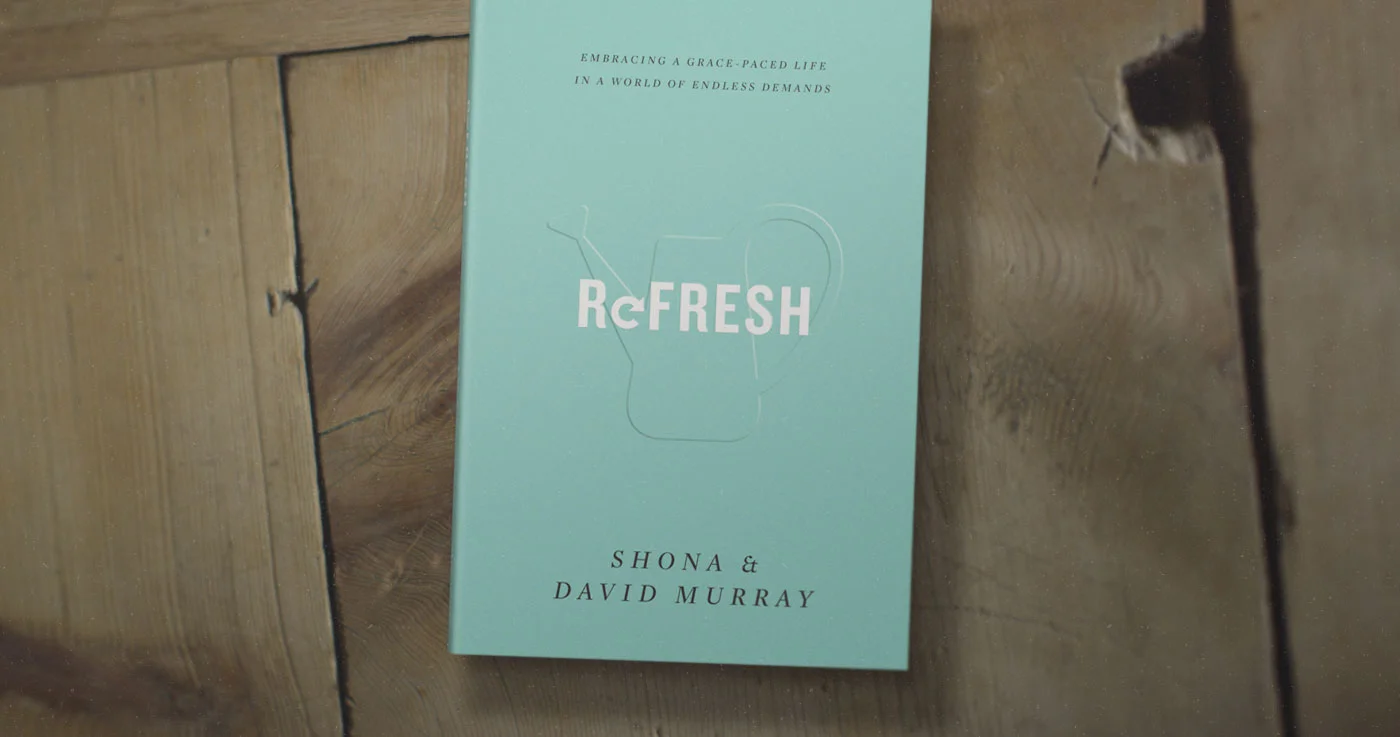
How to Turn Down the Volume of Your Anxiety
Perhaps you’ve met Ms. Frantic. She arrives at the gym at 8:00 a.m. Hours later, she’s still pounding the treadmill, pumping iron, and powering away on the rowing machine, barely stopping to catch snatched sips from her water bottle. She looks exhausted, miserable, and ready to faint, but still she goes on. You ask her why she is doing this, and she replies, “Because I must.” When you press her, asking, “But, why must you?” she looks at you strangely, and impatiently exclaims, “I don’t know, I just must! There’s always more to do.”
Ms. Reflective also starts bright and early at 8:00 a.m., but she’s different. She uses the same machines and works equally hard at points, but not all the time. Every now and then, she enjoys a drink of refreshing cold water. Sometimes she pauses to look out the windows and simply watch the world go by. She laughs at the children splashing in the nearby swimming pool. She even spots a friend exercising and has time to wave, give a big encouraging smile, and sometimes chat.
Now ask yourself, “Which of these two images reflects how I live my life before God?” Am I Ms. Frantic or Ms. Reflective? Am I overworking and over-stressed, or am I taking time to think and to enjoy God’s world?
A MARTHA WORLD
“Women Are Working Themselves to Death,” warned a recent headline.[1] It was based on a joint study by Ohio State University and The Mayo Clinic that compared almost eight thousand men and women over a thirty-two-year period and found that working over forty hours a week did serious damage to women’s health, causing increased risk of heart disease, cancer, arthritis, and diabetes.[2] Working sixty or more hours a week tripled the risk of these conditions. Not surprisingly, the report’s lead author, professor Allard Dembe, warned: “People don’t think that much about how their early work experiences affect them down the road. . . . Women in their 20s, 30s, and 40s are setting themselves up for problems later in life.” Unexpectedly, the risks are elevated only for women, not for men. Further analysis led the researchers to conclude that the greater risk to women is not necessarily because women are weaker but because they are doing so much more than men:
"In addition to working at a job, women often come home to a 'second shift' of work where they are responsible for childcare, chores, housework, and more, according to sociologists. All of this labor at home and at work, plus all the stress that comes along with it, is severely affecting women. Research indicates women generally assume greater family responsibilities and thus may be more likely to experience overload compared to men."[3]
Professor Dembe also pointed to less job satisfaction among women because they have to juggle so many obligations at home as well. But this is not a problem just in the greater culture; it’s a problem in the Christian population too. A survey of over a thousand Christian women, sponsored by Christian Woman magazine, found that 60 percent of Christian women work full-time outside the home. Reflecting on this, Joanna Weaver, author of Having a Mary Heart in a Martha World, commented, “Add housework and errands to a forty-hour-a-week career, and you have a recipe for weariness.” But she also warned homemakers: “Women who choose to stay at home find their lives just as full. Chasing toddlers, carpooling to soccer, volunteering at school, babysitting the neighbor’s kids— life seems hectic at every level.”[4] Maybe you’re now seeing Ms. Frantic in the mirror or hearing her in your heart and mind.
OUR INNER ORCHESTRA
Every Christian wants to know God more; few Christians fight for the silence required to know him. Instead, we spend our days smashing stillness-shattering, knowledge-destroying cymbals on our ears and in our souls. And with so many gongs and clashes in our lives, it can sometimes be difficult to isolate and identify them. So let me help you do this and then provide some mufflers.[5]
First, there’s the din of guilt, the shame and embarrassment of our dark moral secrets: “I should have . . . I shouldn’t have . . . I should have . . . I shouldn’t have . . . ” clangs noisily in our deep recesses, shattering our peace and disturbing our tranquility.
Then greed starts banging away in our hearts with its relentless drumstick: “I want it. I need it. I must have it. I will have it. I got it. I want it. I need it.” And so on.
And what’s that angry metal beat? It’s hate stirring up malice, ill will, resentment, and revenge: “How could she . . . I’ll get him! She’ll pay for this!” Of course, anger often clatters into the cymbal of controversy, sparking disagreements, debates, disputes, and divisions.
Vanity also adds its proud and haughty thud, drowning out all who compete with our beauty, our talents, and our status. “Me up . . . him down, me up . . . her down, me up . . . all down.”
Anxiety tinkles distractingly in the background too, rapidly surveying the past, the present, and the future for things to worry about: “What if . . . What if . . . What if . . . ” And is that the little, silver triangle of self-pity I hear? “Why me? Why me? Why me?”
The repetitive and unstoppable jangle of expectation comes from all directions—family, friends, employer, church, and especially from ourselves. Oh, for even a few seconds of respite from the tyranny of other people’s demands and especially from our demanding, oversensitive conscience.
And smashing into our lives wherever we turn, we collide with the giant cymbals of the media and technology: local and international, paper and pixels, sound and image, audio and video, beep and tweet, notifications and reminders, and on and on it goes.
Is it any wonder that we sometimes feel as if we’re going mad? Clanking and clanging, jingling and jangling, smashing and crashing, grating and grinding. A large, jarring orchestra of peace-disturbing, soul-dismantling cymbals. Then.
“Be still and know that I am God.”
But how?
SILENCING THE CYMBALS
We can silence the cymbal of guilt by taking faith to the blood of Christ and saying, “Believe!” Believe that all your sins are paid for and pardoned. There’s absolutely no reason to have even one whisper of guilt. Look at that blood until you grasp how precious and effective it is. It can make you whiter than snow and make your conscience quieter than the morning dew.
Greed is not easily silenced. Maybe muffled is about the best we can expect. Practice doing with less than usual, practice not buying even when you can afford it, practice buying nothing but necessities for a time, and practice spending time in the shadow of Calvary. How much less you’ll find you need when you see how much he gave! Draw up your budget at the cross (2 Corinthians 8:9).
Our unholy anger can be dialed down by God’s holy anger. When we feel God’s hot rage against all sin and all injustice, we begin to chill and calm. Vengeance is God’s; he will repay.
The doctrine of total depravity is the ultimate dampener of personal vanity. When I see myself as God sees me, my heart, my mind, and even my posture change. I stop competing for the top spot and start accepting the lowest place. “He must increase, but I must decrease” (John 3:30).
Hey! I’m beginning to hear some quiet now. But there’s still that rankling anxiety tinkling away. Oh, to be free of that!
Fatherhood.
What?
Yes, the fatherhood of God can turn the volume of anxiety to zero. He knows, he cares, and he will provide for your needs. Mute your “what-ifs” at the bird feeder (Matthew 6:25– 34). As mother-of-two Sarah told me, “Sometimes the things that can start to burn you out or cause you weariness are often things you can’t leave. Just because you’re feeling burned out by the responsibilities surrounding your husband and kids doesn’t mean you can just up and leave—sometimes not even just for an afternoon! Sometimes you just have to put your head down and persist—but at the same time it is important to take to our Father in heaven our emotions and weakness and weariness.”
Oh, and call in total depravity again when self-pity starts up. “Why me?” cannot stand long before “Why not me?”
“She has done what she could” (Mark 14:8). Don’t you just love Christ’s words to Mary when she anointed his head? What an expectation killer! Every time the despotic Devil, other people, or your tyrannical conscience demands more than you can give, remind them of Jesus’s calming words, “She has done what she could.”
Content taken from Refresh: Embracing a Grace-Paced Life in a World of Endless Demands by Shona and David Murray, ©2017. Used by permission of Crossway, a publishing ministry of Good News Publishers, Wheaton, Il 60187, www.crossway.org.
Shona Murray is a mother of five children and has homeschooled for fifteen years. She is a medical doctor and worked as a family practitioner in Scotland until she moved to the United States with her husband, David.
David Murray (DMin, Reformation International Theological Seminary) is professor of Old Testament and practical theology at Puritan Reformed Theological Seminary and pastor of Grand Rapids Free Reformed Church. He is also a counselor, a regular speaker at conferences, and the author of Jesus on Every Page.
[1] Jessica Mattern, “Women Are Working Themselves to Death, Study Shows,” Woman’s Day, July 5, 2016, http://www.womansday.com/health-fitness/news/a55529 /working-women-health-risks/.
[2] MistiCrane,“Women’s Long Work Hours Linked to Alarming Increases in Cancer, Heart Disease,” Ohio State University, June 16, 2016, https://news.osu.edu/news/2016 /06/16/overtime-women/.
[3] Mattern, “Women Are Working Themselves to Death, Study Shows.”
[4] Joanna Weaver, Having a Mary Heart in a Martha World (Colorado Springs, CO: Waterbrook, 2000), 7.
[5] Part of this section was previously published in Tabletalk, the monthly magazine of Ligonier Ministries. Used by permission.


The Word for the World

The following is an excerpt from our newest release, That Word Above All Earthly Powers. You can pick up the book in Kindle or paperback format.
In the film, Ghost in the Shell, the central character has an entirely upgraded body, complete with cloaking abilities and enhanced strength. Her brain, however, is intact, salvaged from her mangled body, just before she died.
Haunted by memories that don’t square with what she’s been told about her past, she lives between a distant humanity and a very real cybernetic present. She struggles to grasp who she is while concluding, “We cling to memories as if they define us, but what we do defines us.”
DO ACTIONS MATTER MOST?
In an age of activism and protest, it’s easy to think that words don’t really matter. It’s what we do that counts. But when we speak, we actually act. In marriage vows, the words of the bride and groom move them from friend to spouse. Words can make a vow, bring someone back from the brink of suicide, and inflict pain that lingers for decades.
Words are active and powerful.
This is why James warns that the tongue is like a tiny rudder which turns an entire ship, and can set the whole world on fire. The right words from our president could trigger a nuclear war, and the words, “I love you” spoken from a sincere heart can change the course of your life. If human words are that powerful, it stands to reason that God’s words are all the more vital.
So where do we find God’s words? In the Bible.
THE SPEECH OF GOD
The Bible is God’s personal speech to us. Over and over again the Scriptures record, “Thus said the Lord” or “The word of the Lord came to…” When you hear someone’s voice in another room, you can tell who it is without even seeing them. Why? Because their speech is uniquely personal; it reveals them and not somebody else. Similarly, God’s words are uniquely personal; they reveal him. The Bible is God speaking, in space and time, to us.
Now what is particularly unique about God’s voice is that it comes through other voices. Male voices, female voices, voices of all kinds of experiences, ethnicities, cultures and in three different languages. His word is modulated through speakers. But just because it is modulated through people doesn’t mean it originated with people, “For no prophecy was ever produced by the will of man, but men spoke from God as they were carried along by the Holy Spirit” (2 Peter 1:21). So while the Bible is true to people’s experience, it isn’t dictated by experience; it is dictated, in a sense, by God’s Spirit. The authors of Scripture spoke from God, not themselves, as God exhaled his revelation through their unique personalities (2 Timothy 3:16). But, for some, this idea seems like a stretch.
If we rule out this possibility, that God can speak to humanity through his Spirit and his Word, then we’re left with two problems. First, we’re saying if there is a God he is incapable of communicating with us. But if he is God, shouldn’t he be free to communicate however he wants?
Second, if we approach Scripture with the assumption God can’t speak through people to reveal himself, and that the Bible can’t be trusted, we’re judging his voice before we’ve even heard it. We’re saying, without having heard his voice, what his voice is like—not the voice of Scripture. This would be like making up our mind that Morgan Freeman’s voice is not his voice without ever having heard it.
This places us over Freeman, assaulting his uniqueness, predetermining what he can and cannot sound like, when in reality his speech is just that—his speech. We cannot change what is. God speaks, and it is precisely because he possesses this attribute—speech—that we speak. We are cut from the cloth of a communicating God.
As Tom Wolfe points out, “Speech, and only speech gives man the power to ask questions about his own life—and take his own life. No animal ever commits suicide.” Indeed, speech allows us to explore these questions even now. It follows, then, that if God has chosen the Scriptures to communicate with us, and his words are the origin of all, shouldn’t we lean in to learn the sound of his voice?
THE SOUND OF JESUS
What, then, does his voice sound like? It sounds like Jesus.
The word of God is not only his capacity to speak, a divine attribute, but it is also a person, the Word, “In the beginning was the Word, and the Word was with God, and the Word was God” (John 1:1). Jesus is the Word.
As history unfolds, the use of prophets taper off and the person of Christ takes their place, “Long ago, at many times and in many ways, God spoke to our fathers by the prophets, but in these last days he has spoken to us by his Son” (Hebrews 1:1). Christ is the Word, the speech of God whom the Spirit bears witness to. But what does he witness Jesus doing?
Jesus did not just stand on a mountain, like a heavenly attraction, for people to visit and marvel at. The Word taught, using words. And when Jesus was on trial for all his words, words that upset the status quo, that questioned what people thought, Pilate asked Jesus if he was the king of the world.
Jesus replied, “For this purpose I was born and for this purpose I have come into the world—to bear witness to the truth” (John 19:37). The truth, not a truth. We can’t overwrite his words here. Jesus says his purpose was to bear witness to the truth, the truth concerning his cosmic royalty and redemption. We don’t have to like his words, but that would be a silly reason to reject them. Do we truly think God will always agree with us, take our side, and support our every thought? Who then would be the real God?
Jesus taught that he was the Messiah of God come to rescue sinners who repent and trust in him for salvation. But the Word did more than teach; he enacted his teaching. He gave lessons that previewed his actions. Jesus did not pit word against deed. The Word stood up for the truth, and it cost him his life. He threw himself in front of the oncoming eighteen-wheeler of God’s holy wrath to deliver us from sin, death, and hell.
His blood still speaks . . . and his body rose from the dead.
THE WORD FOR THE WORLD
Walking on the road to Emmaus, the resurrected Word taught once again. He joined his journeying disciples, but they didn’t have a clue who he was. It wasn’t enough for the grieving disciples to see Jesus. They needed to hear his voice—for the Word to reveal himself, “And beginning with Moses and all the Prophets, he interpreted to them in all the Scriptures the things concerning himself” (Luke 24:27). He explained how it was necessary he suffer these things and then enter into glory. We’re told their hearts burned within them and their eyes were opened to the Word, and then he vanished.
The Bible is the Word of God, and the Word of God is the centerpiece of the Bible. The Word is God’s speech, and God’s speech is the Word. Scripture is God’s revelation, and it reveals, supremely, the person and work of Christ for the world. How can this be? John Frame explains, “There is no contradiction between thinking of the word as a divine attribute and thinking of the Word as the name of the eternal Son of God. Fatherhood is a divine attribute, but Father is also the name of the first person of the Trinity.”
Therefore, we can say that the Word points to the Word. The Law, the Psalms, the Prophets, every epoch of history points forward to Christ. They show us the need for a just ruler and a humble sufferer. A king who can lead us out of this mess, and a savior who can take our place. In this way, the Word is for the world.
The Bible is a collection of memories meant to inscribe us into redemptive history, eternally defining us in a way our actions never could, sons and daughters of a flawless Father, citizens of the cosmic King. But when we fail to return to these inspired, performative, transforming stories—the true story of the world—we fill in our own stories with lesser words.
WHEN WORDS ARE ENOUGH
When we wake up and peruse the news headlines, or spend our morning scrolling a social media feed, we replace the redemptive memories of the world with ephemeral chatter and fleeting headlines. If this process repeats, we will find ourselves at a distance from God and overcome by the brokenness of the world. Enough with the words. The controversy and chaos are simply too great.
This leaves us with two decisions, spiral into despair, reaching for a pint of distraction to wash it down. Or take up redemption ourselves, subtly believing it is what we do that the defines us and the world. If we choose the latter, every injustice necessarily becomes something we must right. We become savior and judge. Those who fail to join our crusades suffer our scorn. When in fact, we will be dead in a matter of time.
But those who saturate their hearts and minds with the speech of God, and behold day by day the Word of Christ, will respond with the very character of Christ, the Word become humble flesh. We will act out of the redemptive memory of a Savior who suffers and rises to make all things new. We will reject the dichotomy between thinking and doing, reading and acting, and allow the Word of Christ to dwell in us richly, so much so that we respond in all kinds of unexpected ways—service and silence, witness and study.
Far from ghosts in a shell, we are embodied souls shaped by the Word. We speak and we act because the Bible is personal speech of a crucified God—the Word for the World. But only in Christ do we find the perfect balance, a person whose actions do not speak louder than words, and words do not speak louder than actions; instead, they speak in concert, emitting the sound of redemption and forgiveness for all who will take them in. The Word that is enough.
The Bible is God’s speech to us, and we have it in our hands, but will we give it to the world?
Jonathan K. Dodson (M.Div, Th.M) is the founding pastor of City Life Church in Austin, TX which he started with his wife, Robie, and a small group of people. They have three children. He is also the founder of GCDiscipleship.com and author of a number of books including Gospel-Centered Discipleship, and Here in Spirit: Knowing the Spirit who Creates, Sustains, and Transforms All Things (IVP, 2018).

New Book Release | That Word Above All Earthly Powers
Today we release our newest book, That Word Above All Earthly Powers. Pick up the paperback or Kindle edition at Amazon.com.
The Protestant Reformation means many things to many people. More than just a movement of people away from an ecclesiological structure filled with abuses, the Reformation was a movement back to the truth of God contained in the Scriptures.
THE AUTHORITY OF SCRIPTURE
Underneath this movement was the question where does the authority for life and salvation rest? In answer to that question, the Reformers declared Sola Scriptura, or Scripture alone possesses the authority to command our lives and declare where salvation is found.
Scripture has the final word to determine how we should live—not the Roman Catholic Church.
Scripture alone possesses the truth of how we are rescued from our sin and rebellion against God. For the Christian, the Scripture is the highest authority over and against any church tradition or structure.
PERSONAL REFLECTIONS ON THE AUTHORITY OF SCRIPTURE
As we look back 500 years, we give thanks to God for his grace to inspire and embolden men and women to work for the reform and purity of the gospel for the good of the world.
And, yet, we must also give thanks for the Scriptures themselves. As God's revealed, pure, and complete Word for us containing all we need for salvation and life, we must humble ourselves to its authority. The Reformation reminds us of the emboldened passion to lift high Christ above all and to bring to the center God's Word for the shaping of our lives.
This collection of reflections written by the GCD Staff Team and noted writers and theologians like Dr. Gerry Breshears, Micah Fries, and Jonathan Dodson is our effort to spur you on to listen to the voice of God through his Word and humbly receive his grace for all of life.
Our prayer is that this book will bolster your confidence in the authority of God's Word, and encourage you to see his grace for all of life.
Purchase That Word Above All Earthly Powers in paperback or Kindle edition.

The Spiritual Angst of Martin Luther

Martin Luther experienced angst in the extreme. Born five hundred years ago into a humble copper miner’s family, it was neither career uncertainty nor economic worry that most troubled young Martin, though I’ll bet that German winter got him down. Martin experienced anxiety of cosmic dimensions. He was petrified by death, hell, and the avenging wrath of God. At twenty years old, weeping and wailing, trembling and doubting, Martin despaired over the salvation of his own soul. He was convinced that God’s grace was utterly blocked by his mortal guilt and that there was just no way out. “To cry unto the Lord, that is beyond us,” he lamented, “for our bad conscience and our sin press down on us, and lie so about our necks so badly that we feel the Wrath of God: and the whole world could not be so heavy as that burden.”
The Jesus of Martin’s imagination promised no refuge; he never  showed up as a brotherly Savior offering comfort. When Martin kneeled on the stone floor of the unheated church, the young man looked up to the crucifix with the suffering Christ hanging there—and he saw a harsh judge from whom he wanted to flee. Martin turned pale, terrified by the very name of Jesus; Christ’s accusing gaze was, he said, a lightning stroke to him.
But one day, Martin was caught out in an open field during a violent thunderstorm, convinced that a fiery death was at hand. In desperation he cried out for rescue and vowed to become a monk if only God would spare his life. Martin survived the storm. I’ve also made some impulsive, emergency promises, bargaining with God and then always managing to forget, but Martin actually made good on his prayer. He gave away his possessions and signed on at the Augustinian monastery before even checking with his parents. They’d been pushing him to become a respectable lawyer. Eager to go all the way, Martin, at twenty four, became a priest.
Unfortunately, Martin’s new religious vocation provided zero relief from his anxiety. Martin found no peace within the monastery walls despite his scrupulous regimen of vigils, fasts, confessions, and grueling self-punishments. Plagued by distress, he was tormented by the vision of an irate God who set impossibly high standards then damned him for failing to achieve them. Martin came to hate the God he was commanded to serve.
Disillusioned, melancholy Martin lost all hope in the church’s claims to salvation. The corruption of the medieval church, with its pay-your-way-to-heaven scams, pushed him over the edge. On October 31, 1517, Martin nailed his famous protest declaration, his Ninety-Five Theses, onto the massive door of the Castle Church in Wittenberg, declaring war against the Christian establishment. With that, the Protestant Reformation began.
Martin antagonized the church elites and then stubbornly refused to recant. The authorities excommunicated him as a heretic, vowing fatal penalties. Martin, a convicted clerical outlaw on the lam, hid out behind the walls of Wartburg Castle for almost a year.
Driven by rebellion and despair, Martin turned to the Bible. Paul’s words in Romans captured his attention: “‘He who through faith is righteous shall live” (Romans 1:17). With that truth, everything changed. Martin found relief from his doomed efforts to win God’s pleasure, the impasse of church dogma and religious piety. Faith, he realized, is simple trust in God’s promises, no matter how we feel or what we accomplish. What an unexpected, astounding revelation: salvation is a gift! In a profound emotional rush, Martin declared, “When I realized this, I felt myself born again.” It was as if “the gates of paradise had been flung open” and he’d walked in.
Did Martin’s newfound spiritual freedom heal his heart and calm him down? Hardly.
Intense, complex Martin launched ferocious doctrinal debates and waged personal battles. Unwilling to back down, Luther vilified his opponents as dragons, specters and witches, monsters of perdition, and enemies in a pantheon of wickedness. (You did not want to get on this guy’s bad side.) Martin’s countercultural ideas took off and ignited violent peasant uprisings. Historians say that his theological revolution ushered in the modern era of Western history. So, uh, no. Martin never calmed down.
Martin did find some relief in human love. No longer a monk in good standing, Martin Luther married Katharina von Bora, a runaway nun. She’d escaped the fortifications of her convent hidden in an empty fish barrel, a display of her innovative spirit. Katharina was one no-nonsense wife. She ran a buzzing household, supervised their six children, hosted mobs of relations and theology students, and all while she managed her brewery, vegetable garden and fish hatchery. It’s no wonder Martin utterly adored the woman. He warmly declared, “There is no more lovely, friendly, and charming relationship, communion, or company than a good marriage.”
Even with intimate family affection, close community, prayer, biblical conviction, and outsized courage, Martin was still plagued by chronic anxiety to the end of his life, a condition he named Anfechtung, with its connotation of assault. At fifty, Luther lamented that his dark emotional afflictions, those “weapons of death,” were still troubling him—more worrisome than any of his intellectual labors or personal enemies. One strategy usually helped. When things got bad, he said, he got into bed and embraced his Katy until her nearness sent the demonic depressions away.
In Martin’s time, fellow sufferers came to him and begged for counsel. Pastor Martin first responded with theological insights. Jesus knows that we worry, he truly does, Martin assures them (and us). So listen deeply to Jesus’ words, he’d say, “Let not your hearts be troubled. Trust in God.” In your hopelessness, your angst, your helplessness, there is a clear divine command: Rejoice! Yes, Martin, insists, “The Christian should and must be a cheerful person.” I for one read this and ask: isn’t cheerfulness a lot to expect? I know I can hardly complain, compared to some impoverished Germanic peasant in the year 1500. But still. I can’t just put on a happy face.
It is said that Martin prayed the Lord’s Prayer eight times a day. I don’t think he did it as an act of rote religiosity. Instead, I think Martin was daily tested by his apprehension, continually forced back to ask for
God’s help. Only in prayer was Martin assured, as he said, that Christ loved him, that the Father loved him, that the Holy Spirit loved him.
I imagine going back to sixteenth-century Wittenberg for an afternoon. I walk along Collegienstrasse and through the Katharinenportal to enter the Luther-Von Bora house. I pull a chair up to the heavy wooden table in the Lutherstube and join the men for several hours of heated intellectual debate. In the courtyard, the Luther kids scramble after squawking chickens beyond the smoky kitchen. The chatter, the commotion, the conflict. It’s just too much. I have to get outside and walk.
Katharina and Martin guide me into the medieval streets. We push through the crowded market square, past crofters’ clay and straw huts, through the ramparts and city gate and into the open summer fields of Saxony. Here, with the sun on our faces, Martin drops his cantankerous tone for a more pastoral, reflective manner.
Martin quotes Jesus, who said, “Do not be anxious, saying ‘What shall we eat?’ or ‘What shall we drink?’ or ‘What shall we wear?’ Your heavenly Father knows that you need these things.” As we amble through the grass, I picture Martin as the young man who bolted across this very meadow, caught in the stormy terror of God’s wrath. Here he is, speaking of grace. I know that it’s not easy for him.
Adapted from Vintage Saints and Sinners by Karen Wright Marsh. Copyright (c) 2017 by Karen Wright Marsh. Published by InterVarsity Press, Downers Grove, IL. www.ivpress.com
Karen Wright Marsh is executive director and cofounder of Theological Horizons, a university ministry that has advanced theological scholarship at the intersection of faith, thought, and life since 1991. Karen directs daily programs, writes resources and curriculum, teaches weekly classes, mentors students, leads the staff, and speaks at retreats, churches, and campus ministries. She holds degrees in philosophy and linguistics from Wheaton College and the University of Virginia. Karen lives in Charlottesville, Virginia, with her husband, Charles Marsh.
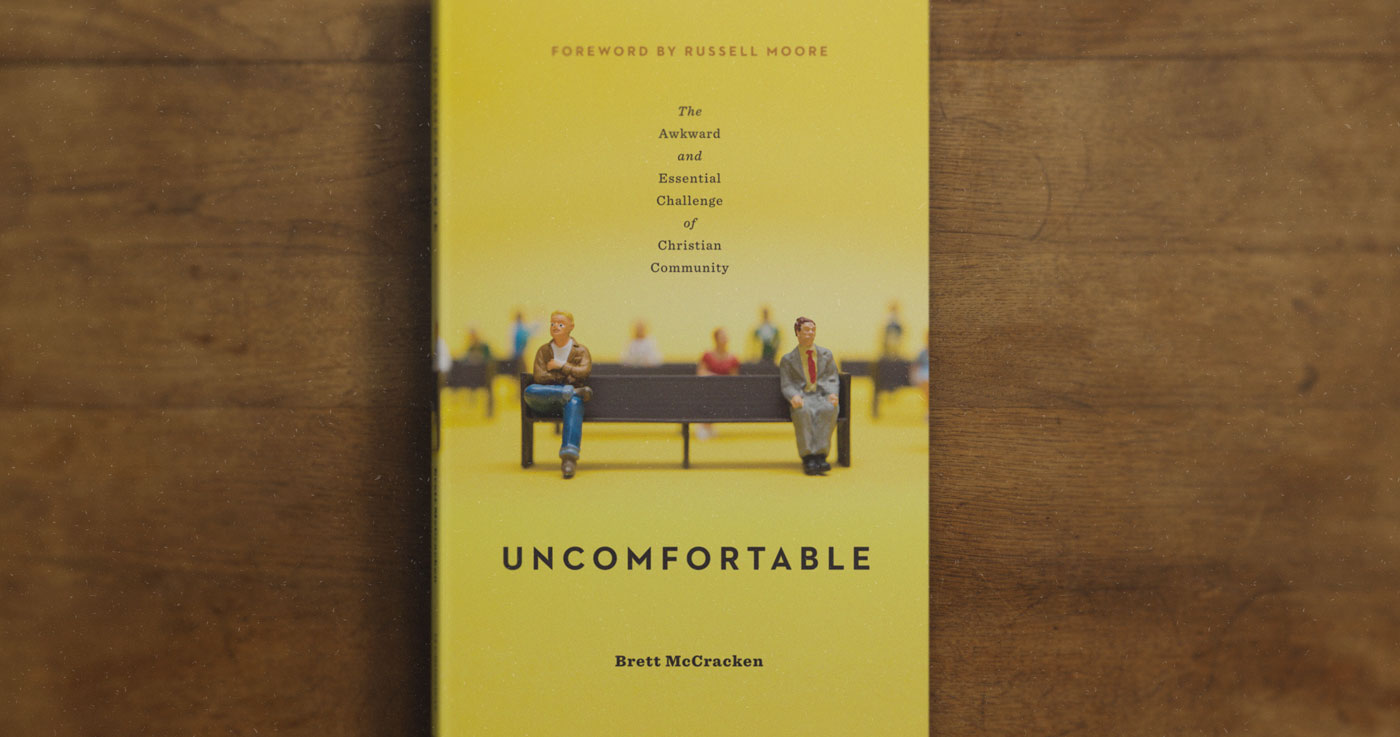
Uncomfortable Holiness, and Why It's Essential for Christian Community

The bar was full of people, full of smoke, full of that loud, sustained decibel hum of alcohol-fueled chatter that makes shout-talking into someone’s ear necessary for a conversation. The music was bumping, full of profanity. At one point a few people were dancing on a table. Bursts of laughter and the occasional shattering of glass punctuated the noise. All manner of tobacco was being smoked: cigarettes, cigars, cigarillos, pipes. And almost everyone in the bar had just finished a day of sessions at a major Christian conference.
I was a part of that scene, one of the evangelical revelers whose behavior was such that no observer could have distinguished us as believers in any holy God, in any “set apart” sense. Of course in the moment it was fun, joyful even, and we relished blending in with the bar crowd. But in retrospect I wish I’d contributed a better witness, living at least part of the call to “not be conformed to this world” (Rom. 12:2). I wish I’d been more mindful of how, even in a bar, I was called to be different, to let my light shine before others (Matt. 5:16). I came home from that conference and penned thoughts about the problematic desire for faith to “fit in” with the cool kids of the world.1
Like many of my Christian peers who grew up in a rather moralistic, protective, separatist evangelicalism, I fell prey to the all-too-common pendulum problem in my twenties. I attended parties (and hosted some) with Christian college students and graduates where kegs, beer pong, sake bombs, and vomiting were among the evening’s amusements. I watched movies and TV shows with little filter for unsavory or explicit content. In my efforts to avoid legalism, I abused Christian liberty.2 Because who wants to be prudish or lumped in with the hypocritical, holier-than-thou evangelicals so despised by society? No one.
But as uncomfortable as it is to embrace holiness and be noticeably different in the way we live in the world, it is essential for our vocation as the people of God.
WHY WE HATE HOLINESS
In today’s world, holy is the most offensive of all four-letter words. It’s far more acceptable to say, “My life is so messed up,” than it is to say, “I am striving to be holy.” For many, Christianity’s seeming obsession with holiness is one of its most distasteful qualities.
Why is holiness so reviled? One reason is simply that the pursuit of holiness also involves the acknowledgment of sin and the necessity of repentance. These are two words that are incredibly unfashionable: sin and repentance. In addition to implying that we are not good people, the words sin, repentance, and holiness conjure images of nuns with paddles, deceptively sweet (but kind of creepy) church ladies, and hypocritical pastors who decry the deviant sexual ethics of liberal America while they ravenously consume pornography behind closed doors.
Hypocrisy is a huge reason why we hate holiness. We’ve witnessed the inconsistencies of a “moral majority” that often failed morally, and fundamentalists who railed against the evils of pop culture while they perpetuated the evils of racism and sexism. We’ve seen too many people use the word holy while simultaneously ignoring the poor, condemning the homosexual, turning away the refugee, and covering up various forms of abuse.
For some nonbelievers, the idea that Christians are called to “be perfect, as your heavenly Father is perfect” (Matt. 5:48) is naive but innocuous, so long as believers keep their holiness and sin talk to themselves. What is abhorrent is when Christian morality is felt to be imposed on others or suggested as the preferred program for human flourishing. One man’s morality may be OK for him, but it’s not OK to suggest it is right for another. This implies a holier-than-thou superiority, and nothing is worse than being holier than thou.
OUR WARINESS OF "WORKS"
Even devout Christians can be uncomfortable with the word holiness. Many Protestants are skeptical of too much emphasis on sanctification, for example, lest it morph into works-merited righteousness. But the history of God’s covenant relationship with his people has always been one of both God’s sufficient grace and his desire for our response of obedient living. In his biblical theology of covenantal discipleship, Jonathan Lunde argues for a continuity between the old and new covenants in terms of the holy living that, though not understood to merit the covenantal blessings, is nevertheless expected of God’s people:
Though always established in grace, each biblical covenant also includes demands of righteousness from those who trust in [God’s] faithfulness to fulfill his covenantal promises. This means that covenantal grace never diminishes the covenantal demand of righteousness—righteousness that flows out of covenantal faith. As a result, faith and works of obedience will always be found in God’s true covenant partners.3
Jesus and Paul do not dispense with the importance of holiness for God’s people in the new covenant. In some cases Jesus actually calls his disciples to even higher standards than the Mosaic covenant, for example in the area of divorce (Mark 10:2–12), the expansion of the murder prohibition to also include anger (Matt. 5:21–26), or the elevation of the prohibition on adultery to also include lust (Matt. 5:27–30). But why? Jesus is not upping the expectation of righteousness to make it harder for people to enter his kingdom. No, salvation is by grace through faith, not of our own works (Eph. 2:8–9). Jesus is raising the bar because he wants his people to be noticeably different, a light in the dark world. It’s difference for the sake of mission.
THE DIFFERENCE OUR DIFFERENCE MAKES
Ever since Abraham was called by God to leave his homeland to found a new nation in an unknown land (Genesis 12), uncomfortable obedience and uncomfortable difference have been a part of what it means to be the people of God. Why? Because God is perfectly holy. “Be holy, for I am holy” (Lev. 11:45; 19:2; 20:7; 21:8). God’s holiness is no joke. It’s why the Israelites crossing the Jordan were instructed to stay a thousand yards or more away from the ark (Josh. 3:4); it’s why Uzzah died for touching the ark (2 Sam. 6:6–7). It’s why the entire book of Leviticus is devoted to holy worship (chapters 1–10) and holy living (chapters 11–27). The minutiae of holiness in the Old Testament may seem a bit bizarre to us today, but that was sort of the point. Holiness is difference.
It is strange. But not for the sake of strangeness. For the sake of Yahweh.
The theme of holiness and separation is reiterated in the New Testament: “But you are a chosen race, a royal priesthood, a holy nation, a people for his own possession, that you may proclaim the excellencies of him who called you out of darkness into his marvelous light” (1 Pet. 2:9). Jesus also uses the light imagery when he says his followers are to be “the salt of the earth” and “the light of the world” (Matt. 5:13–14). As Lunde notes, “Whatever Jesus intends by the images of ‘salt’ and ‘light,’ it is clear that his followers are to be different from those surrounding them in the world.” Salt was used in the ancient world for flavoring, for fertilizer, and as a preservative, in each case bringing something different and beneficial to the substance around it. Light also brings something different and beneficial to its surroundings (darkness).4 Like a lamp in a dark house, our light shines for a purpose: “So that they may see your good works and give glory to your Father who is in heaven” (Matt. 5:16).
For Christians, there is a discomfort in being different, but it is for a missional purpose. It is for the sake of the world. As Rod Dreher notes in The Benedict Option, embracing a countercultural identity as Christians is not about our survival as much as our task to be a light to the world: “We cannot give the world what we do not have.”5
THE IMPORTANCE OF BEING COUNTER-CULTURAL (IN GOOD WAYS)
As historians of the early church have pointed out recently, the earliest Christians recognized the vital importance of habits and behavior that were starkly different from those of the surrounding culture. For them, more important than believing in Christian virtues was living them, “embodying the Christian good news, bearing it in their bodies and actions, living the message visibly and forcefully so that outsiders would see what the Christians were about and, ideally, would be attracted to join them.”6
But our pursuit of holiness is also an act of worship, a response to God’s grace. The opening of Romans 12 calls Christians to “present your bodies as a living sacrifice, holy and acceptable to God, which is your spiritual worship” (v. 1). And the next verse underscores the connection between holiness and difference: “Do not be conformed to this world, but be transformed by the renewal of your mind” (v. 2).
“Do not be conformed to this world” is one of the most grating verses of the Bible to many modern ears, yet it is not just a Pauline one-off. The nonconforming set-apartness of God’s people is a major theme of the whole Bible. But it’s an unpopular idea these days, both for Christians who wish they could blend in and for nonbelievers pressuring religious institutions to compromise on their different-ness (for example in the recent push for Christian colleges to abandon their policies on sexual conduct, or for Christian business owners to provide services or insurance policies that compromise their beliefs).
But the logic of groups necessitates difference. In order for any group—whether a Jewish seminary, an African-American college fraternity, or an LGBT advocacy organization—to have a meaningful identity and flourish in its function, it must have boundaries. If a Jewish seminary started enrolling radical, Jew-hating Muslims, or if an African-American fraternity allowed white women to join, or if GLAAD hired James Dobson as its new president, these groups would cease to have any meaningful differentiation. In the same way, a Christian college or church ceases to be relevant when it abandons its conviction-driven distinctions to fit the prevailing winds of politics and culture. Pluralism only makes sense if individual groups are allowed to be themselves. When boundaries are blurred and set-apartness is lost, everyone loses.
FROM MORAL MAJORITY TO PROPHETIC MINORITY
This is why Christian difference matters. When we blend in, when our boundaries are blurred or disappear altogether, our light in the darkness fades. Our salt loses its saltiness. This is why the shift Russell Moore describes in Onward, from an evangelical “moral majority” to a “prophetic minority,” is a good thing. It doesn’t mean we disengage from culture or build impenetrable, dialogue-averse walls around our institutions. What it means is engaged alienation: “a Christianity that preserves the distinctiveness of our gospel while not retreating from our callings as neighbors, and friends, and citizens.”7
The more Christians look, talk, act, and believe like the culture around us, the less interested others will be in what we have to offer. Why would anyone go to church and bother with Christianity if it is only a replica of the sorts of things they can find at the mall, movie theater, community center, or nightclub? It is the different-ness of the gospel, not its hipness, that changes lives and transforms the world.
- Those written thoughts eventually became my book Hipster Christianity: When Church and Cool Collide (Grand Rapids, MI: Baker, 2010). ↩︎
- I explored the healthy balance between the two extremes in Brett McCracken, Gray Matters: Navigating the Space between Legalism and Liberty (Grand Rapids, MI: Baker, 2013). ↩︎
- Jonathan Lunde, Following Jesus, the Servant King: A Biblical Theology of Covenantal Discipleship (Grand Rapids, MI: Zondervan, 2010), 50. ↩︎
- Ibid., 172–73. ↩︎
- Rod Dreher, The Benedict Option: A Strategy for Christians in a Post-Christian Nation (New York: Sentinel, 2017), 19. ↩︎
- Alan Kreider, The Patient Ferment of the Early Church: The Improbable Rise of Christianity in the Roman Empire (Grand Rapids, MI: Baker Academic, 2016), 13. Kreider illustrates this focus on behavior and habitus by quoting early church leaders like Cyprian: “We know virtues by their practice rather than through boasting of them; we do not speak great things but we live them” (p. 13). Or Lactantius on a non-coercive missional strategy that is focused on embodying truth: “We use no guile ourselves, though they complain we do; instead, we teach, we show, we demonstrate” (p. 34). ↩︎
- Russell Moore, Onward: Engaging the Culture without Losing the Gospel (Nashville: B&H, 2015), 8. ↩︎
Content taken from Uncomfortable: The Awkward and Essential Challenge of Christian Community by Brett McCracken, ©2017. Used by permission of Crossway, a publishing ministry of Good News Publishers, Wheaton, Il 60187, www.crossway.org.
Brett McCracken is the managing editor of Biola Magazine at Biola University and the author of Hipster Christianity and Gray Matters. He writes regularly for the Gospel Coalition website, Christianity Today, Relevant, and his website, BrettMcCracken.com.

The Baffling Call of God

August 5, 2014 was the darkest Tuesday of my life. My mother, critically ill with the Ebola virus, was returning from Liberia to the United States for treatment that we hoped would save her life.
 The previous ten days had been a whirlwind of emotion. On July 26 my father had called late in the evening from Monrovia to say that mom had contracted the disease. She was serving as a nurse’s assistant in the isolation unit of a mission organization hospital when she became ill. Since Ebola was becoming an epidemic in West Africa, international news media quickly inundated us with requests for information regarding my mother’s condition and the family’s response.
I had placed it in my mind that mom would—like so many overseas missionaries before her—lose her life to a foreign disease. We’d been told there was no possibility of transport from the small house where she was being isolated to a first-world medical facility capable of better fighting the virus.
So it was a great surprise when we learned that she would be medically evacuated to Emory University Hospital in Atlanta, Georgia. She was due to arrive on August 5.
THE RIGHT WORDS FOR THE MOMENT
As my father and I spoke during the time between mom’s diagnosis and her transport and arrival in Atlanta, he shared how timely and encouraging Oswald Chambers’s devotional had been to him. He would read My Utmost For His Highest outside the bedroom window of the house where my mother was growing more and more ill, and it would sustain his heart through the gravity of the situation.
When my brother and I arrived in Atlanta we too began to read Chambers’s meditations along with some close friends. On the morning of August 5, as we awaited mom’s nationally televised arrival and transport to Emory, we read the entry titled “The Baffling Call of God.”
Confident of God’s call on my parents to serve Him in Africa, I was baffled by what they were enduring for the sake of the needy there. Furthermore, as I dealt with my own weary and broken heart, I was baffled at what God was doing in my own life. None of it made sense.
It all seemed like failure—and the conclusion of the matter would be death. I could relate to the disciples when they heard about Jesus’s mission to go to the cross: “They understood none of these things” (Luke 18:34 ESV).
THE FOOLISHNESS OF THE CROSS
We live in a cause-and-effect world, so trials and suffering bear down on us in ways we would never imagine. We desire—we insist on—lives that are clear-cut and explainable. We hate it when circumstances we can't control threaten our comfort and security.
When hardships, suffering, and trials hit our lives, our faith can be jolted deeply. It’s not uncommon for sufferers to bellow out to God, “Why?” And yet Jesus “led every one of [His disciples] to the place where their hearts were broken.”
Suffering feels like failure, like complete and utter defeat. The world calls it foolish.
From a certain perspective Jesus’s life looks a lot like this. As he left his family and carpentry trade at the age of thirty to begin an itinerant preaching ministry, he confused his family. They heard the reports of His ministry and miracles and concluded, “He is out of his mind” (Mark 3:21).
He labored for the kingdom of God without a place to lay his head or call home (Luke 9:58). His teaching became difficult to understand, and the number of those who followed him dwindled (John 6:66). As he confronted the religious establishment, he created powerful enemies who sought to have him killed (Matthew 26:59). One of His own friends and followers betrayed him for a small sum of money. He was slandered, beaten, abused, mocked, rejected, unjustly tried, and ultimately executed as a criminal, in shame and disgrace.
The cross is foolishness if the “Savior of the world” hangs dead upon it.
FOOLISHNESS TURNED TRIUMPHANT WISDOM
Yet, from another perspective—the biblical one—we can see our sufferings in another light. The apostle Paul called the cross the wisdom and power of God. He saw from God’s standpoint a “tremendous triumph.”
Through the suffering and death of Jesus we have one who can stand in our place for our sins—and take them away. We have one who can mediate on our behalf and reconcile us to God. We have one who, by laying down His own life, won righteousness, peace, and life for us. “God made him who had no sin to be sin for us, so that in him we might become the righteousness of God” (2 Corinthians 5:21).
Following the utter defeat of the cross, the powerful resurrection of Jesus on the third day verified, vindicated, and validated all the suffering he endured for our sake. “But when Christ had offered for all time a single sacrifice for sins, he sat down at the right hand of God, waiting from that time until his enemies should be made a footstool for his feet. For by a single offering he has perfected for all time those who are being sanctified” (Hebrews 10:12–14 ESV).
BAFFLED BY OUR SUFFERING
This leads us back to our own trials. The Scriptures show us we should not be surprised by “the fiery ordeal” (1 Peter 4:12). The Christian life is one that includes persecution (2 Timothy 3:12). We can expect difficulty and trials as marks of discipline from the hand of a heavenly Father who loves us and longs for us to be mature and complete (James 1:2–4, Hebrews 12:5–11). Suffering is a mark of the Christian life.
Still, like so many in the world today, we want to know the reason behind it.
But the gospel allows us to move ahead without having all the answers, without knowing perfectly the purposes of God. This doesn’t mean we can’t ask the "why" question or ponder the bigger picture; we simply become, as Chambers states, “less inclined to say—‘Now why did God allow this and that?’”
If we see the goodness of God in the seemingly foolish decision to send his Son to die on our behalf, then we can embrace his call to what may feel like an “unmitigated disaster” in our own lives.
CAN I TRUST GOD?
This is what the whole of faith truly boils down to: Can I trust God?
If we affirm that God is trustworthy and does all things for His glory and our good, then we can live with an unparalleled freedom to receive both the triumphs and the trials of life from his gracious hand. If all things work together for the good of those who love God and are called according to his purpose (Romans 8:28), then we are liberated from having to hold all the answers in our own hands.
The baffling call of God, although it can bewilder us, is ultimately a safe and rewarding call. It’s a release from the ever-present desire to control and maintain all things by our own power. It means I can be a child, safe in the hands of an omnipotent and gracious God, and he will lead me through the valley of the shadow of death (Psalm 23:4).
Whatever God may have planned for my future—whatever he may have planned for your future—he is working out his purposes.
THE LEISURELINESS OF FAITH
As the air ambulance carrying my mother landed at Dobbins Air Reserve Base outside Atlanta on August 5, I could only wonder at the baffling call of God. The aims of God’s work and call in the life of my family were not clear. The anguish and turmoil of our hearts swelled as we became a public spectacle of suffering. My parents’ mission to Liberia looked like an utter failure.
And yet, in God’s hands and by his power, we could trust his great purposes. As a child of God I could cling to his mercy and ask for his grace in my pain. I could trust “the wits and the wisdom” of God, to use Chambers’s phrase, that ultimately everything would be okay—even if that meant my mother’s death.
I could even trust God’s baffling call when mom’s health made an incredible turn for the better. I could rest with joy when God healed her of the terrible Ebola virus. I could trust his providence when he called my parents back to Liberia—back to the mission—even when others might argue the cost was too great.
I can walk with a leisureliness of faith because what looks like failure to the world is, from God’s perspective, the fragrance of life.
Taken from Utmost Ongoing: Reflections on the Legacy of Oswald Chambers, © 2017 by Discovery House. Used by permission of Discovery House, Grand Rapids, MI 49501. All rights reserved.
Jeremy Writebol is the Executive Director of GCD. He is the husband of Stephanie and father of Allison and Ethan. He serves as the lead campus pastor of Woodside Bible Church in Plymouth, MI. He is also an author and contributor to several GCD Books including everPresent and Make, Mature, Multiply. He writes personally at jwritebol.net.
You can read all of Jeremy’s articles here.

Four Critical Values for Pastoral Accountability

Let’s face it. If a pastor's accountability isn't in the local church, it's probably not real accountability. It's the illusion of accountability so we can traffic in the vocabulary without the entanglements of the substance.
 Here’s the problem: Not everyone is clear on what they mean when they use the word "accountability." Let me suggest four specific values we should seek to experience in accountability of plurality.
- Intentionality
- Self Disclosure
- Approachability
- Appeal
Below we’ll look a bit at each of these values. But before we do, there is one overarching principle we must never overlook. If you want to know the secret underlying the kind of loving accountable relationships where elders grow more in love with Jesus, their wife and their ministry, it’s humility. That’s right, humility.
AN IMPORTANT WORD ON HUMILITY
Humility is the oil that lubricates the engine of plurality. When one considers all of the polity options God could have chosen for governing churches, I theorize that God chose plurality because he loves humility. And plurality can’t work without humility because in plurality, God imposes a governing structure that can’t be effective without embodying humble values. God loves unity, so he calls us to plurality where we must humbly persevere with one another to function effectively. God loves making us holy, so he unites us to men who will make us grow. God loves patience, so he imposes a way of governing that requires humble listening and a trust that God is working in the lives of others.
God has decided the church will be governed in ways that value both the ends and the means. That is, God values decision making, but he also values the way we relate to each other in the decision making process. We often think what’s “best” in polity is what’s most efficient, easiest, or most effective way of doing something. Instead, God’s best way is whatever is the most beautiful way. The standard of beauty is God, specifically the interplay of his own unity, diversity, and harmony. God throws together diverse men with different gifts who have strong opinions and then insists upon their unity. This does not always look or feel “beautiful”. But God still charges elders to lead the church. As they lead, they are also called to grow in their exercise of authority as they remain mutually accountable and responsible to one another. The only hope for such a dynamic to exist in a group is for us to make humility our aim.
But this is the one to whom I will look: he who is humble and contrite in spirit and trembles at my word. (Isaiah 66:2)
God made healthy plurality dependent upon accountability because he loves humility. Now we’ll turn our attention to the four values of accountability, the first one being "intentionality."
FOUR CRITICAL VALUES FOR ACCOUNTABILITY
Intentionality means I will have some defined, regular and consistent context in my life where guys who know me can encourage me, pray for me, and understand my patterns of temptation. It’s saying, “I love my wife enough, my family enough, the church enough and fear God enough, that I’m actually going to define the contexts for my accountability. And rather than sharing in a generic manner, or in vague generalities, or using amoral words to remove any sense of my own moral agency, I’m going to ensure they know me all the way down to where I am most tempted. This way they can pray for me, encourage my growth, and ask about how I’m doing.” We must press down into all the areas that could potentially detonate our family or ministry and define when and where these will be discussed. That’s intentionality.
Self-disclosure means while you are always welcome to inquire about my soul, it is not your job to investigate my life, my sin or my temptations. Self-disclosure brings forth humility by making it our responsibility to humbly open our souls to those to whom we are accountable. Fellow elders are not prosecuting attorneys cross-examining your life. Instead, you are a witness to your own life, sharing truthfully, freely, and happily with little or no provocation. In Christ, we have God’s self-disclosure (John 1:18). Jesus is God moving towards us making himself known. Self-disclosure stems from the incarnation by communicating we too want to experience deep community. We move towards one another by beginning with making ourselves known first. The burden is on me to disclose my joys and struggles.
This small distinction in how we view self-disclosure results in a far more gracious approach to accountability and respects the believer’s relationship with God. Behind this value is a confidence that God’s work in our lives propels us towards an honest life before Him and one another. Placing the accent on our disclosure creates an arrangement where accountability is not rigged to find sin or places us in the role of the Holy Spirit. Rather, it is transformed into a context to trust God’s word and encourage the exercise of humility. When I make self-disclosure my responsibility it’s easier for others to ask me questions about my soul, my marriage, my parenting, my ministry, or to share their heart for me.
Approachability is best described by Ken Sande who writes about the importance of conducting ourselves in a way that makes us approachable, generous, and easy to talk to--even if our conversation is about something hard. Sande says when we live humbly, resonate with openness, and become more Christ-like, we gain ‘passports’ into the lives of others. This is an important concept for anyone who wants to experience genuine, meaningful, and fruitful accountability.
Simply belonging to a group is not passport into the lives of others. A passport, remember, is an authorization to enter and travel in a foreign land. Similarly as we are intentional, self-disclosing and approachable with one another, we gain passports into the lives of the other people in our group. These “passports” are earned bestowals of trust that come when others feel they can trust us with their own self-disclosure and with the care of their souls amidst their struggles.
If you want to experience real accountability and helpful feedback from others, you will need to be known as one who is approachable and trustworthy.
Appeal recognizes accountability is hard and sometimes needs help. Maybe the experience of fellowship breaks down due to a conflict that can’t be resolved, or maybe one person in the group feels permanently tagged by something they’ve confessed. Maybe it’s something more serious: You seem to be caught in sin and the group feels unable to help, or your wife feels trapped by some pattern of behavior you’re exercising in the home and just doesn't know what to do.
The value of appeal says, even before we start our group, we are agreeing a plea for help may be necessary and we are defining the person or group within the church to whom we will appeal. Appeal says that seeking outside help is not betrayal or slander, but sometimes necessary when sinners are trying to help each other. Appeal says we are agreeing up front we will not allow our homes to become tightly controlled, closed systems; that our wives can appeal to others for help if they feel it is needed. Our cycles of accountability can be appealed if something becomes an albatross. The value of appeal anticipates that sometimes we are blind and need help and in that moment, we are far less likely to want to seek it. So we agree now to protect ourselves (and those we love) then.
Dave Harvey serves as the Executive Director of Sojourn Network and a Teaching Pastor at Summit Church in Fort Myers, Florida. Dave is also the founder of Am I Called.com, a leadership resource site helping pastors, leaders, and men who sense a call to ministry. He has 31 years of pastoral experience, with 19 years as a lead pastor. Dave chairs the board for the Christian Counseling and Educational Foundation (CCEF) and has traveled nationally and internationally doing conferences where he teaches Christians, equips pastors, and trains church planters. Dave has a D.Min from Westminster Theological Seminary, writes regularly for TGC and FTC, and is the author of When Sinners Say I Do, Am I Called, Rescuing Ambition, and Letting Go: Rugged Love for Wayward Souls. Married for 35 years, Dave and Kimm have four kids and two grandkids.
You can find this Sojourn Network e-book here on Amazon, iTunes, or at the Sojourn Network bookstore.
You can find out more about the Sojourn Network here.

The Freedom to Slow Down
It seems counterintuitive to look at the tension Bob is facing about change in his life, his family’s life, and the life of his friends outside the church, and say to him, “You need to slow down if you want to see that dream move from a thought in your head to a reality in your midst.”

WHY YOU CAN STOP FOCUSING SO MUCH ON YOU
It seems counterintuitive to look at the tension Bob is facing about change in his life, his family’s life, and the life of his friends outside the church, and say to him, “You need to slow down if you want to see that dream move from a thought in your head to a reality in your midst.”
So welcome to one of the many paradoxes of the gospel.
Perhaps one of the best places to view this paradox is in the story we often refer to as "The Good Samaritan." If anything unveils the root reason why Bob can slow down to love and disciple others, it’s this story from Jesus. Simon Sinek is right…we should always start with the “why.”
We find the parable recorded in Luke 10:25-37, and the name we have given it is often used for hospitals, justice ministries, and as the battle cry for those staring down the racial divide, educational gaps, refugee crisis, and many other injustices. These are real issues where we want to see what is good and right have its full effect.
But, in further study of this passage, we find, like the disciples who spent years with Jesus, we may have missed a deeper meaning to what Jesus is declaring in this ancient parable. In fact, we may have missed the very connection he’s making between what we want to see come to fruition in our world and how we actually arrive at this desired destination.
The story begins with Jesus’ encounter with a lawyer, “For behold, a lawyer stood up to put him (Jesus) to the test” (Luke 10:25). This is a man, mind you, who was extremely well educated in the Jewish Law. To say he had the Law of God and all its many facets memorized would not be an understatement. From what we can tell, he apparently has heard about Jesus from others, has gone to listen to Jesus, and in his observation felt there is a serious divide between what God has declared in the Law and what Jesus is teaching.
So, right out of the gate, the lawyer begins his onslaught with one simple question: “Teacher, what shall I do to inherit eternal life?” (v. 25).
It’s a simple, straightforward question, and with death being a destiny awaiting us all, a very relevant question. Jesus, as a skilled teacher, begins the process of answering the lawyer's question by asking him a question, “What is written in the Law? How do you read it?” (v. 26).
Ready to share his immense knowledge of the Law in a moments notice, the lawyer responds, “You shall love the Lord your God with all your heart and with all your soul and with all your strength and with all your mind, and your neighbor as yourself” (v. 27).
Ding. Ding. Ding. “You have answered correctly,” Jesus said. “Do this, and you will live” (v. 28).
You could have heard a pin drop as the lawyer was assured that Jesus' beliefs about the Law and his teachings on eternal life were in line with what God has declared in the Torah. But instead of being satisfied with Jesus’ answer, an eerie look comes across his face as he quickly, and quietly realizes: “According to the Scriptures, If I 'do this,' this Law, this act of loving God with everything I am, and loving my neighbor in the same degree that I love myself…then I ‘will live.’”
Most of us read this and think, “Alright. A clear to do list. I got this. Thank you, Jesus!” But for the lawyer here, this wasn’t a moment of gratitude… it was a moment of sheer panic.
As a lawyer, he knew better than anyone else in his day, how the perfect Law to “love God with all” of your being and to “love your neighbor as yourself” is only done, only met, only fulfilled, if it is done with perfection. Yes, righteousness, “rightness,” is our need to live in the presence of a holy God. There is no such thing as imperfect obedience.
The very Law the lawyer had just used to justify himself incriminated himself.
So rather than face the reality of his need and his inability to meet it, “he, desiring to justify himself, said to Jesus, ‘And who is my neighbor?’” (v. 29).
The question is an escape tactic; a backpedal plot rooted in a man-made spin on the Law, aimed at helping the lawyer get around the demands of loving God and his neighbor with perfection. In response to this move, Jesus goes into a story of a man who was traveling on a long stretch of dangerous, isolated terrain from “Jerusalem to Jericho,” where he “fell among robbers who stripped him and beat him and departed, leaving him half dead.” Scene one of the opening act is set with a character who is broken and desperately in need of someone outside of himself to save him.
Jesus goes on and says, “a priest was going down that road, and when he saw him he passed by on the other side,” followed by a “Levite” who took this same course of action (vv. 31-32). With scene two, two new characters are added to the plot, one representing the Law of Moses, and the other it’s role in the world. Both are naturally good, informative, and even directive, but neither have any ability to actually bring change to the human heart. Like a mirror, the Law can reveal the dirt on your face. Amen. However, rubbing your face on a mirror will never make it clean.
From here Jesus brings the story to its climax as He says, a “Samaritan,” unlike the Priest and Levite… “when he saw him, ...had compassion.” Jesus went on to spell out what this loving compassion looked like as the Samaritan “bound up his wounds, …set him on his own animal and brought him to an inn to take care of him,” and then covered this stranger's medical expenses as he paid the innkeeper to take care of him until he returned (vv. 33-35). Think of the medical cost today entailed in nursing someone to health who was almost dead. The estimate is upwards of an entire year's salary.
With the full scenario and each character’s role in view, Jesus moves to the heart of the lawyer's question and asks: “Which of these three, do you think, proved to be a neighbor to the man who fell among the robbers?" (v. 36). In other words, in light of the Law you quoted just a minute ago about what you need to do to inherit eternal life, the question here isn’t “Who is your neighbor?” but rather “What kind of neighbor are you?” The lawyer answers, “the one who showed him mercy.” And with the lawyer’s ploy exposed, Jesus makes sure his original question is clearly answered: “You go, and do likewise” (vs 37).
The parable is pure genius.
Jesus uses a story about a man who is desperately in need of someone else to save him after being “beaten half dead”…a guy the lawyer refuses to identify with, who was loved by a “Samaritan”…someone the lawyer will not identify with, to show him what he “must do to inherit eternal life”…a task he cannot identify with.
And perhaps that is the point.
With the beliefs most likely held by the lawyer in regards to what is wrong with the world and what the solutions are to fix it, he was looking for a Messiah who was coming to make the world straighten up and fly right, not “the Lamb of God” who is slain to take “away the sins of the world” (Jn. 1:29). It’s the same song and dance with everyone in Jesus’ context, including the disciples themselves. So, as people who were thinking they needed a guide rather than a Savior, they would naturally see themselves as the Samaritan in Jesus’ story, not the helpless man on the side of the road. Ironically though, it's only in recognizing our death, our inability to live out the demands of the law with our righteousness of “filthy rags,” will we cling to the only One who’s in the resurrection business (Isaiah 64:6).
It is Jesus and Jesus alone who fulfills the Law and “inherits eternal life.” By God’s grace, he has announced his Father’s dealings with the sin problem of our world are “finished,” forgiven (John 19). By God’s grace, his “righteousness” has been attributed to all who believe (Rom 3-4; Eph 2:8-10). And by God’s grace, “all things,” as in everything that feels lost from our acts of pride, greed, fear, hatred, racism, sexism, manipulation, abuse, theft, lying…“has been reconciled” in the life, death, and resurrection of the one who made us, loved us, forgave us, and sustains us all (Col. 1:15-20).
In Jesus, reality has undergone a major shift.
We need nothing else…except to believe in the One who’s made this life-changing news a reality.
Believing we stand complete in Jesus is what allows us the freedom to look at the purpose of the Law, this beautiful picture of love for God and others, not as a to-do list to obtain the holiness the Law demands, but as a picture of what harmony with God and others truly looks like. This by no means removes the call on our lives to what is good and worthy of pursuit, it just changes the posture of our pursuit as the Law, this “ministry of death,” reveals the impossible feat of us ever walking in our own righteousness (2 Cor 3:1-9). It’s a journey marked not by determined action, but rather complete dependence on Jesus who is our salvation and sanctification (Heb. 10:13).
Believing we stand complete in Jesus is what allows us the freedom to die to the project of self, the tyranny of more, and the need to posture ourselves as someone who has it together. The independent life, apart from Him who is “life,” is a myth (John 14:6; Gal. 2:20). We are completely “hidden” in Him (Col. 3). There are no levels in the kingdom, no ladders to climb in hopes to reach your next breakthrough… just a Savior to dwell in. So you’re free to stop giving away all of your limited margin to church programs centered around your growth, and like the disciples, run with Jesus as He ministers to those outside—an actual place of need that drives your dependence and shapes your life.
Lastly, believing we stand complete in Jesus is what allows us the freedom to stop racking our brains in search of the magic bullet to help us build the church. Jesus said, “I will build my church,” so it’s not something we do (Matt. 16:18). It is easy to lose sight of this promise when we mistakenly place this task upon ourselves or when we face trials, fail, and feel defeated. Just as it’s easy to forget how the early church was a vast movement that brought the news of Jesus to much of the known world with only one resource: his Spirit. No copy of the Scriptures for everyone to study, no seminaries, no large Sunday venues, just the Spirit at work through everyday people who had been “given the ministry of reconciliation” (2 Cor 5).
Knowing what He would accomplish on the cross, Jesus slowed down to disciple others.
Knowing what He has accomplished on the cross, we can slow down to disciple others as He works in us, with us, without us, and even in spite of us.
Such good news for the lawyer in us all.
Gino Curcuruto is part of the Directional Team for The Table Network. He and his family lead a new expression of the church, known as The Table Philadelphia. He, along with fellow The Table Network leaders Russ Johnson & Tony Sorci, co-authored the book, Slow Down: A Timeless Approach.
Content contributed from Slow Down: A Timeless Approach by Russ Johnson and Gino Curcuruto, ©2017. Used by permission of Missional Challenge Publishing.

Gospel Glories from A to Z

Today we want to share an excerpt from our latest release Gospel Glories from A to Z. Kelly Havrilla works to reflect some of that glory onto each page as she connects deep biblical truths through the structure of the alphabet. Our hope is is that this reflection will spark a desire to venture into deeper waves of gospel glories. If you love rich theology and beautiful design, pick up our first ever full color edition.
– GCD Team
Jesus
Though his ministry lasted only three short years, Jesus’ impact on the world has been immeasurable. What he said about himself was extraordinary. He claimed to be the Son of God, to be the only way to God the Father, and to have come to earth to save sinners. His teachings, miracles, resurrection and ascension are proof positive that Jesus is exactly who he said he was. The writers of Scripture call him: Emmanuel (God with us), the Holy One, the Savior, King of Kings, the Lamb of God, the Way, the Truth and the Life.
These titles provide only a glimpse into his greatness. Jesus is the only way to God and the only source of eternal life. Jesus lived a completely sinless life, died an obedient death, was raised from the dead as proof of his righteousness and God’s acceptance of his sacrifice, and is now seated at the right hand of God the Father. He is fully God and fully man; therefore, he can represent mankind perfectly to God the Father. God declares the believer righteous, not by the worthiness of his faith, but by the worthiness of the one in whom he has faith. Jesus Christ is God’s solution to man’s most significant problem—sin.
Righteousness
Righteousness is the character quality of being right according to God’s holy standard. Simply stated, it is glorifying God with our lives as perfectly as Jesus did. This high and holy quality of righteousness applies to will, motive, thought, action and word. It is an attribute that we must possess in order to be justified by God. It is unattainable in and of ourselves. Why? Because every part of our being is infected and influenced by sin.
We cannot be as perfect as Jesus. Consider the following things that many religious people would say if asked why God should accept them: I am a good person; I give money to a church; I read the Bible; I was baptized; I help my neighbors. And on and on it goes. Every sentence starts with “I”! Does anyone do any of these things perfectly? Of course not!
But here’s the fantastic news of the gospel—at the point of saving faith, the sins of the Christian are imputed to Christ (and punished by God) and they are forgiven. Christ’s righteousness is imputed to the Christian, and the believer is declared righteous by God. Trust in Christ alone, and let his righteousness be your righteousness.
Zion
Zion in Scripture is often used as a synonym for Jerusalem, and even more specifically of the mountain near Jerusalem. Zion was also the name of the temple mount within Jerusalem, which was the seat of the first and second Holy Temple. Zion’s meaning broadened to God’s eternal kingdom through the Old Testament prophets who foretold of a time of great joy when the Savior of Israel will appear in Zion at His second coming.With the temple and prophetic ideas in view, the New Testament authors envision Zion as the heavenly dwelling place of Almighty God.
The author of Hebrews penned it this way, “But you have come to Mount Zion, to the city of the living God, the heavenly Jerusalem.” The writer declares repeatedly that there is only one road, one gate, one way that leads to Mt. Zion, to the city of the living God. It is by faith in Jesus Christ alone. He is the preeminent one, the one for which the prophets of the Old Testament had been waiting. He is the Savior, and it is through Him alone the believer may roam the heavenly streets of Zion.
Kelly Havrilla lives in Plymouth, MI, with her husband David. They are both outdoor enthusiasts, love hiking in the Colorado Rocky Mountains, and enjoy spending time with family and friends. After a career in marketing at General Motors she has pursued a variety of creative endeavors. However, her greatest passion is the gospel. Over the years God has graciously opened numerous avenues into several local and international communities into which she and David have opportunities to minister and share the gospel. From this passion and desire was born the Gospel Glories project.


New Book Release | Kelly Havrilla’s Gospel Glories from A to Z
We are releasing Kelly Havrilla’s Gospel Glories from A to Z in three formats—a digital edition, a black and white paperback, and a full color edition (click “look inside” to view full color images for the first several chapters). The Christian life is knowing God. It is not an impersonal knowledge of bare facts but one rooted in wonder at "the light of the knowledge of the glory of God in the face of Jesus Christ" (2 Cor. 4:6). It is knowing that basks in the glories of the gospel.
In Gospel Glories from A to Z, Kelly Havrilla works to reflect some of that glory onto each page as she connects deep biblical truths through the structure of the alphabet. Useful for both those new to the beauty of Christianity and those looking for a fresh way to grow deeper this book aims to make God's grace abundantly clear and accessible. Our hope is is that this reflection will spark a desire to venture into deeper waves of gospel glories.
If you love rich theology and great design, don’t hesitate to pick up our first ever full color book! Enjoy this excerpt from the “Preface.”
God made him who had no sin to be sin for us so that in him we might become the righteousness of God. – 2 Corinthians 5:21
“God so loved the world that he gave his only begotten Son.” That is the good news about Jesus Christ in a sentence, and that is the best news of all time for the entire world. The gospel, which means good news, is the centerpiece of the Christian message. It explains that although every person is separated from God because of sin, God in his justice, mercy, and love has made a way for us to be made right with him. And that way is remarkably simple—trusting in the person and work of Jesus Christ.
The Bible teaches that Jesus brought peace between God and man through his perfect life, sacrificial death on a cross, and resurrection from the grave. Jesus himself proclaimed in the Gospel of John, “I am the way, the truth and the life. No one comes to the Father except through me” (Jn. 14:6) This is an extraordinary claim. C.S. Lewis, Oxford theologian and author of the famous Chronicles of Narnia series, posed a compelling statement about Jesus. He said in view of all that Jesus did and said about himself, one cannot view him as merely an incredible teacher, a remarkable Prophet, or an exceptionally moral man. He must be either a liar, a lunatic, or he is who he said he is—Lord of all.
It’s a wonderfully amazing thing that we have the most credible and well-attested books of all time testifying about the life and works of Jesus—the Bible. Comprised of both Old and New Testaments with 66 books written by about 35 authors over a period of some 2000 years, the Bible has God’s ultimate plan of redemption as its singular theme. It repeatedly points to Jesus as the only person qualified to accomplish the task. The Bible authoritatively and accurately records who Jesus was, what he did, what he said, what others thought of him, and how they reacted to his claims. His greatest claim is that he is the very Son of God, sent by his Father—who so loved the world—on a rescue mission to save people on planet earth. And that is indeed good news!
In a New Testament letter to the church in Corinth, the Apostle Paul wrote, “God made him who had no sin to be sin for us so that in him we might become the righteousness of God” (2 Cor. 5:21). This is the good news from the pen of the great Apostle in concise form. God sent Jesus to earth to die for sins, and to rise again, so that those who trust in him can be forgiven of their sins and be declared righteous.
In the following pages, we will navigate our way through the alphabet of twenty-six gospel rich words; words which will enlighten, encourage and challenge us all. The gospel is the only true life-giving message in all the universe. I pray you learn it, believe it, and embrace it for yourself.
Kelly Havrilla lives in Plymouth, MI, with her husband David. They are both outdoor enthusiasts, love hiking in the Colorado Rocky Mountains, and enjoy spending time with family and friends. After a career in marketing at General Motors she has pursued a variety of creative endeavors. However, her greatest passion is the gospel. Over the years God has graciously opened numerous avenues into several local and international communities into which she and David have opportunities to minister and share the gospel. From this passion and desire was born the Gospel Glories project.

God’s Eclectic, Intriguing, and Quirky Construction Crew

I’m weird. I actually enjoy going to the Department of Motor Vehicles. I find it intriguing to spend part of an afternoon at the DMV because it offers the best glimpse of diversity in our culture today. Skinny or stout, tall or short, married or single, successful or struggling, we all spend a day paying our dues at the DMV. Paying for the right to be part of the community of transportation. The Department of Motor Vehicles gives us an accurate view of the people who make up our local culture. There are businessmen in dress slacks, hairdressers clothed in black, and homemakers looking casual with their kids in tow. There’s the middle-aged woman who will slide into her Mercedes Benz adorned with a personalized plate, and the elderly man who struggles to find the flexibility to attach this year’s tag to his Buick.
Diversity. That’s why the DMV is such a great place to spend part of a day.
It’s different from hanging out at Panera Bread. Only a certain type of person is going to grab coffee and a cinnamon crunch bagel, enjoy some classical music, and respond to e-mails from a laptop at Panera.
It’s not like spending time at the local Cabela’s store. Only a specific segment of our population is going to be testing the weight and feel of the newest fiberglass fly-fishing rod. (Likely, this isn’t the same person sitting in his second office—Panera.)
It’s not like meandering around Bath & Body Works sniffing the soft fragrances of their body lotions and triple-wick candles. Folks who spend time and hard-earned money at Cabela’s aren’t typically concerned about eucalyptus spearmint hand lotion.
Sweet bagel, new fly rod, and aromatherapy lotion aside—everybody needs transportation. It’s a commonality that unites us all. The DMV offers me a genuine glimpse of the broad spectrum of people in my local community. Folks I might not run into at Panera or Cabela’s or Bath & Body.
But there is another reason I enjoy the Department of Motor Vehicles. Whenever I sit and wait for my number to be called, I’m reminded of another more significant picture of diversity. One with a global reach. A collection of individuals with a wide expanse of socioeconomic, cultural, political, and theological differences. A group with more examples of uniqueness than even the DMV can attract. God’s church!
By design God draws to himself teachers and artists, contractors and caregivers, to be part of the unique group of people he calls his church. He created it that way.
God calls the poor, the wounded, the opinionated, the nosey, the caring, the broken, the seemingly unlovable. He calls them his own. He welcomes all of us, with our quirks and our maladies, into his unique community of love and acceptance, of grace and truth.
This community is far different from anything you or I could ever dream up! Not because we couldn’t pull together a group of folks that would resemble the famous “Buy the World a Coke” television commercial from the 1970s.1 With a little help from our Facebook friends, we could gather a group from across the globe. Problem is, we wouldn’t. The power of diversity is lost on most of us.
You and I would likely pick a group that looked a whole lot like us. We’d choose people who wear the same Eddie Bauer jeans, Gap sweatshirts, and Clark’s shoes that we do—folks who drive Honda SUVs, make the same schooling choice that we make,2 and live in three-name subdivisions.
If it were up to us to choose, God’s church would look a whole lot like you and a whole lot like me. The Church of the Mirror.
Fortunately, God in his great wisdom, didn’t draw unto himself a collection of clean-cut-Christian look-alikes, dressed in white polo shirts and khaki pants. He didn’t draft a fantasy faith team of the smartest, funniest, best looking, and most creative.
The church that Jesus is building is an eclectic, intriguing, quirky, diverse mess of humanity. That’s God’s way. (Which couldn’t be more different than our personal view of the world—and the church.)
It’s All about Me!
Simple fact: you were made in God’s image. It’s true. Here’s the evidence in black and white:
Then God said, “Let us make man in our image, after our likeness. . . .”
So God created man in his own image, in the image of God he created them; male and female he created them. (Gen. 1:26–27)
Because we were made in the image of God, bearing his likeness, we are really significant. We carry with us the image of the Creator and sustainer of the entire world! (Take a moment to ponder that.) It’s an amazing and humbling truth wrapped up tight in a skin-covered package that is uniquely you and uniquely me.
How amazing are we? God himself smiled on his creation. “And God saw everything that he had made, and behold it was very good” (Gen. 1:31).
It was very good!
But now, the very good thing has a problem. Our significance often causes us to idolize the created instead of the Creator. We worship self instead of worshipping the Holy.
Here’s how it works: instead of thankfully and joyfully being little images of the living God, we make big images of ourselves and consider God the little one. We don’t say this, of course—that would be blasphemous. But what we practice is a world centered on our thoughts, our actions, and our dreams.
Don’t believe it? Consider for a moment the way you and I typically determine the quality or value of a photograph. It’s a great photo if you look good! Right? Not such a good shot if your eyes are shut or your smile reveals a front tooth with a piece of the broccoli you had at lunch.
Here’s another one: Consider the appropriate driving speed on the highway. You set the curve. Everyone else needs to stop driving like your great-grandmother and get out of your way, or they’re certifiable speed demons driving like NASCAR star Jimmy Johnson! Right?
We tend to be the barometer of all that is right and true and correct in the world.
Obviously, these are two seemingly insignificant ways we position ourselves as the ultimate authority in our day-to-day experience. What we’re really doing is slowly developing a mind-set where we elevate our thoughts and actions above God’s plan and his desires. Unfortunately, our experience with other Christ followers often puts them on the receiving end of our elevated view of self. And, typically, we don’t even realize we’re doing it.
Anne Lamott captures the essence of this thinking when she writes of some honest counsel she once received: “You can safely assume that you’ve created God in your own image when it turns out that God hates all the same people you do.”3
Can’t see this sort of thinking in your own life? Consider how easily the mind-set takes over after a weekend worship service or a midweek small-group gathering.
- Are you critical of the music style of worship unless it matches the tunes in your iPod?
- Are you disappointed in the pastor’s sermon unless it’s filled with enough funny stories and memorable illustrations that you can bluff your way through a dinner conversation about the message’s application for your life?
- Do you disapprove of the newly appointed elders who were selected to lead your church because none of them are guys you play golf with each week?
- Are you unhappy with the new person who’s been added to the teaching team of your Sunday school class because he’s been influenced by the wrong theologians and Christian thinkers?
- Are you critical of the book you’re studying in your weekly small group because it’s challenging the way you and your spouse are parenting your two children?
Your dissatisfaction and angst might be warning signs that you’ve begun to attend church made in your own image. Built on your opinions. Fashioned after your desires. You’ve made yourself the senior pastor of the Church of the Mirror.
Unfortunately, this happens in the hearts and minds of Christ followers every weekend. You do it. I’m guilty. It happens in churches of every denomination, of every size, in every city. The Church of the Mirror mind-set infiltrates congregations everywhere—without much opposition.
Church databases are filled with people who came from the church across town. Christ followers shuffle from one local body of believers to another. Why? Because something’s always wrong—the worship style, the volume, the pastor, the elders, the lady who wears too much perfume, the guy who’s got too many tattoos, the folks whose tongues are too loose in the lobby following the service—all are very important. The real problem? Other people who aren’t like that person in the mirror.
That’s why longtime pastor Eugene Peterson says:
The people we encounter as brothers and sisters in faith are not always nice people. They do not stop being sinners the moment they begin believing in Christ. They don’t suddenly metamorphose into brilliant conversationalists, exciting companions and glowing inspirations. Some of them are cranky, some of them are dull and others (if the truth must be spoken) a drag. But at the same time our Lord tells us they are brothers and sisters in the faith. If God is my Father, then this is my family.4
As the pastor who oversees the small groups at my church, I see this I-want-to-pick-my-family thinking with regularity.
If some members classify themselves as “deep” biblically and theologically, they’re typically only interested in connecting with a group of Christ followers of similar depth. And if they can’t find others to discuss the nuances and differences in the Synoptic Gospels or kick around the theological similarities of John Calvin and Jonathan Edwards, they’re looking for another group of believers where they can experience “deep” community.
While there is certainly something unique in our culture about folks who still value a deep biblical or theological discussion, this desire often makes me wonder; who will be left to guide the younger, less-mature believers if all the people with biblical and theological depth are off swimming in the deep end of the pool of Christian community?
Another example I see often is the common interest in being physically active. Active people often want to invest only in others who’ll bike and hike, camp and fish, and exert their inner Bear Grylls on the weekends. Common activities aren’t wrong. Doing life together in a small-group community that has similar interests can provide us with powerful experiences and lifelong memories. But this active group is typically a made-in- my-image community. It’s too narrow. Too self-serving. Too me-focused. It pays little respect to the diversity of God’s church.
Pastor John Ortberg wrote an entire book on the oddities and quirkiness of God’s people. In it, he says, “The yearning to attach and connect, to love and be loved, is the fiercest longing of the soul. Our need for community with people and the God who made us is to the human spirit what food and air and water are to the human body. That need will not go away even in the face of all the weirdness.”5
Most of us long for a church community that is rich in worship, teaching, and relationships. We yearn for a worshipping community that regularly leads us into the presence of the Father. We desire a teaching community that is rooted in Scripture and is theologically rich. And we long for a community of Christ followers who are honest about living out their faith in word and deed. Problem is, we too often want all of these communities created in our image.
Rick McKinley pastors the Imago Dei Community in Portland, Oregon. His church is a diverse collection of urban professionals, former drug addicts, and young middle-class families. His clarity on this diversity of God’s people is refreshing: “Jesus created the community of the church to be a family that comes into being by a new birth in Jesus and the miracle of our union with him. Jesus didn’t create a product for us to evaluate and decide if we like it or not.”6
The diversity that we see among the unique community of people that God is building called his church is something that we should run toward—not away from. It should intrigue us to know people—at a deep, spiritual level—who are unlike the person we see in the mirror.
The security that we have as men and women of our heavenly Father should open doors of opportunity that nonbelievers can only dream of having. Is there a safer person from whom to learn about an opposing political view than a fellow believer? Could there be a less confrontational environment to discuss racial issues? Isn’t a fellow Christ follower the best person to help you understand the economic challenges faced by the poor, or the weight of responsibility carried by the wealthy?
The community God is building is incredibly diverse. And every one of us is better because the rest of the community doesn’t look just like us.
1. The 1971 advertisement with teenagers from across the globe made the song “I’d Like to Teach the World to Sing (in Perfect Harmony)” such a part of our culture that many Coca-Cola-drinking adults can still sing it today some forty years later.
2. A pastor friend of mine once told me that he could look out over his congregation of three hundred on a Sunday morning and see the dividing lines of homeschool, Christian school, and public/charter school families in the seating patterns at the worship service.
3. Anne Lamott, Bird by Bird: Some Instructions on Writing and Life (New York: Anchor, 1994), 22.
4. Eugene Peterson, A Long Obedience in the Same Direction: Discipleship in an Instant Society (Downers Grove, IL: InterVarsity, 2000), 176.
5. John Ortberg, Everybody’s Normal Till You Get to Know Them (Grand Rap- ids: Zondervan, 2003), 18.
6. Rick McKinley, A Kingdom Called Desire: Confronted by the Love of a Risen King (Grand Rapids: Zondervan, 2011), 139.
Rob Bentz (MDiv, Reformed Theological Seminary) is the lead pastor of Woodside Bible Church in White Lake, Michigan. Rob has written numerous articles for various ministry websites and is currently a featured blog writer at ChurchLeaders.com. He and his wife, Bonnie, have two children and live in Highland, Michigan.
Content taken from The Unfinished Church: God's Broken and Redeemed Work-in-Progress by Rob Bentz, ©2014. Used by permission of Crossway, a publishing ministry of Good News Publishers, Wheaton, Il 60187, www.crossway.org.

An Unredeemed Sense of Guilt

The human conscience is a like a fine musical instrument. When in tune, it plays lovely music. When out of tune, it sounds wrong notes. A conscience rightly oriented has three characteristics: What is the standard? You evaluate yourself (and others) by God’s standards of right and wrong.
Who is the judge whose opinion matters? How God views you matters more than how you view yourself (self-esteem) or how others view you (reputation).
Where do you turn when you fail? You rely on God’s mercies in Christ.
Experiences of sexual darkness bring disorientation to the conscience. We will look at two problems: the self-righteousness of a seared conscience and the self-condemnation of an anguished conscience.
First, a dull or seared conscience is a deadly affliction. Many sexual behaviors are misbehaviors, but the conscience feels no guilt or shame. Instead, wrongdoing is defended and even extolled as normal and desirable—the wrong standard. Appeal is made to the authority of personal desires and popular opinion—the wrong judges. There is no need for mercy because people are okay as they are—self-salvation by self- righteousness is assumed. The conscience reassures itself, “Peace, peace,” but there is no peace. The operations of the conscience fail the test of reality on all three counts. But God can take such a heart of stone and make such a person come to life.
Second, an anguished conscience is an exceedingly painful affliction. Feelings of guilt and shame become stuck in a vortex of self-condemnation. Rightly aroused guilt and shame are good gifts of God. They signal that something is wrong. Guilt senses failure against a standard that matters; shame senses failure before the eyes that matter. These feelings are natural, God-given repercussions when our conscience is alive to genuine personal failure before God. But guilt and shame are meant to go somewhere good.
What do you do when you find yourself drowning in self-condemnation? The normal aftermath of doing wrong (or thinking you have done wrong) is to feel guilt, shame, regret, and remorse. But what comes next? We are meant to seek and find mercy and refuge in the loving welcome of our Father. But when we are not alive to the mercies of Christ, what follows is a predictable cycle of repetitive self-reproach, resolutions to change, self-punishing penance, attempts to forgive ourselves, hollow rationalizations, trying to make up for the wrong by compensating actions, self-concealment, escapism to numb pain and shame, and, finally, despair.
Consider two self-condemnation scenarios. What happens when the conscience is accurate—for example, “My girlfriend and I were wrong to do that”—but blind to the mercies of God? Right standard, right judge. But this true sense of guilt spirals in many fruitless directions. And what happens when the conscience is inaccurate? For example, “I should have done something to avoid being sexually abused. It must have been my fault. I feel horrible about myself and ashamed to let anyone know.” Wrong standard, wrong judge. And self-blame for wrong reasons is inevitably blind to God’s mercies, so it spirals in further fruitless directions. The second scenario calls for a more comprehensive reorientation of the conscience, but both forms of self-condemnation need to find the mercies of God.
Consider a situation where actual sin has occurred. An unmarried man and woman have not treated one another respectfully, as brother and sister, but have indulged in heavy petting. They know they’ve done wrong. But, like many strugglers, they oscillate between moments of obsession with erotic pleasure and days of obsession with moral failure. Guilt turns them inward.
But grace invites them out of themselves. So simple to say, so hard to do. We routinely underestimate how radically faith relies on fresh mercies freely given. Grace means that what makes things right comes to this brother and sister from outside themselves. It’s a sheer gift from their Father and their Savior given courtesy of the Holy Spirit. They don’t get it by self-laceration, by trying to work up a different set of feelings, by trying to say it’s not that big a deal, by resolutions to do better, by distracting themselves. They are forgiven, accepted, and saved from death by God’s mercy. Listen to how Scripture shows a person dealing candidly with his former and current sins. The italics highlight how much his hope amid guilt lies outside himself:
Remember, O Lord, Your compassion and Your lovingkindnesses, for they have been from of old. Do not remember the sins of my youth or my transgressions; According to Your lovingkindness remember me, For Your goodness’ sake, O Lord.
..........................
For Your name’s sake, O Lord, Pardon my iniquity, for it is great. (Ps. 25:6–7, 11 NASB)
David’s sexual sin was high-handed. It tore his conscience (Psalms 32, 38, 51). It brought immediate and long-lasting consequences (2 Sam. 12:10–12, 14–15). Yet David was truly forgiven (2 Sam. 12:13). He experienced the joy of repentance and the wisdom, clarity, and purposeful energy that real repentance brings—captured in those same psalms and the rest of 2 Samuel 12. Notice how David radically appeals to the quality of “Your compassion . . . lovingkindnesses . . . goodness . . . O Lord.” David’s own conscience remembers only too well what he did. But he appeals to what God will choose to remember. In effect, “When God looks at me, will he remember my sin or his own mercies? O Lord, when you think about me, remember yourself.” Understanding these last few sentences will forever change your experience of failure.
So let’s make it personal. Are you haunted by your sins in the eyes of God, in the eyes of your conscience, and in the eyes of others who might find out? Your sin may have just occurred a few minutes ago; or it may be a distant but potent memory. Perhaps you don’t commit that sin anymore. You’ve come far and no longer feel any allure to a lifestyle you once avidly pursued. Or perhaps you just did it again. But the memory—whether fresh-minted or ancient history—fills you with dismay. Perhaps immediate and long-term consequences of your sin run far beyond the repercussions within your conscience: abortion, STD, inability to bear children, ongoing vulnerability to certain kinds of temptations, a bad reputation, ruined relationships, wasted time, failed responsibilities. Nobody did this to you; you did it to yourself. The sense of shame and dirty distaste haunts your sexuality just as it haunts those who were victimized. Only you victimized yourself (and others you betrayed). You, too, feel like damaged goods. Sex is not bright, iridescent, cheerful, restrained, generous, matter-of-fact. It is not a flat-out good to be enjoyed with your spouse, or saved should you ever marry.
You might live with such guilty feelings in your singleness. You might have brought them into your marriage. Perhaps you are afraid of relationships, because you know from bitter experience that you can’t be trusted. Perhaps it’s hard to shake off the train of bleak associations that attach to sexual feelings and acts.
Just as sin and suffering turn us in on ourselves, so guilt and shame spiral inward. But living repentance and faith turn outward to the one whose opinion most matters. What God chooses to “remember” about you will prove decisive. Your conscience, if well tuned, is secondary. (This retuning is the core dynamic in renewing an inaccurate conscience.) Your self-evaluation depends on the evaluation he makes and the stance he takes. If the Lord is merciful, then mercy gets final say. It is beyond our comprehension that God acts mercifully for his sake, because of what he is like. Wrap your heart around this, and the typical aftermath of sin will never be the same. You will stand in joy and gratitude, not grovel in shame. You’ll be able to get back about the business of life with fresh resolve, not just with good intentions and some flimsy New Year’s resolutions to do better next time. This is our hope. This is our deepest need. This is our Lord’s essential and foundational gift.
You need to know how faith in Christ’s mercy decenters you off of yourself and re-centers you onto the living God’s promise and character. You know other people who need to know this. We typically mishandle the aftermath of sin with further forms of the God-lessness that manufactures sin. The One “to whom we must give an account” freely offers mercy and grace to help us by the loving-kindness of the Lord Jesus Christ (Heb. 4:13–16).
David Powlison (MDiv, Westminster Theological Seminary) is a teacher, a counselor, and the executive director of the Christian Counseling & Educational Foundation. He is also the senior editor of the Journal of Biblical Counseling and the author of Seeing with New Eyes, Good & Angry, and Speaking Truth in Love.
Content taken from Making All Things New: Restoring Joy to the Sexually Broken by David Powlison, ©2017. Used by permission of Crossway, a publishing ministry of Good News Publishers, Wheaton, Il 60187, www.crossway.org.
Recapturing the Wonder

In Susanna Clarke’s wonderful fairytale Jonathan Strange and Mr. Norrell, she tells a story about the rediscovery of magic in England in the nineteenth century. In the beginning of the tale, magic has vanished from England. It remains part of English folklore, like the story of King Arthur, but no one has actually practiced it in many years. Nonetheless, there were men who called themselves magicians. They did so in spite of the fact that “not one of these magicians had ever cast the smallest spell, nor by magic caused one leaf to tremble upon a tree, made one mote of dust to alter its course or changed a single hair upon any one’s head. But with this one minor reservation, they enjoyed a reputation as some of the wisest and most magical gentlemen in Yorkshire.” These magicians spent their days in lengthy arguments about theoretical magic, debating the use of this spell over that, nitpicking the details of magic’s history in England, meeting once a month and reading “long, dull papers” to one another. The idea of actually practicing magic was vulgar.
Then Mr. Norrell showed up. He cast a spell that made all of the statues in Yorkshire’s cathedral come to life: shouting, singing, and telling stories about the deaths of the men and women those images they bore. The magicians of Yorkshire were speechless. The world was far different than they’d believed.
I couldn’t help but feel a certain sadness reading Jonathan Strange and Mr. Norrell. I found myself identifying with the magicians of Yorkshire. My life as a Christian had left me with a certain amount of fluency with faith: I could keep up in conversations about theology, the history of the Bible, the world of the first century, and the history of the church. I could talk a bit about apologetics and worldview. And I could talk a good bit about worship and liturgy in the church. But as I read Clarke’s book, I couldn’t help but feel the gap between knowing and know-how, between what I knew I could say about my faith and what I could do with it. At times, my faith felt like a boxed-in corner of my life, separate and distinct from the rest of it.
Strangely, this isn’t because of a lack of events in my life that could be called miraculous. In fact, I’ve seen more than a few things that I can’t explain rationally, and I’ve had spiritual experiences that felt no less than spectacular. But these, too, felt somehow boxed-in, an island I occasionally took a ferry to, rather than the mainland of my everyday experience. Even the little things that make up a “Christian” life—going to church, reading the Bible, and so on—felt tacked on and disconnected from the rest of my life. My ordinary life felt strangely irreligious.
Much of this book is an attempt to understand why such a gap exists and what we might do about it. It’s an attempt to sketch out the spiritual landscape of an age that has been called a “secular age,” an “age of anxiety,” and a “culture of narcissism,” and an effort at finding a path into a different way of life.
Transformation is a before-and-after story, and to know what the after looks like (and how to get there), it’s necessary to have a sense of the before. For most Christians, our before picture is shaped by decades of immersion in this strange world and strange culture that surrounds us. It’s had a deep and powerful formative effect on us.
This is an age where our sense of spiritual possibility, transcendence, and the presence of God has been drained out. What’s left is a spiritual desert, and Christians face the temptation to accept the dryness of that desert as the only possible world. We have enough conviction and faith to be able to call ourselves believers, but we’re compelled to look for ways to live out a Christian life without transcendence and without the active presence of God, practicing what Dallas Willard once called “biblical deism”—a strange bastardization of Christianity that acts as though, once the Bible was written, God left us to sort things out for ourselves.
In such a world, the Bible feels like a dead text and our prayers seem to bounce answerless off the drywall. Practicing our faith feels more fruitless than talking about it, and we end up very much like the magicians of Yorkshire, able to talk fluently about magic and almost certain that it doesn’t exist. The practical magic that’s missing isn’t just the dramatic—healing the sick or raising the dead. Rather, it’s the more quiet and invisible magic of how anxious souls find wholeness and how broken people find healing. We might be fluent in the language of faith but unable to pray, overwhelmed by fear and anxiety, and victim to the compulsive, distracting habits that fill our age. We might be able to articulate the doctrine and dogma of the gospel but feel as though we’re doing so from the outside looking in.
I want to better understand how we got here, the reasons we feel this resistance, and the ways we’ve intentionally and unintentionally cultivated it. Most of all, I want to try to describe how we might live differently.
Mike Cosper is a writer, speaker, and podcaster. In 2016, he founded Harbor Media, a non-profit media company serving Christians in a post-Christian world. He's the host of Cultivated: A Podcast about Faith and Work, and is developing The Devil and the Deep Blue Sea, a podcast about faith and culture.
Taken from Recapturing the Wonder by Mike Cosper. Copyright (c) 2017 by Mike Cosper. Published by InterVarsity Press, Downers Grove, IL. www.ivpress.com

Everything in It’s Place

I recently built the Millennium Falcon. For those who don’t know, the Falcon is one of the greatest spaceships a galaxy far, far away has ever seen. Flown by Han Solo and his sidekick Chewbacca in Star Wars, it is capable of entering hyperdrive at just the right time, and while it might look like a beaten-up old wreck, everyone knows that’s part of its enduring charm. And I helped to build it.
The Lego version, that is.
My children and I opened the beautiful box at the start of a glorious holiday in south Devon and poured over the 1,254 pieces of the famous craft, and my eldest son set about piecing it together. It took him a total of nine hours. Patiently, lovingly, brick by brick, section by section, and with growing excitement, he saw the work of his hands create something spectacular. Even his mother agreed it was superb, and she couldn’t tell the Millennium Falcon from the Starship Enterprise.
If you have ever built anything by Lego—or from Ikea—you will know that success is achieved when you work piece by piece, using each one in all the right places in all the right ways and at all the right times. If you’re trying to build a model to match the picture on the box, then going freestyle is usually a recipe for disaster.
As I watched my son work, it occurred to me how life is like a construction exercise. Our lives are made up of so many different pieces—people, events, circumstances, times, places—that are all being locked together to make our individual stories. Sometimes we don’t see the significance of a tiny piece of the story until later on. Often there seems to be a brick missing, and it’s hard to keep going without it. Or there’s tremendous joy and satisfaction as a particular piece clicks into place and crowns a part of our life project.
The difference between real life and Lego construction, however, is that we are not the ones with the instruction blueprint laid out in front of us. God is. We have individual pieces in our hands, and in the Bible God has given us enough explanation to set us building, but only he has the master plan. We are building our lives, and we have an idea of how we want to do it, and how we hope it will turn out, but there is so much about the shape our lives will take that we cannot control.
The Essence of Ecclesiastes 3
In chapter 1 of Ecclesiastes the Preacher introduced his main thesis: death puts an end to our repetitive quest for greatness and gain and instead teaches us that we are simply part of the generation who came after the last one and before the next. But it’s not just that the whole of our lives comes and goes like a vapor. In chapter 2 the Preacher explained that all the pursuits and pleasures to which we give ourselves within our lives also slip through our fingers with little lasting satisfaction.
Now in chapter 3 the Preacher brings together both the big picture (the whole of life) and the individual parts (the seasons of life) and begins to explain why our lack of control over either is the very thing that can give us hope. There are many ways to embrace our frailty, and nearly all of them involve thinking clearly about time. It is part of living well to accept two things: first, we are enclosed within time’s bounds, and, second, God is not. What we do comes and goes, but “whatever God does endures forever” (3:14). We are each building the project of “me,” constructing the edifice of our lives, but as we do so, we are neither architect nor site manager. We are each writing the story of our lives, but we are not the main author.
Ecclesiastes 3 is a very beautiful chapter, with famous words of poetry often read at funerals, even humanist ones. As we will see, however, the beauty of the Preacher’s poetry in verses 1–8 is only half the story; we need the punch of his prose in verses 9–22 if we are actually to find any joy and hope in the poetry.
The Powerful Pattern of His Poetry (vv. 1–8)
Just as the created world has a rhythmic pattern built into it, so too our lives within this world experience their own regularities and cadences that ebb and flow with the rolling years. Ecclesiastes 3 gives us a poem to show this.
The statement in verse 1—there is a time and a season for everything—is fleshed out in verses 2–8 with an artful literary technique that places polar opposites or extreme positions side by side “as a way of embracing everything that lies between them (e.g., north and south, heaven and earth).”1 So with “a time to be born, and a time to die” (v. 2), the whole of life is captured as being something that has a time for its beginning, a time for its end, and a time for everything else that happens between the decisive moments of start and finish.
After stating the big picture of life and death, the rest of the verses move through different experiences of life and all the varied human activities that most of us engage in or encounter at one time or another. There does not seem to be a logical progression or natural connection between one set of extremes and those that come after or before. If there is any structure, it most likely lies in the fact that the list of opposites is made up of twenty-eight items in fourteen pairs; this means the list is comprised of multiples of seven, the number that symbolizes perfection in the Bible.2 It is a skillful way of again emphasizing the totality of things that are contained within any human life. This is a complete summary of the seasons of life.
It is a mistake to extract these verses from the whole chapter (as is often done) and think they can have their real meaning displayed without looking at how the Preacher follows them in verses 9–22. The poetry is setting up a problem that the prose will seek to resolve. At the same time, however, there is a wonderful richness to the poetry that is worth lingering over.
To begin with, note how the poem expresses the beautiful complexity of life. Some of the opposites in the list can be grouped together into a basic pattern of bad times and good times: there is a time for killing and a time for healing, a time to love and a time to hate, a time for war and a time for peace. But not all seasons have an opposite that is either straightforwardly good or bad: there is a time to embrace and a time to refrain; there is a time to be silent and a time to speak. Each of these can be good when done at the right time in the right way. Others seem even more ambiguous to us: there is a time to search and a time to give up. Which one of these is favorable or unfavorable? Again, as with chapter 1, the form of the poem is part of the meaning of its content: life is complex, full of good times, hard times, in-between times, and a whole manner of lifestyle choices and decisions that often require a wisdom that seems to escape us. There is a time for every single one of these things.
Observe as well how the combined effect of the poem puts flesh on the skeleton of a human life. There are seasons in the world that act upon us (war and peace), but almost every pair in the poem involves our connectedness to others between the moments of our birth and death. We are profoundly relational beings, and most of the seasons of our lives are taken up with navigating the different stages of our relationships and the effects they have on us. We dance at a wedding, and we mourn the loss of the one we danced with. We laugh together, and we weep for what the people we used to laugh with have done to us. Without thinking, we reach out and touch, but we instinctively respect a different emotional and physical boundary with someone else. We grow to love some people and come to hate others.
If we were somehow to take the seasons of life out of the web of relationships in which we are enmeshed, our lives would become flat and monotonous. We check our calendars every day, but we don’t set the seasons of life just by the patterns of the sun and the moon. Rather, our times are marked by being a daughter and a sister, becoming a wife and a lover, then a mother and a grandmother, and a widow. These are the seasons God gives. The times he grants are bound to the presence or absence of relationship.3
The Preacher is seeking to give us perspective on each of the items in his patterned opposites, while pointing us to the perplexity of this rhythmically ordered arrangement of time. Life is full of flaws. Killing, tearing down, weeping, mourning, hating, warring: these are the times of life we will experience that show us in the most painful of ways that we live east of Eden and under the curse. More than this, the fact that there is no chronological sequence or discernible purpose to the order of each of these items is itself part of the Preacher’s point that we have no control over any of these things. We make real, responsible decisions every single day, but in reality we each know that the seasons of life are almost completely out of our hands. There is a time for everything, but we are not arranging them on our stopwatch. “Three hours for mirth today, and next week I will have just twenty minutes of sorrow, please. Following that I will embark on an entirely new chapter of life with great success, and in two and a half years I will be happy to move on to something new.” We all know life is not like this. So what can we do about it?
Each of the individual aspects of the curse displayed in this poetry combine to point to one great flaw—and here is where I want to make good on my claim that this beautiful poetry on its own can actually do us more harm than good. For notice how the Preacher follows the poetry immediately in verse 9: “What gain has the worker from his toil?” This is the most powerful of sucker punches.
There is a time for everything; life is a lyrical arrangement of good and bad, of relational complexity and nuanced subtleties, and at the end of it all, you go in a box in the cold, hard ground. What have you gained after living all the seasons of life? Nothing. You’re dead. You experienced it all, you came and went, and look: you have no lasting gain. It is vital to see that there is nothing in the first eight verses of chapter 3 that could not have been written by an atheist philosopher or the Poet Laureate. Anyone with enough experience can dramatize life in this way and sum it all up with a lilting flow of rhythmical patterns.
It’s why I’ve heard these words at a humanist funeral, but I have yet to hear a celebrant advance to verse 9. Is it possible that it doesn’t much matter whether you read out verses 1–8 at a humanist funeral or a Christian one? For it is still a funeral. Joe Bloggs might have led a varied life in all its richness, but what has he gained now? Nothing. He’s dead. It’s over.
1. Iain Provan, Ecclesiastes/Song of Songs, NIV Application Commentary (Grand Rapids, MI: Zondervan, 2001), 87.
2. Ibid.
3. Zack Eswine develops these things in characteristically thoughtful ways. See his Recovering Eden: The Gospel according to Ecclesiastes (Phillipsburg, NJ: P&R, 2014), 130–35.
David Gibson (PhD, University of Aberdeen) is minister of Trinity Church in Aberdeen, Scotland. Previously he served as a staff worker for the Religious and Theological Studies Fellowship (part of UCCF) and as an assistant minister at High Church, Hilton, Aberdeen. Gibson is also a widely published author of articles and books such as Rich: The Reality of Encountering Jesus and Reading the Decree: Exegesis, Election and Christology in Calvin and Barth.
Content taken from Living Life Backward: How Ecclesiastes Teaches Us to Live in Light of the End by David Gibson, ©2017. Used by permission of Crossway, a publishing ministry of Good News Publishers, Wheaton, Il 60187, www.crossway.org.
Humanity’s Oldest Ache

In an interview with The Atlantic, Tiffany Watt Smith, author of The Book of Human Emotions, described her research on the role that language plays in our emotional lives. As Smith argues, words not only describe how we feel, they distinctly shape how we understand our feelings. As complex emotional beings, we need nomenclature for fear and self-doubt, longing and desire. In short, we must be taught to explain ourselves to ourselves as well as to others. “One of the emotions I became really interested in when researching the book was homesickness,” Smith described in the interview. In the mid- to late-eighteenth century, homesickness was counted a credible source of physical ailment and even considered a possible cause of death. According to medical records, homesick patients experienced the expected symptoms of depression and fatigue, but they also suffered surprising physical ones, such as sores, pustules, and fevers. In severe cases, sufferers refused to eat, growing so weak as to eventually die. Their doctors labeled their deaths severe cases of nostalgia—from nostos, “homecoming,” and algia, “pain.” (The last mention of “nostalgia” on a death certificate was in 1918.)
Nostalgia may have disappeared from our medical dictionaries, but we have not cured the ache for home. To be human is to know the grief of some paradise lost. Each of us—however happily settled—suffers a foreboding sense of rupture, as if we have been cut off from some hidden source of happiness. We are not unlike Lot, the nephew of Abraham, who parts from his uncle upon arriving in Canaan. When given first pick of the land, without any living memory of Eden, Lot scans the horizon and settles in the well-watered Jordan Valley because it bears resemblance to “the garden of the Lord” (Gen 13:10). Lot suffered nostalgia—or, as the French would say, maladie du pays: sickness of [a lost] country.
Biblical words related to home can denote physical dwelling, family household, material possessions, as well as geographical and social connections, but these words only hint at the emotional dimensions of the English word home and its cousins in German, Danish, Swedish, Icelandic, and Dutch. In these languages home connotes much more than geography and material reality; home also describes an emotional state of being. For the linguistic ancestors of the Old Norse, home, heima, means more than bricks and mortar. In part, its walls are safety, its windows, welcome. Provided there is intimacy and a sense of belonging, a home can be made in almost any place.
Home represents humanity’s most visceral ache—and our oldest desire.
The Witness of Literature
Instinctive to the witness of Western Literature is the longing for home. Odysseus spent ten years fighting at Troy and another ten years getting home. His son, Telemachus, awaiting his father, defends his mother from the string of suitors wishing against Odysseus’s safe return. He laments his father’s exile: “How I wish I could have been rather son to some fortunate man, whom old age overtook among his possessions.” Telemachus senses the privilege of belonging to a place that serves as witness to our birth and spectator to our death, and understands that home is the place for being recognized, received, remembered. Missed. In the face of death, home, as perceived stability, is one hedge against the terror of the réveil mortel—the wake-up call to mortality. As writer Julian Barnes has put it in his novel Nothing to Be Frightened Of, we live with “the vicious awareness that this is a rented world.” The grass withers, and the flowers fade: ours is an impermanent life. At the very least, home is a steadying consolation when the lights go out.
The novel is a powerful literary witness to human nostalgia: as philosopher and literary critic George Lukacs has written, the novel is the great form of “transcendental homelessness.” This is to say that from Don Quixote to Don DeLillo, the world’s greatest writers are giving voice to our inexorable grief at lostness and our irrepressible joy at being found. Homelessness, whether physical or spiritual, is the terror of the elements and the threat of an angry sky. Home is the dry place we are all searching for. Humans need home.
The Old, Old Story of Home
The biblical narrative begins and ends at home. From the Garden of Eden to the New Jerusalem, we are hardwired for place and for permanence, for rest and refuge, for presence and protection. We long for home because welcome was our first gift of grace and it will be our last. The setting of our first home and our last home testify to the nature of the embodied story God is writing in human history. Because God’s story begins in a garden and ends in a city, place isn’t incidental to Christian hope, just as bodies aren’t incidental to salvation. God will resurrect our bodies, and he will—finally—bring us home. As Craig Bartholomew, author of Where Mortals Dwell, concludes, “One of the glories of being human and creaturely is to be implaced.” The “fortune” of home, as Homer puts it, is the witness of Genesis and of Revelation. God will never leave any of his children to homelessness.
Jen Pollock Michel is the author of Christianity Today’s 2015 Book of the Year, Teach Us to Want, which has also been produced as an original video series by RightNow Media. She is a regular contributor to Christianity Today’s popular Her.meneutics blog and Moody Bible Institute’s Today in the Word. She blogs regularly on her website at jenpollockmichel.com.
Taken from Keeping Place by Jen Pollock Michel. Copyright (c) 2017 by Jen Pollock Michel. Published by InterVarsity Press, Downers Grove, IL. www.ivpress.com