
Maintaining Dignity When Insecurity Strikes
True dignity comes from the Lord.
It makes sense, because there is no one more worthy, honorable, and esteemed than God Himself. In His goodness, He made us His image bearers, so we carry dignity too. It’s designed to be wrapped around us like a beautiful robe.
But in this post-Eden world, there are constant pulls on this glorious covering, and all too often we are left exposed.
The solution, always, is the Lord. In worship, in repentance, and in fear of the Lord, we expose our true selves to God rather than spend our efforts covering ourselves in a way that impresses others. We will find that He is The God Who Covers.
As an image bearer, dignity is God’s intention for you. If you are in Christ, dignity is immovably yours. And yet—it won’t always seem that way. In a post-Eden world, none of us are immune to shame.
When we have intense fears—or intense shame—logic doesn’t offer the rescue we need. “Mind over matter” doesn’t seem feasible. And yet, because the battle rages in our minds, we need mental weapons. What can you do when you know you’re clothed in dignity but feel as if you’ve been stripped bare?
Mental Weapon 1: Matching Your Internal World to God’s Word
There’s a story of my cousins’ grandmother, Nanny, feeling nauseated during a shopping trip and heading to the car to lie down. When Nanny propped up her feet, she suddenly understood the root of her illness: She was wearing two different shoes with differing heel heights. Legend says they were even different colors. Apparently, when she got dressed that day, she never looked at her feet. I love her for this.
Not to point out the obvious, but if we don’t look at our clothes, they’ll never match. In a similar sense, if we don’t regularly peer into God’s Word, it’ll never match our internal world.
The “unholy Trinity” (as Jen Wilkin calls the devil, your flesh, and the world) will always be ready with a dignity crisis—whether it happens to you or through you. Without God’s Word, these crises will be nauseating and deeply disruptive. Such is the result when a life is mismatched with its life source.
Consider Romans 12:2: “Do not be conformed to this age, but be transformed by the renewing of your mind, so that you may discern what is the good, pleasing, and perfect will of God” (CSB). You might be able to paraphrase the beginning of the verse like this: “Don’t match the world. Be changed by having a changed mind.” Christians have a better option than listening to the world. God’s Word renews our minds and then actually transforms us.
I was once in an argument with my husband. (It’s only happened once, swear!) (Of course, by “once,” I mean once a week.) We love each other, but we were both struggling a bit with the “like” part in that moment. But then, he got a phone call. Something much bigger was happening in our world, and it changed everything.
I’m sure you can imagine such a scenario. A “bigger” event, whether a terrible event or a delightful piece of good news, doesn’t melt away our problems, but it does put them into proper perspective. Even when the external circumstances stay the same, our internal world can completely shift—and that makes all the difference. That day, the “bigger” thing reoriented us into what matters, and we later navigated through the disagreement with much more ease.
This is what the Bible offers us: a bigger picture that disrupts our circumstances, helps us navigate difficulties, invites us to match our internal world to the stabilizing, perspective-altering truth of God’s Word. The Bible has the capacity to change everything about our internal world during the inevitable dignity crises we will face, delivering us through them with dignity intact, equipping us to clothe others in dignity.
Here’s a big truth to settle into (anti-nausea medication for the soul, if you will): If you are in Christ, you are clothed in dignity, and no one can take this covering. Say it out loud: I am clothed in dignity, and no one can take this covering.
Reading such a truth in an article isn’t what will help the truth settle into your bones. You need regular interaction with God’s Word. That’s what has me convinced, what has helped me truly see the source of my own dignity: my Savior who was exposed so that I might be covered.
If you aren’t sure where to start, many recommend the Gospel of John—maybe a chapter a day—or ask your local church or a Christian friend if they have a reading plan. Pay attention to what the words tell you about God, and when you’re confused, problem-solve like an eager student: Pray and ask your Teacher for help, look up words, reread, keep watch for repetition and themes and ask other Christians to help you process what you’ve read. The point isn’t to perfectly understand all of it but to meaningfully absorb it.
Slowly, God’s Word will infiltrate your insides, and your inner world will begin to match its beauty. Then, when the dignity crisis comes, you may feel a wave of nausea, but put your feet up and you’ll realize something is mismatched. You’ll gain orienting perspective of something bigger: the God who clothes you with dignity that no one can take.
Mental Weapon 2: Taking Thoughts Captive
When my daughter was six, she watched in horror as the doctor pricked Buddy the Elf’s finger—and subsequently became dreadfully afraid of the doctor. So instead of counting down to her birthday with excitement, she counted down to her own doom: the annual checkup where she would get her finger pricked. I tried to reason with her, but it didn’t matter how far away her birthday was, how pointless it was to worry, how it really doesn’t hurt that bad or last that long, how we’d come to trust our doctor and believe she wanted the best for her patients. Logic was a useless weapon against these bad thoughts. We need a better weapon.
The Bible speaks to this.
Paul told the Corinthians:
For although we live in the flesh, we do not wage war according to the flesh, since the weapons of our warfare are not of the flesh, but are powerful through God for the demolition of strongholds. We demolish arguments and every proud thing that is raised up against the knowledge of God, and we take every thought captive to obey Christ. (2 Corinthians 10:3–5)
It was this passage that finally helped me understand how to help my daughter, and I wonder if our conversation can help us in our battle for dignity:
“It sounds like that scary idea just won’t leave your head,” I said, silently cursing Buddy the Elf. “Do you want me to tell you what the Bible says we should do with bad thoughts?”
She nodded.
“It says we should take them captive. Do you remember what captive means?”
“It means put them in jail,” she said.
“Yes!” I said. “I think you’re letting that bad thought run around your head and make a mess, but he needs to be in jail.”
“I don’t know how to put him in jail!” she cried, tears streaming down her face. My girl.
One of the gifts of motherhood is being forced to figure out how to say a thing the simplest way. We talked it out, and eventually we landed on four steps:
Look at the bad thought. Point to it. Say, “You aren’t allowed here! You are a lie!”
Tell God about the bad thought. He already knows about it and can help.
Fight the bad thought with truth. (In this case, “Good doctors keep us safe and healthy. Mom takes me to the doctor because she loves me and wants me to be safe and healthy. I trust Mom.”) Lies lose their muscles when they are faced with truth.
Pick something good to think about instead. (In this case, the Nutcracker, the baking show, and Psalm 23.)
Repeat as often as necessary.
When we are faced with dignity-threatening words, treatment, and shame, we will feel it in our minds and bodies. But, praise God, He will help us in this battle. Consistently matching our internal world with God’s Word and taking thoughts captive aren’t merely “mind over matter” or magic pills. Rather, they help us pull out a lie by its roots and water our understanding of our God-given dignity until it grows into a tree less prone to fall down in storms of shame. This is the slow but steady impact of a person’s mind being transformed over time.
Has someone denied your dignity? He or she is wrong. Don’t match your life with their words or actions but with God’s words and actions toward you. Take mismatched thoughts captive every time they pop up. Your dignity is not at stake.
Did you embarrass someone else? Remember the bigger story of your dignity, and humbly repent and seek to restore that person. Your dignity is not at stake, and you can bear God’s image by clothing another.
Whatever your story and whatever you may be wearing, you can be clothed with dignity because of The God Who Covers.
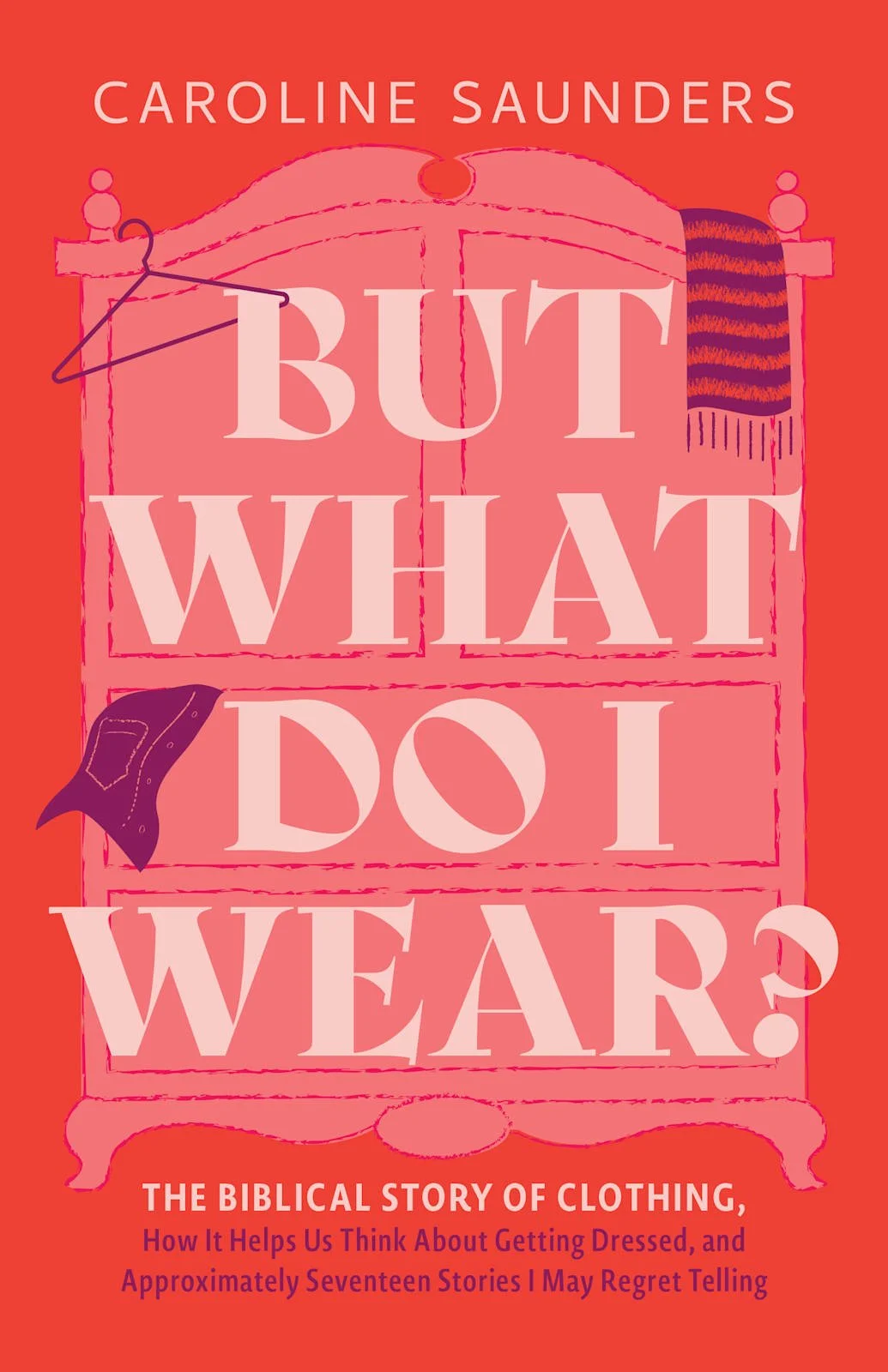
Editor’s Note: The following is an adapted excerpt from “But What Do I Wear: The Biblical Story of Clothing, How It Helps Us Think About Getting Dressed, and Approximately Seventeen Stories I May Regret Telling,” releasing Sept. 15, 2026, from B&H Publishing Group.