
The Lord created the world to operate in rhythm. The sun and moon cycle through the sky each day at set rhythms. The seasons come and go and come again according to an established rhythm. The ocean tides both surge and recede at a precise, predictable rhythm. Even amid a world at chaos, the whole thing rides on an ancient foundation of rhythm.
If we stop to notice, we’ll even feel the rhythm inside ourselves. Our bodies follow what’s called a circadian rhythm—the physical, mental and behavioral changes that mark the way we experience each twenty-four-hour period. Our hearts beat to a rhythm. Our breathing occurs at a rhythm. All the systems at work inside us, most of them moving involuntarily without any effort of will on our part, continue plodding away at this invisible rhythm.
But the fact that we don’t see these rhythms unless we’re looking for them, and that we don’t hear them unless we’re listening for them, doesn’t mean they don’t exist. It just means we’ve become more accustomed to living at a different rhythm.
You remember, of course, in the final moments before Jesus was betrayed, how He took His three closest disciples deep into the garden. He left them to stand watch with Him, to be present with Him, to pray for Him while He withdrew to an even more secluded spot a short distance away.
Three times He returned, and three times He found them sleeping. And with what we know now about what Jesus was facing, and about the agonizing prayers He was offering alone to His Father just beyond where these three friends were stretched out asleep, could any question cut more deeply into a believer’s heart than the one He asked of Peter: “Couldn’t you stay awake with me one hour?” (Matt. 26:40).
Just one hour?
Notice that Jesus didn’t ask this question of the other two. He singled Peter out. Maybe that’s because, more than the others, Jesus wanted Peter to have these words in mind when, three times before this night was over, he would deny having any kind of relationship with Jesus at all. I think it’s fair to say if Peter had stayed awake in the garden—if he’d been in rhythm with Jesus for even that one hour—he might not have failed Him so miserably in the courtyard. His attention to each hour, to the importance of each hour, to the rich opportunities for communing with God that reside within each hour, might’ve prevented him from being so unprepared for those next few harrowing hours.
And I wonder how many of our own failures, our own missteps, our own stumbling around and falling in trying to follow Christ, could be traced back to all those single hours we missed? The hours we spent sleepwalking. Whole hours we didn’t even notice as they passed by. Hours we could’ve spent attuned to God’s presence. But we were so accustomed to spending them on everything else. We were so engrained at dancing to a different rhythm—to our own rhythm, to others’ rhythms, and to all the chiming-clock rhythms of the world—when we were made to move at God’s rhythm.
If you’re looking for a definable rhythm in Scripture, you’ll find it most often in the measure of a single day.
Give us today our daily bread. (Matt. 6:11)
Encourage each other daily, while it is still called today. (Heb. 3:13)
[Jesus] said to them all, “If anyone wants to follow after me, let him deny himself, take up his cross daily, and follow me.” (Luke 9:23)
Even though our outer person is being destroyed, our inner person is being renewed day by day. (2 Cor. 4:16)
Dailiness creates an environment for hearing from God. He established this rhythm right from the beginning in the daily cadence of creation. But no sooner had He rescued the Old Testament people of Israel from slavery in Egypt than He immediately established with them another daily rhythm as they journeyed toward the promised land.
The Lord said to Moses, “I am going to rain bread from heaven for you. The people are to go out each day and gather enough for that day. This way I will test them to see whether or not they will follow my instructions.” (Exod. 16:4)
In the rain, in the heat, in the wind, every day, they were required to go out and bring in their daily allotment of manna. When they were sick, when they were tired, when it was the last thing they felt like doing, each day called for that day’s work, except on the Sabbath, when God provided for two days.
In the manna He was offering them life. Through His provision in the wilderness, He was offering them a future. But to experience it, to go forward with Him, they needed to keep an immovable appointment with Him.
Today.
On its face, the little bit of manna they gleaned from each day’s harvest didn’t amount to much. Just enough for that day’s needs. There wasn’t any saving it for tomorrow. If they tried hoarding it away and building up a surplus, it grew worms and turned rancid. The secret wasn’t in the manna; the secret was in daily obedience. In dailiness. God was teaching them through this daily chore the discipline of depending on Him. Of maintaining a daily relationship with Him. And every day for forty years, they would learn it again each morning.
We, too, must learn it again each day ourselves. The Lord had to teach it to me again on the porch—slowly but surely, night after night. Dailiness is the operating system that supports our spiritual life. Just as we can’t delegate our devotional time with God to someone else, having them do it for us, neither can we delegate today’s moments with God to tomorrow. By staying fully engaged in the present and in the parameters of each day, we marry the essential quality of stillness with the mighty power of patience. We allow ourselves to wait on Him because . . . because we’ve got all day. And because, really, we have nothing else. But because we do have today, we have all the required materials for hearing the One who’s told us not to “worry about tomorrow” (Matt. 6:34).
Something will dictate the rhythm of your life. It may be the pressure of the clock; it may be the ten things needing to get done before you go to bed tonight; it may be whatever electronic impulse pulls you back toward your cell phone for the hundredth time today. But depending on what is dictating your rhythm, you’ll either be open to hearing the voice of God, or you’ll be so connected to other things that your only connection with Him is reduced to passing Him in the hallway, on your way to wherever you think you’re supposed to go next.
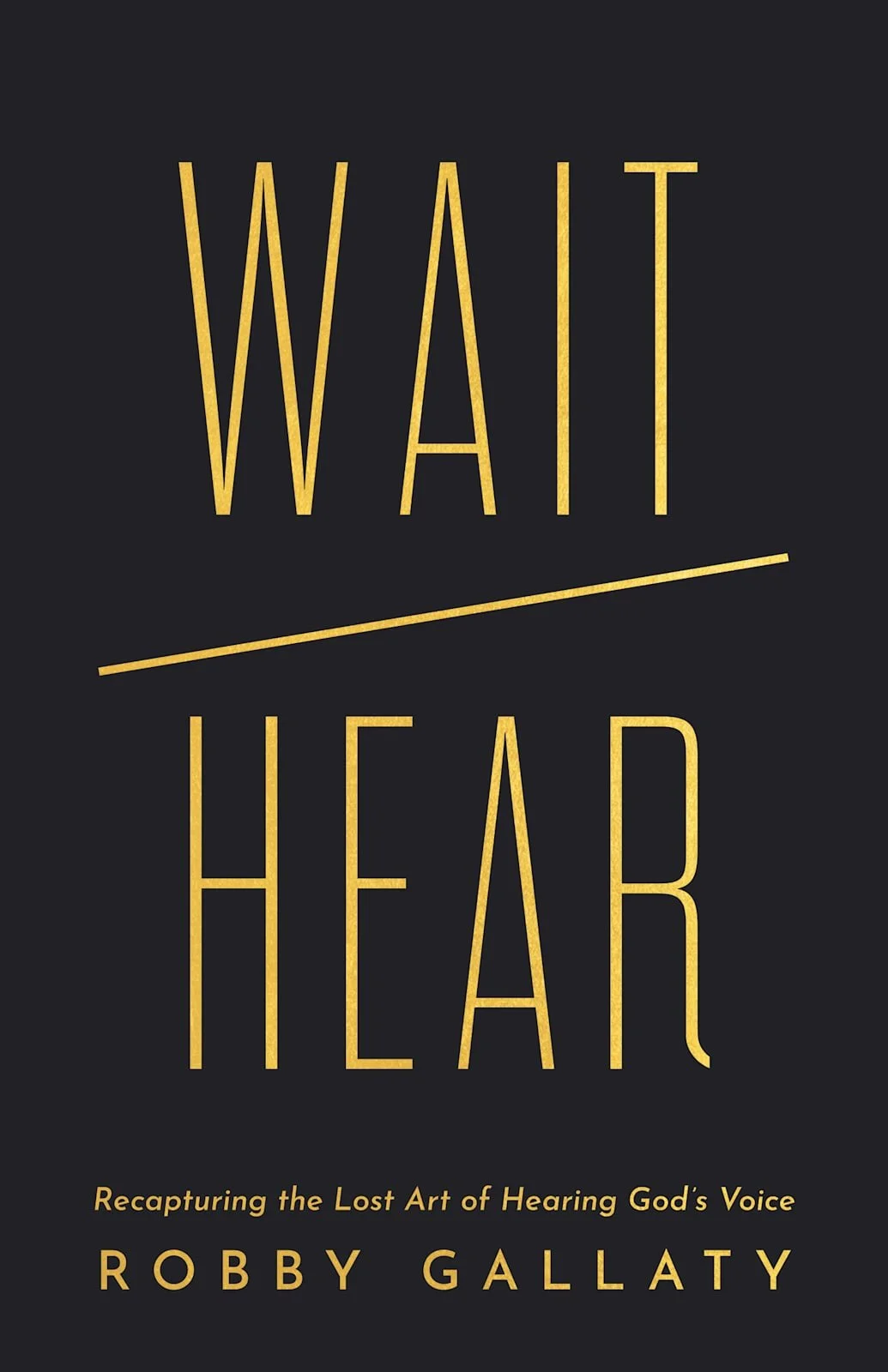
Editor’s Note: The following is an adapted excerpt from “Wait/Hear: Recapturing the Lost Art of Hearing God’s Voice,” releasing Sept. 22, 2026, from B&H Publishing Group.