
We Love Stories
For the longest time, I always wondered why people loved Hallmark movies. After all, they all seem to have the same predictable plot. With each movie, the same thing happens—boy meets girl, they fall in love, break up, and then, after overcoming a seemingly insurmountable obstacle, they get back together forever. I couldn’t understand the allure until a few years ago when I watched a handful of Hallmark movies back-to-back with my sister.
As we watched the second or third movie, it suddenly clicked for me. Over and over again, I saw what people love—the thrill of a budding relationship, the exhilaration of overcoming obstacles, and the deep satisfaction of two people ending up “happily ever after.” With each new movie, these scenes evoked an emotional response from me that never got old. At that moment, I realized these movies were so popular because they painted a picture of what we all long to have—“the good life,” or the place where we think true happiness is found.
For generations, humanity has communicated the truth about their existence from the perspective of a character in a narrative whose story continues to unfold. As humans, we have a built-in narrative instinct, as if we have been designed to use stories to remember our past, make sense of our present, and shape our future. We interpret our life experiences through stories, a collection of facts seen through the lens of our mind, body, and heart. Stories help us make sense of the world and find our place within it, answering the three core life questions all of us ask—Who am I? Why am I here? Where do I belong?
However, we aren’t born with these stories. Over the years, they are shaped by various influences. The TV shows we watch, the people we follow on social media, and our community all teach us how to view our lives and the world we live in. They tell us what to value, how to view the people around us, and how we should steward the resources we have been given.
Moreover, every story has its own version of heaven, hell, and a Savior figure. We can see this in the Hallmark movies I struggle to watch. In these stories, heaven is romantic bliss, hell is remaining alone, and the Savior figure who gets you over the bridge from hell to heaven is a prince in a made-up country who happens to meet you at your small-town apple stand. By telling us how the Savior figure will help us escape hell and make it to heaven, every story ultimately shows us where “the good life” can be found.
You and I are like sponges, absorbing the information we expose ourselves to the most. So, if our minds and hearts are primarily fixated on our surrounding culture, we will use its various stories to answer the questions we have about our human longings. We will look to them to figure out where to find love, our identity, and even hope in the midst of suffering. While we should continue to ask, “Who am I? Why am I here? Where do I belong?,” our habits are leading us to look for answers in the wrong place.
When we use the map provided by our culture, we are setting out towards a destination we will never reach. What culture doesn’t tell you is that their solution is really a Trojan horse, a door that does not lead to shalom, but that instead leads us to reject the One through whom shalom is found.
The False Gospel of Our Age | Radical Expressive Individualism
I am rarely running early; usually I am running late. But last year, I left my house a little earlier than usual. I was on my way to church to teach in our Women’s Bible study. As I walked down my steps to the place my car was parked, I did what I always do—hit the little button on my key remote to open my car door. When I press the button, my car makes a beep sound that lets me know the doors are unlocked. However, this time, when I hit the button, I didn’t hear the beep sound. I immediately stopped in my tracks because this meant one thing—my car battery was dead.
After confirming that my suspicions were in fact true, I opened my phone to order an Uber. I needed to get to church, and my car battery issues would have to wait until I was done. In about 5 minutes my ride pulled up and I quickly got inside. My driver’s name was Rickey, and let’s just say he was real chatty!
We started making small talk, commenting on the weather and how his day was going. He had a strikingly positive disposition, so I pressed in to learn why. Rickey began to share about how he believed we can control what happens in our lives. Through the power of positive thinking, we can overcome what is going on in the world. He wasn’t a Christian, but rather a “spiritual person” who was trying to live his best life. As Rickey talked and I listened, it became apparent that He believed his good feelings were the guide that he needed to get to his desired destination. As long as he listened to the voice inside of him, He would be okay.
Maybe you’ve talked to someone who sounds a little bit like Rickey—they are spiritual, but not religious, driven by a guide that is hidden inside of them. They believe the pursuit of authenticity will lead them to the good life they are looking for.
This mindset is the calling card of our culture’s narrative, which we could call the (false) Gospel of Radical Individualism. It is the belief that the pathway to the flourishing we seek comes through us centering ourselves, and it has three key elements:
We Decenter God So We Can Be God: As we move away from the things of God, we slowly begin to prioritize the voices of others over the voice of God. These voices tell us that the pathway to our best life is inside of us; that we must turn inward to cultivate and discover our true self.
Do What Feels Good: When we decenter God and center ourselves, we begin to be motivated or driven by what feels good to us, pleases us, and doesn’t make us uncomfortable. Since we are our greatest authority, we are hesitant to allow external influences that might seek to limit us hold us back.
Live Like This World Is All That There Is: With our time and our money, we pursue what feels good to us here and now because that’s all there is. Our driving motivations lead us to find our identity in things like success, our careers, comfort, and the acquisition of material things.
Every story has an ending, and while this one makes us believe we can find our best life simply by staying true to ourselves, it sadly leads us to a place that is more sinister than we could imagine. This is because it's a place where we are serving the storylines of this world rather than the God who created us.
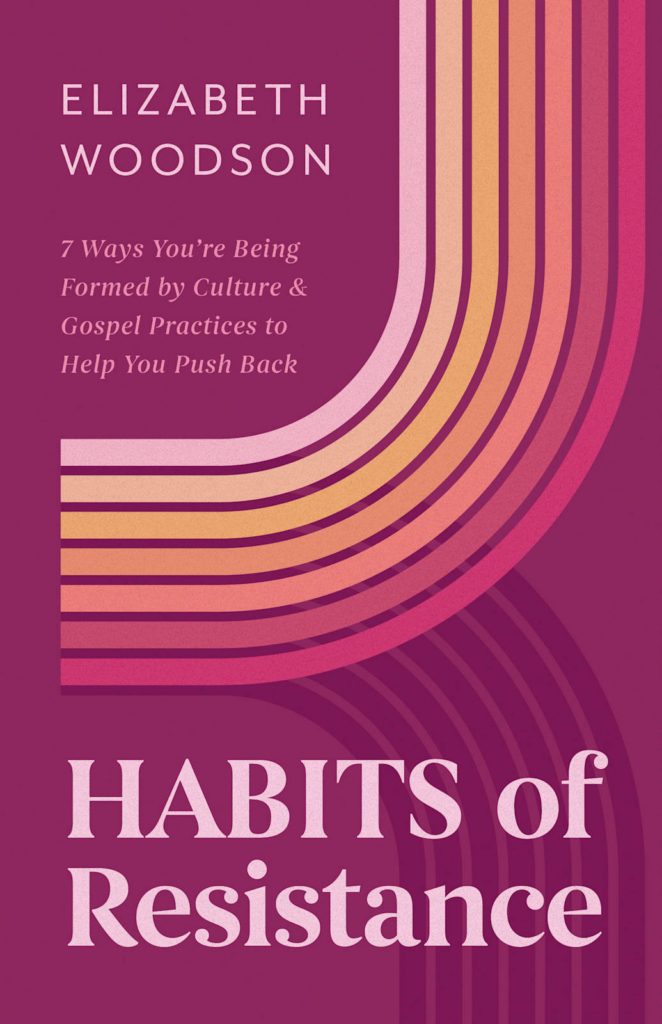
This excerpt is from Habits of Resistance: 7 Ways You're Being Formed By Culture and Gospel Practices to Help You Push Back by author Elizabeth Woodson, published by B&H Publishing.