
“Teach us to pray,” the disciples asked Jesus, and in response, he said, “When you pray, say this . . .” The prayer he gave us—addressed to our Father, yearning for God’s kingdom, pleading for daily sustenance and forgiveness—is the perfect summation of a heart that desires to seek first the kingdom of God and his righteousness (Luke 11:1–4).
No wonder The Didache, one of the earliest compilations of Christian teaching outside the New Testament, instructed believers to pray the Lord’s Prayer three times a day. These words are not intended to be all that we pray, but they should play an integral role in every Christian’s prayer life. Likewise, the prayers we find scattered through the Old and New Testaments provide a model for us, especially the Psalms—the prayer book of Jesus, who is himself the source and sum of those ancient hymns of faith.
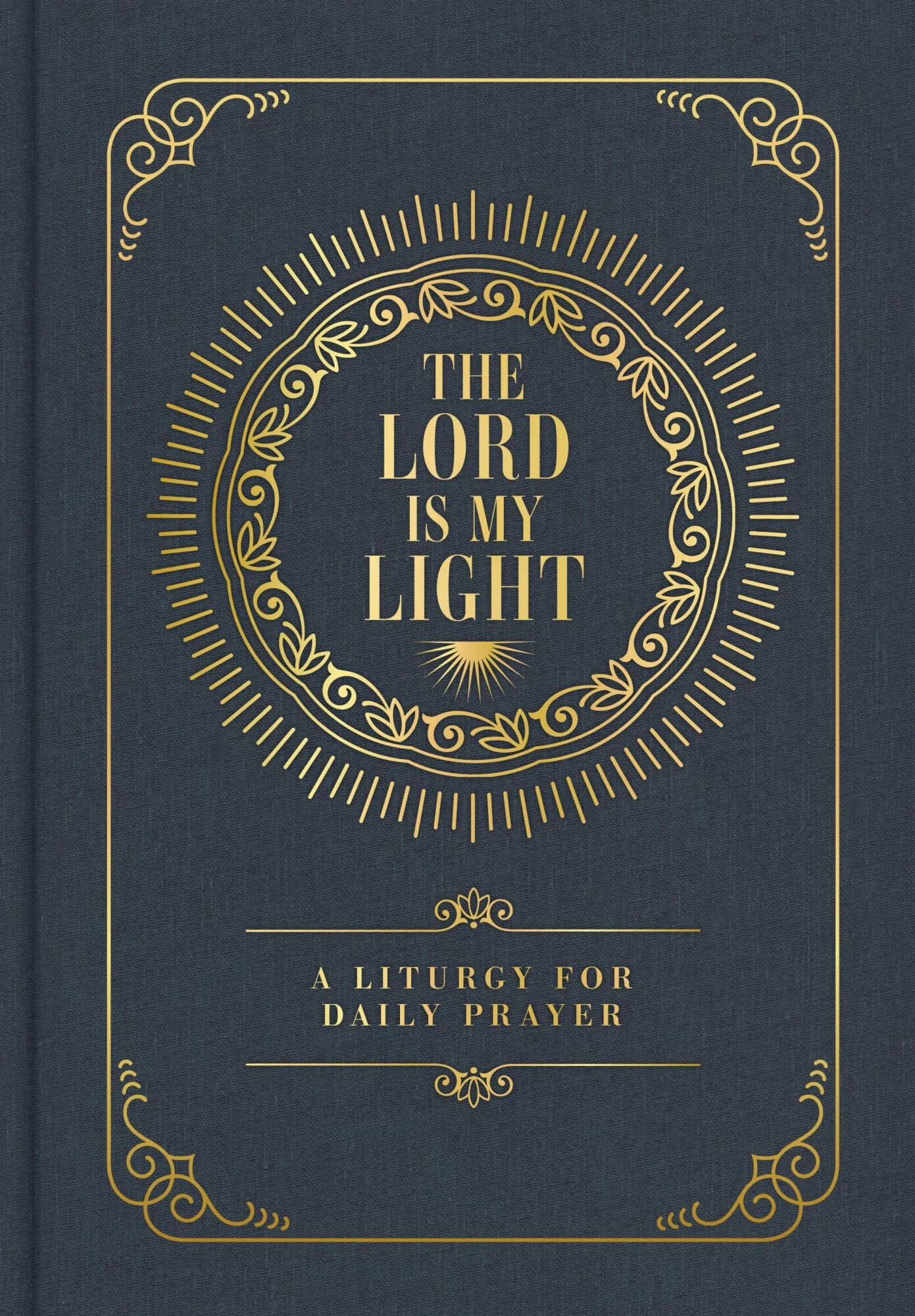
I believe that regular, prayerful meditation on God’s word, combined with the prayers of the saints, can become a means of grace the Holy Spirit can use to transform and renew our hearts. That is why I’d like to offer the following liturgy adapted from The Lord Is My Light: A Liturgy for Daily Prayer. I pray that it will help deepen your walk with the Lord and allow you to approach him with open hands. I have personally experienced how edifying a daily liturgy can be to my own soul, and this is my hope for you.
The following liturgy has a structured flow and covers ten elements: Call to Prayer, Confession of Faith, Confession of Sin, Canticle, Reading, Gloria, The Lord’s Prayer, Intercessions and Personal Requests, Prayer of the Church and Blessing. I'll offer a few words of counsel on how to engage with each section:
Call to Prayer
Taken directly from a verse of Scripture, our liturgy begins with a Call to Prayer that encourages you to prepare your heart to praise the Lord and hear his Word:
“Therefore be alert, since you don’t know when the master of the house is coming—whether in the evening or at midnight or at the crowing of the rooster or early in the morning. Otherwise, when he comes suddenly he might find you sleeping.” (Mark 13:35–36)
Confession of Faith
Next, we confess what we believe by reciting a passage of Scripture:
I believe in Jesus Christ, who, existing in the form of God, did not consider equality with God as something to be exploited.
Instead he emptied himself by assuming the form of a servant, taking on the likeness of humanity.
And when he had come as a man, he humbled himself by becoming obedient to the point of death—even to death on a cross.
“For this reason God highly exalted him and gave him the name that is above every name, so that at the name of Jesus every knee will bow— in heaven and on earth and under the earth— and every tongue will confess that Jesus Christ is Lord, to the glory of God the Father.” Philippians 2:6–11
Confession of Sin
Now, we confess our sins against God and against our neighbors. The purpose of this section is to acknowledge our need for the Lord’s mercy and forgiveness, to remind ourselves that the only way sinners can enter the throne room of God is through the blood of our Savior, and clothed in his righteousness:
O Lord, you have mercy upon all—take away from me my sins, and mercifully kindle in me the fire of your Holy Spirit. Take away from me the heart of stone, and give me a heart of flesh, a heart to love and adore you, a heart to delight in you, and to follow and to enjoy you, for Christ’s sake. Amen. (Ambrose of Milan, 339–397)
Canticle
Now that we have declared our faith and confessed our sins, we praise God through the canticle—an older English word that refers to a hymn or chant, typically taken from or inspired by the Scriptures. Here, we lift our voices alongside believers who have gone before us, expressing a variety of emotions as we bring to God our praises and laments, our doubts and our declarations of trust:
“Blessed is the Lord, the God of Israel, because he has visited and provided redemption for his people.
He has raised up a horn of salvation for us in the house of his servant David, just as he spoke by the mouth of his holy prophets in ancient times; salvation from our enemies and from the hand of those who hate us.
He has dealt mercifully with our ancestors and remembered his holy covenant— the oath that he swore to our father Abraham, to grant that we, having been rescued from the hand of our enemies, would serve him without fear in holiness and righteousness in his presence all our days.
And you, child, will be called a prophet of the Most High, for you will go before the Lord to prepare his ways, to give his people knowledge of salvation through the forgiveness of their sins.
Because of our God’s merciful compassion, the dawn from on high will visit us to shine on those who live in darkness and the shadow of death, to guide our feet into the way of peace.” (Luke 1:68–79)
Reading
With this section, we are invited to pay attention to the primary selection from the Word of God for the day’s reflection. Here, we actively read and study the scriptural selection, slowly and thoughtfully considering the text, expecting God to bless us as we seek to encounter him in his Word and to show us how we might come to love and obey him more:
Join me in reading Isaiah 2:1-22.
This is the Word of the Lord. Thanks be to God.
Gloria
After listening to God’s Word, we offer praise that points to the purpose of our existence: to give glory to our Triune God—Father, Son, and Holy Spirit—now and throughout all eternity:
Glory be to God the Father, God the Son, and God the Holy Spirit. As it was in the beginning, is now, and will be forever, world without end.
The Lord’s Prayer
With God’s glory as our North Star, we now pray as our Lord Jesus instructed. We go together before our Father in heaven, praying first for the hallowing of his name and the coming of his kingdom. We then express our dependence on the Lord for daily bread, asking for forgiveness and deliverance:
Our Father in heaven,
Hallowed be your name.
Your kingdom come,
Your will be done
on earth as it is in heaven.
Give us this day our daily bread.
And forgive us our debts,
as we also have forgiven our debtors.
And lead us not into temptation
But deliver us from the evil one.
For yours is the kingdom and the power and the glory forever. Amen.
Intercessions and Personal Requests
Next, we open our hearts to the Father, in the name of the Son, by the power of the Spirit, and we pray spontaneously about whatever is most on our hearts and minds. This time of personal intercession can be as short or long as you need it to be. Just remember: When you offer up these personal requests, you’re not alone. The Son intercedes for you, the Spirit prays through you, and the Father hears you. Prayer presses you up against the veil between earth and heaven.
Prayer of the Church
As the daily liturgy draws to a close, we join our voices to those who have gone before us. The goal here is to align our hearts with the church throughout the ages, asking for the Lord to work in and through us just as he has for those in the past:
Holy Spirit, breath of God and fire of love, I cannot pray without your aid: Kindle in me the fire of your love, and illumine me with your light; that with a steadfast will and holy thoughts I may approach the Father in spirit and in truth; through Jesus Christ my Lord, who reigns with you and the Father in eternal union. Amen. (The Book of Common Prayer)
Blessing
Finally, the liturgy concludes with a blessing taken directly from Scripture, an expression of hopeful promise for the Lord to work in and through us:
“Now to him who is able to protect you from stumbling and to make you stand in the presence of his glory, without blemish and with great joy, to the only God our Savior, through Jesus Christ our Lord, be glory, majesty, power, and authority before all time, now and forever. Amen.” (Jude 24–25)
I pray you will receive this liturgy as a gift, to be received and followed in faith. We pray for the Spirit to shape us, over time, into people who rest in the Lord’s love, who learn to pray in the truth, and who walk in the light as he is in the light (1 John 1:7).
Adapted from The Lord Is My Light: A Liturgy for Daily Prayer by Trevin Wax. Copyright © 2026 by Trevin Wax. Used by permission of B&H Publishing Group. On Sale November 1, 2026, at bhpublishinggroup.com.