
1) Truth is defined individually.
One of the greatest concerns we should have for Generation Alpha is that they are growing up in a time when there are very few things the world can agree on as true. The prevailing idea is that each person can create their own truth and their own version of truth. Even the secular world is raising the red flag about truth. While the secular world refers to it more in terms of the “absence of shared truth,” the biblical worldview we want Gen Alpha to embrace must be anchored in the absolute truth found in the Bible.
In fact, many adults will say things like, “I am living my truth.” Then, this mindset gets passed on to the next generation. However, the Bible says, “You shall know the truth, and the truth shall make you free (John 8:32).” It doesn’t say “your truth” will set you free... it says “the” truth. So, anytime that “your truth” contradicts the Truth... Stick to the Truth, instead.
2) An economy of attention is targeting Generation Alpha.
Generation Alpha’s attention is coveted, pursued, and manipulated by technology. Digital algorithms personalize feeds to content that maintains the individual's attention. The continual push of curated information feeds confirmation bias as these algorithms discover what is attention-keeping for the individual. The things Generation Alpha pays attention to will impact their worldview, and the world is desperately fighting for their attention.
So, when Scriptures tell us to think on what is true, honorable, pure, lovely, and good, to think on what is excellent and worthy of praise in Philippians 4:8, this is not just a platitude to “think happy thoughts.” We think that Paul is pointing us to focus on these things because what we pay attention to changes us. Luke 6:43-45 records Jesus teaching that we are recognized by our fruit, fruit that is the overflow of our hearts. He says that a good man brings good things stored out of his heart, whereas an evil man brings forth the evil stored in his heart. Out of the overflow of the heart, the mouth speaks.
What we previously paid attention to shapes our brain to make sense of whatever might come next. This process is efficient, but there are important real-world implications. This includes implications for our spiritual life. How we used to think about things may not line up with what we have been commanded to in the Scriptures. What we think matters, and when it doesn’t line up with the Bible… the Bible doesn’t change; our minds and thoughts need to. That is what Paul was writing about when he said, “Do not be conformed to this age, but be transformed by the renewing of your mind, so that you may discern what is the good, pleasing, and perfect will of God (Romans 12:2).”
So, the focus of our attention matters beyond the individual moment of attention. We carry in our brains a representation of our previous attention history that serves as a filter for all subsequent interactions in the world.
3) Performance-driven parenting.
Parents and guardians know their children’s test scores even before school is out, as digital tools provide performance data in real time. Instead of allowing the process of incremental growth and improvement to influence the final grade, parents and kids fixate on the immediate result, and short-term solutions are expected that may undermine the growth process. The use of artificial intelligence to shortcut the system for an immediate performance or productivity gain may be a threat to real learning and mastery of ideas that often come gradually with sustained effort and attention.
Instead of the motto "Failure is not an option," Generation Alpha would be better served if parents and teachers reframed it as "Failure is an opportunity to learn and grow." As James reminds us, “Blessed is the one who endures trials… (James 1:12)”. You can’t help but wonder how many blessings we may be robbing our children of because of our well-intended desires to rescue them from any kind of trials, failures, or suffering. This sounds like the opposite of the “wisdom of the world” regarding parenting.
However, we also recognize that most of the time, Kingdom truth will be the opposite of what the world says is wise. Unfortunately, many people struggle deeply with knowing how to effectively navigate trials as adults because they were overly protected from them as children. They never learned what perseverance looks like.
4) Authority.
Gen Alpha tends to question traditional authority structures, seeking explanations and understanding rather than accepting directives at face value. Believing something because authority figures in their life “said so” is no longer the norm. They fact-check sermons in real time and often want to dialogue about issues rather than just be told what to think about them. While some may see this as defiance, it reflects Gen Alpha’s desire for authenticity and transparency.
Many Gen Alphas believe they can be their own authority. This is where some of the gender and sexuality confusion can be vividly seen. They may falsely believe, “I have the authority to determine my own sexuality, gender, and destiny. In fact, I believe this so much that anyone who challenges this belief must hate me or have a phobia towards me and others like me.”
Generation Alpha is not the first to challenge traditional norms around sexuality. The sexual revolution among Baby Boomers and Gen Xers laid the groundwork for Millennials and Gen Z to normalize self-defined identity and personal expression. This shift created a cultural climate where personal preference became untouchable.
Helping Gen Alpha understand and appreciate healthy authority figures in their lives will also help them spiritually. After all, if they do not submit themselves to authority, they can’t have a relationship with God. He is the ultimate authority.
As parents and guardians, we must remember for ourselves and pass this truth on to the next generation: the world is full of sexual confusion, gender confusion, mental and emotional health confusion, political confusion, and racial confusion.
Who is the author of confusion? Satan.
As adults, we can’t neglect our high calling of pointing young people to the authority of God and His Word in their lives. Instead, boldly and compassionately embrace it!
How to help young people build a Biblical worldview.
We must answer this all-important question “How do you help Generation Alpha build a biblical worldview?” Here are five quick and practical things parents, leaders, and teachers can do to help young people build a biblical worldview:
Integrate Scripture into Everyday Conversations.
Don’t just quote verses—connect biblical principles to real-life situations, decisions, and current events to show how God’s Word applies practically in every area of life.Encourage Critical Thinking Through a Biblical Lens.
Ask thought-provoking questions about media, culture, and ethics that challenge young people to evaluate everything through Scripture, not just feelings or trends.Model a Consistent Biblical Lifestyle.
Let them see biblical values in action—how you handle conflict, show integrity, serve others, and make decisions rooted in faith. Let them see you actually live your beliefs outside the walls of a church building.Create Space for Honest Dialogue.
Foster an environment where questions and doubts are welcomed, helping young people wrestle with truth in a safe, grace-filled way. When it comes to the next generation, it’s much better to have awkward dialogue than it is for them to have these feelings on the inside but stay silent… because they don’t trust us.Use Real-Life Mentorship.
Pair young people with mature believers who intentionally disciple them, offering guidance, accountability, and encouragement in living out a biblical worldview. Titus 2:1 – 8 is a beautiful model and mandate for this.
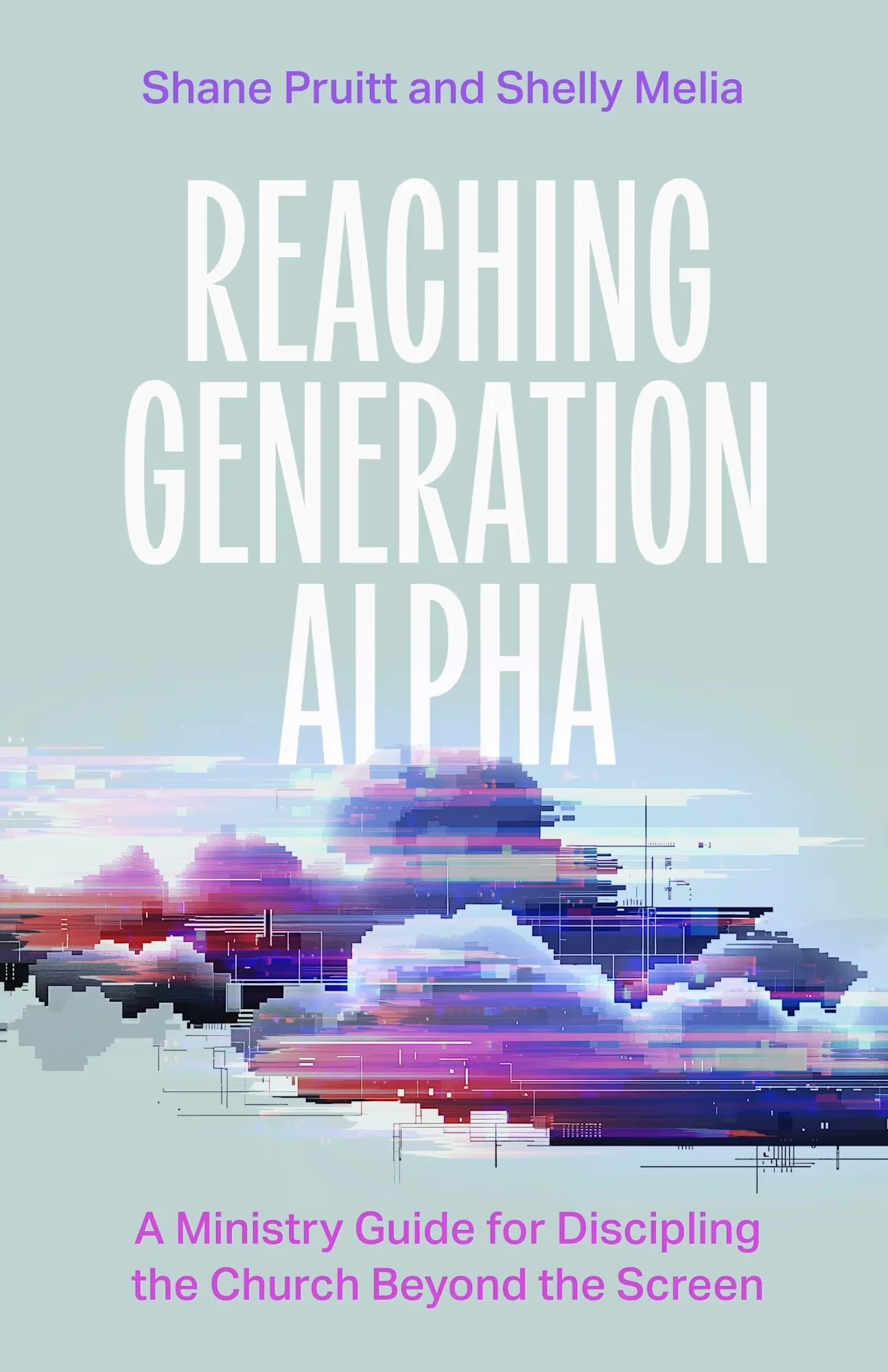
Taken from Reaching Generation Alpha: A Ministry Guide for Discipling the Church Beyond the Screen by Shane Pruitt and Shelly Melia. Copyright (c) 2026 by Brianna Janelle Lambert. Used by permission of B&H Publishing Group. bhpublishinggroup.com