
My grandmother is in her late 90’s. It’s amazing when I think about the changes she’s witnessed over her lifetime. Much has changed in the last century, but the biggest change has been the amount of information available to us and how we consume it. She’s witnessed the telephone go from the wall to the pocket. She grew up listening to the radio and has watched television move to the internet.
One of the causes of eco-anxiety is information overload. It’s shaping a generation to be much more pessimistic and unhappy than previous generations. As one Zoomer wrote sarcastically, “I love checking my phone every five minutes for a new catastrophic headline about the economy, climate change, or a geopolitical conflict I can do nothing about. It’s a wonderful way to start the day with a healthy dose of paralyzing fear and hopelessness.”
To understand how information overload creates anxiety, we need to look at how our access to information has changed over the last century. We also need to consider what it is doing to us.
How Has Information Evolved?
People often romanticize the potential benefits of technology. In the 1800’s, the telegraph was zipping news around the world for the first time. One of its fans predicted it would bring world peace: “It is impossible that old prejudices and hostilities should longer exist, while such an instrument has been created for an exchange of thought between all the nations of the earth.” Two world wars prove that prediction didn’t pan out.
The internet was supposed to solve the world’s problems, too. In the 1990’s, MIT professor Nicholas Negroponte wrote, “In the future, communities formed by ideas will be as strong as those formed by the forces of physical proximity. Kids will not know the meaning of nationalism.” Yet we’ve seen wars between nations continue even though everyone is online.
Instead of healing rifts between people, the flood of information we’re experiencing is tearing us apart. Christians should expect this. The Bible is clear that the basic problem humans face isn’t a lack of information. It’s sin, and we see that sin in the way some people intentionally try to stir up strife and dissention online.
The technology that ensures we’re flooded with information also contributes to our division. Even our news is individualized. We’re no longer dependent on a news editor in a remote city deciding which stories get headlines. Instead, we each experience the world through our personalized algorithm that’s designed to keep us scrolling.
The old journalistic maxim “If it bleeds, it leads,” describes the way negative headlines and stories draw in readers. Now, imagine that those negative stories are automatically selected based on your personal interests. That’s our reality. Internet media outlets feed a constant diet of alarming news to bait those clicks.
Bits of computer code written to efficiently provide content designed to draw us in and keep us looking. Algorithms don’t care about your mental health or the well-being of the world. They are a form of Artificial Intelligence designed to fulfill one purpose: to keep you glued to your phone.
The algorithm doesn’t just waste our time, it changes our perception of reality. Simply watching a long series of home inspection videos makes me question the structural integrity of my home. Content creators are, of course, showing some of the worst problems to keep me engaged, but they show so many examples that I begin to wonder if my house is going to crumble around me.
Now consider the way having news about environmental problems pumped into your newsfeed might be changing the way you see the world. There are real environmental problems, but the flood of information through our phones is making us all more anxious.
It’s not like we’re making a conscious decision to become overwhelmed by anxiety through excessive social media. Still, it’s difficult to stop because social media is designed to be addictive.
Why is Social Media Addictive?
It’s public knowledge that social media platforms like Facebook were designed to be addictive for kids. Social media companies created their products to get us hooked on dopamine.
As Anna Lembke says in Dopamine Nation, “The smartphone is the modern-day hypodermic needle, delivering digital dopamine 24/7 for a wired generation.” Our brains get a shot of dopamine when our friends “like” our comments or when we watch a funny video.
Dopamine is part of God’s good design for our brains. It’s a chemical our body releases that’s intended to trigger positive response to good things like seeing a baby smile, hearing a funny joke, being hugged by a loved one, or scoring in a pickup basketball game. Getting a dopamine hit is part of normal life, but in an analog world, the little surges of dopamine are normally spread out and related to real engagement with the world around us.
Our screens offer a short cut through normal dopamine cycle and make getting a little extra dopamine exceptionally easy. We just have to clear a row on a game like Candy Crush, post something that people like, or watch another 10 second video.
The tragedy of addiction is that the more times you get high, the harder it is to get high. As Patrick Miller notes, “If it only took two TikToks to spike your dopamine the first time, it will take four the tenth time, and dozens the hundredth.”
Dopamine hits, however, don’t just come from good experiences. Bad news releases dopamine, too, which is why the algorithm serves it up. That’s why it’s easy to become hyper-focused on what’s wrong with the world, whether that’s the environment, human trafficking, or the latest political turmoil. The resulting stress from that content can make it harder for our body to get the dopamine high we crave. That’s addiction and it has real consequences.
Addiction to digital technologies among young people leads to social isolation, sleep deprivation, difficulty focusing on anything for an extended time, and increasing dependence on the technology itself. Excessive digital media use strongly correlates to increased attempts at self-harm and even suicide among young people.
To overcome eco-anxiety, we must conquer our digital addictions. We have to recognize that the content we consume is distorting the way we see the world.
God made creation beautiful for his own glory and so he can delight in it. Creation’s goodness and wonder testify to God’s infinitely greater majesty.
If eco-anxiety is weighing us down, we need to get outside and actually enjoy the world around us. Creation isn’t just the invisible cocktail of atmospheric gases we’re worried are slowly cooking the planet. It’s also the flowers poking up in the sidewalk cracks, the swallows nesting on the front porch, and the brilliant purple hues of a sunset.
Overcoming eco-anxiety isn’t about self-improvement. It’s about learning to hope in God and what he’s done for us. It’s about recognizing the goodness of this world and God’s faithfulness toward all of creation.
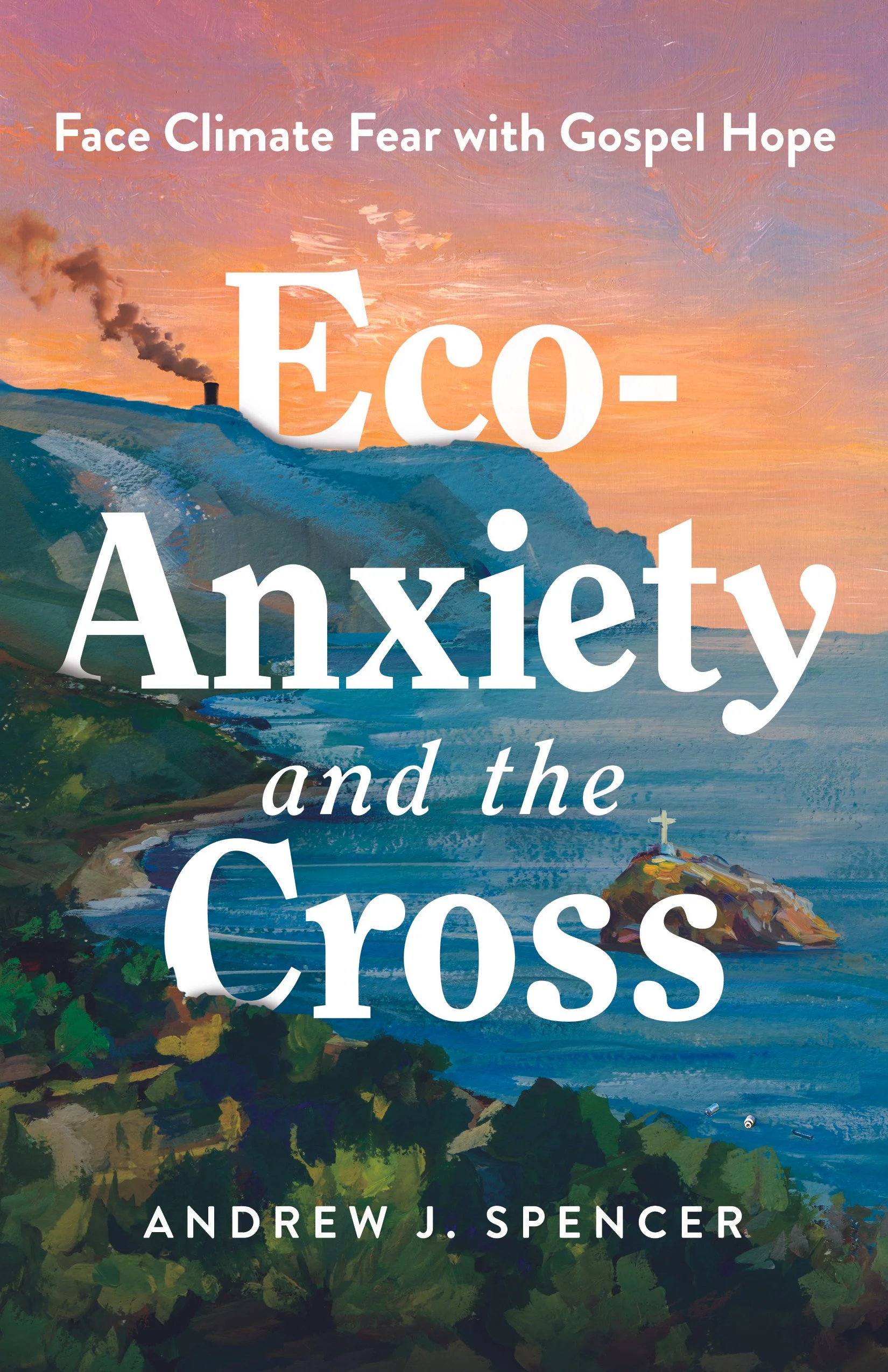
Editor’s Note: The following is an adapted excerpt from Eco-Anxiety and the Cross: Face Climate Fear with Gospel Hope, releasing Sept. 22, 2026, from B&H Publishing Group.